Meteor Showers 2027 in Prague and Central Europe: Dates, Moon and Dark Sky Spots
USD 22,28
Popular
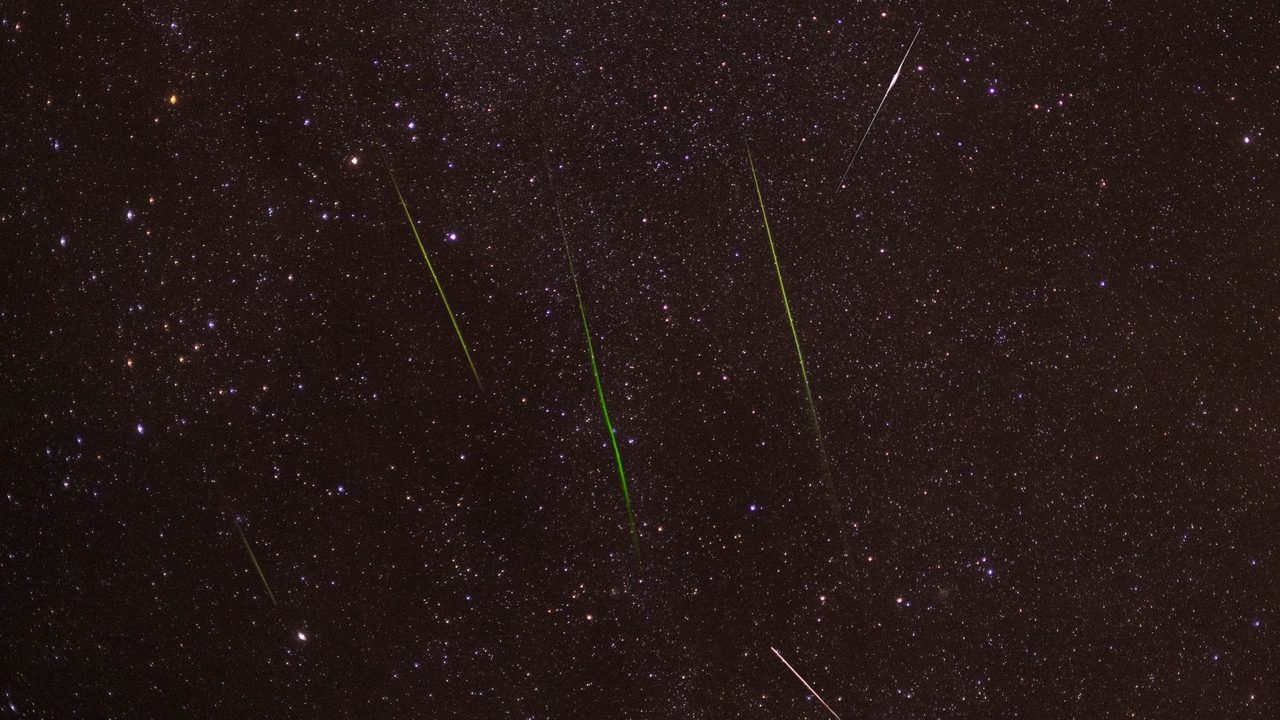
The best meteor showers for observers in Prague in 2027 are the Quadrantids (night of 3 to 4 January), the Perseids (12 to 14 August) and, with a dark Moon, the Eta Aquariids (6 May) and Ursids (22 to 23 December). Dates and rates below come from the International Meteor Organization (IMO) 2027 calendar, with Moon dates from US Naval Observatory data.
ZHR is the zenithal hourly rate: what an observer would count under a perfect sky with the radiant overhead. Under Czech skies the real count is usually a fraction of it, and from inside Prague much lower.
2027 meteor shower calendar
| Shower | Peak (UTC) | ZHR | Moon around the peak |
|---|---|---|---|
| Quadrantids | 4 Jan, 03:25 (04:25 Prague) | 80+ | Thin waning crescent, new Moon 7 Jan |
| Lyrids | 23 Apr, 01:40 (03:40 Prague) | 18 | Bright, three days after full Moon of 20 Apr |
| Eta Aquariids | 6 May, about 09:00 | 50 | New Moon 6 May |
| Perseids | 13 Aug, 08:00 to 10:00 (daylight in Europe) | 110+ | Waxing gibbous, full Moon 17 Aug |
| Orionids | 22 Oct | 20 | Last quarter |
| Leonids | 18 Nov, 06:00 | 15+ | Waning gibbous |
| Geminids | 14 Dec, about 20:00 | 150 | Full Moon 13 Dec |
| Ursids | 23 Dec, 04:00 | 10 | Dark, new Moon 27 Dec |
The IMO says its data were correct for June 2026 and that many peak times are uncertain by hours. New Moons in 2027 fall on 7 January, 6 May, 2 August, 31 August and 27 December, and full Moons on 20 April, 17 August and 13 December (US Naval Observatory).
What this means from Prague
Quadrantids, January
The peak is short, with an IMO timing uncertainty of about 2.5 hours. The 03:25 UTC maximum is 04:25 in Prague, in the pre-dawn hours when the radiant is high in the north-east. The Moon is a thin crescent, so this is a good year, but January weather in Bohemia is often cloudy and very cold.
Lyrids and Eta Aquariids, spring
The Lyrids are modest and the Moon is bright. The Eta Aquariids are a southern-hemisphere shower, and the IMO says the best results come from south of about 40 degrees north. Prague is near 50 degrees north, so expect only a few meteors even under the new Moon.
Perseids, August
This is the one most Czechs watch. The calculated peak, 13 August between 08:00 and 10:00 UTC, falls in daylight in Europe, so the best nights are 12 to 13 and 13 to 14 August. The Moon is gibbous and roughly 85% lit, so its light will wash out fainter meteors in the evening. Check the Moon-set time on the night: the darkest part of the sky comes after it sets. The IMO notes that Earth passes through a part of the stream shifted by Jupiter, which may raise rates by 10 to 20% (ZHR 110 to 120), and lists possible dust-trail encounters on 12 August at 19:18 and 23:46 UTC. These are model predictions and uncertain.
Geminids and Ursids, December
The Geminids are the strongest shower on paper, but their peak of 14 December falls one day after the full Moon, and the IMO says moonlight severely disturbs observing. Bright Geminids will still be visible. The Ursids on 22 to 23 December have a much darker sky, but only a ZHR of about 10.
Dark-sky spots within reach of Prague
The Czech Republic has designated dark-sky areas where light pollution is limited. These are not guaranteed to be perfectly dark, and I could not confirm formal International Dark-Sky Association status for every one of them, so treat the labels as Czech designations and check local rules before going.
- Jizera Mountains (Jizerské hory): The Jizera Dark-Sky Park, established in 2009 and the first of its kind in Czechia, is about 110 km north-east of Prague by road. It sits on the border with Poland.
- Manětín region (west Bohemia): Radio Prague described the Manětín area as the country's third dark-sky area. It is roughly 100 km west of Prague, and its remote villages make for easier day trips than the mountains.
- Beskydy: A dark-sky area in the far east, near the Slovak and Polish borders, but about 350 km from Prague. It is better for a weekend trip than a single night.
Even a site 30 to 40 km outside Prague, such as open fields in central Bohemia away from towns, is much better than the city. Look for a clear northern and eastern horizon, since Perseids and Quadrantids radiate from the north-east.
Practical tips
- Allow 20 to 30 minutes for your eyes to adapt, and avoid phone screens or use red light.
- Lie back and look at a wide patch of sky about 40 to 60 degrees from the radiant.
- Dress for cold: August nights in the hills can drop to 10 degrees Celsius.
- Check cloud forecasts from the Czech Hydrometeorological Institute (ČHMÚ) on the day, as weather decides more than ZHR.
For a peak-by-peak table of the full year including US times, see The Science Beat's 2027 meteor shower calendar.
FAQ
What is the best meteor shower of 2027 for Prague?
The Perseids in August for comfortable nights and high rates, though moonlit. The Quadrantids in January have a darker sky but are short and cold.
Will the Moon spoil the Geminids in 2027?
Mostly yes. The full Moon is on 13 December, one day before the peak.
Where is the nearest dark-sky area to Prague?
The Manětín area in west Bohemia and the Jizera Mountains are the closest designated dark-sky areas, at roughly 100 to 110 km.
Around Prague, based on reporting by International Meteor Organization, US Naval Observatory, Wikipedia, Radio Prague International, The Science Beat