Vulcan Rocket Loses 40 Amazon Internet Satellites 10 Minutes After Liftoff
USD 22,10
Popular
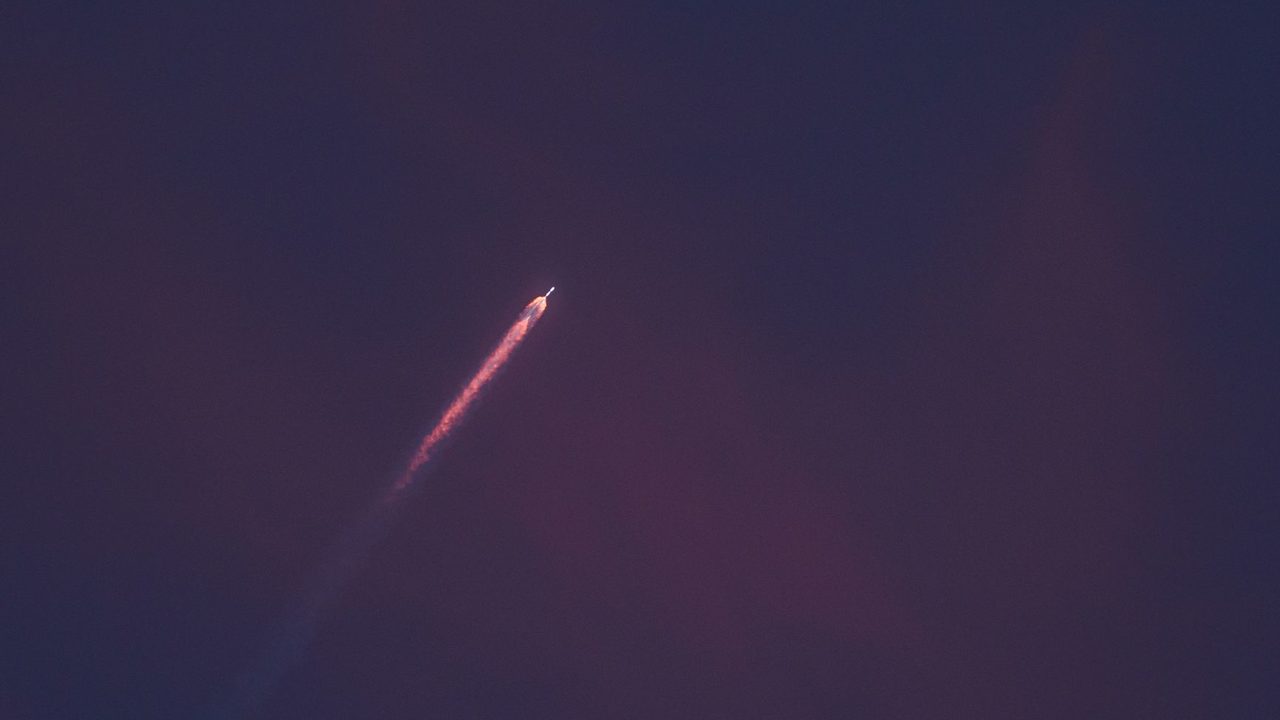
United Launch Alliance's Vulcan rocket failed to reach orbit Sunday, Nov. 15, losing all 40 Amazon Leo internet satellites it was carrying. The company said an anomaly struck about 10 minutes after liftoff from Cape Canaveral Space Force Station in Florida.
Spaceflight Now reported it was the first outright mission failure for ULA since the Boeing and Lockheed Martin venture was formed in 2006. The flight was Vulcan's first in nine months and the first of 38 Vulcan launches Amazon has purchased. The cause is not yet known.
What happened during the flight
Vulcan lifted off at 12:40 p.m. EST from Launch Complex 41, after a Friday scrub caused by a gaseous nitrogen plant outage and a Saturday delay tied to network problems between the rocket and ground systems. On Sunday, controllers also paused the countdown with 20 seconds left to resolve a technical issue. Reports say it is not known whether that issue played a role.
The six Northrop Grumman solid rocket boosters appeared to work normally, according to Spaceflight Now, and burned out and fell away less than two minutes into the flight. The first stage, powered by two BE-4 engines, appeared to burn longer than the pre-launch timeline called for. It also appeared to separate from the Centaur upper stage later than expected, and a telemetry-based animation showed the Centaur making unusual orientation adjustments early in its burn.
ULA's last public update, as reported by Florida Today, said the Centaur had ignited and the payload fairing had come off about six minutes after liftoff. At that point the rocket was 95 miles up and flying faster than 11,000 mph. The Centaur was planned to burn for 12 minutes 15 seconds, and Spaceflight Now said something went wrong during that burn.
ULA said it has no specific data yet on what happened and will work with Amazon and others to find the cause and return to flight quickly. "Today, we did not meet that standard," the company said, referring to its goal of mission success. Florida Today reported that NASA Administrator Jared Isaacman offered the agency's help with the investigation.
How Vulcan got here: a timeline
- January 2024: Vulcan debuts. Sunday's launch was its fifth flight.
- October 2024: A booster nozzle fails on the second flight, according to GeekWire. The rocket still reaches orbit.
- Feb. 12: A solid rocket booster malfunctions on the USSF-87 national security mission. The rocket reaches orbit, but the Space Force pauses Vulcan national security launches afterward, GeekWire reported.
- May: Blue Origin's New Glenn rocket explodes on the ground. Spaceflight Now said an oxygen valve problem in one of its BE-4 engines was the cause. The same engine type powers Vulcan's first stage, and the ones used Sunday had been retrofitted with a fix.
- July: ULA flies the last of eight Amazon Leo missions on its older Atlas 5 rocket, Amazon's last successful launch before Sunday.
- August: Mark Peller, who led Vulcan's development, is named ULA's CEO.
- Nov. 15: Vulcan flies with an improved booster nozzle design and fails about 10 minutes into the flight.
Why it matters for Amazon Leo and the satellite internet race
Amazon Leo, formerly Project Kuiper, is meant to compete with SpaceX's Starlink. Before Sunday, GeekWire reported, Amazon had launched 396 satellites on 14 missions since April 2025. Spaceflight Now said Sunday's flight would have raised the total to 436.
Amazon had described Vulcan as its main workhorse for the coming years. GeekWire reported the rocket is slated to carry more than 1,500 of the company's first-generation satellites. Amazon had also said a second Vulcan mission could fly within weeks, but that flight now has to wait for the investigation.
Other launch options are limited. New Glenn, on which Amazon has 24 launches reserved, has been grounded since the May explosion. Amazon's next scheduled launch is an Ariane 6 mission carrying 36 satellites, targeted for Nov. 23 at the earliest.
The Federal Communications Commission, GeekWire reported, gave Amazon permission in June to keep deploying satellites even if it missed a July 30 deadline to put 1,616 into service. Satellites not operational by then temporarily lose priority in key spectrum bands. Amazon has until July 30, 2029, to deploy and operate all 3,232 first-generation satellites, and it has said it plans an initial commercial service rollout this year.
The mission also carried more than 50,000 pounds, ULA's heaviest payload ever, and was the first to fly a shorter, optimized version of the Centaur V upper stage, according to Florida Today. Amazon's statement said launches carry risk, especially inaugural missions, and that it believes ULA will learn from this one.
What happens next
ULA said Amazon and other customers will have visibility into its investigation. Spaceflight Now reported that Vulcan faces a potentially significant grounding while engineers review telemetry and implement fixes. No timeline for a return to flight has been given.
Around Prague, based on reporting by Florida Today, Spaceflight Now, GeekWire