Science & Space By

Voyager 1 Is About to Be One Light-Day From Earth, More Than 16 Billion Miles Away
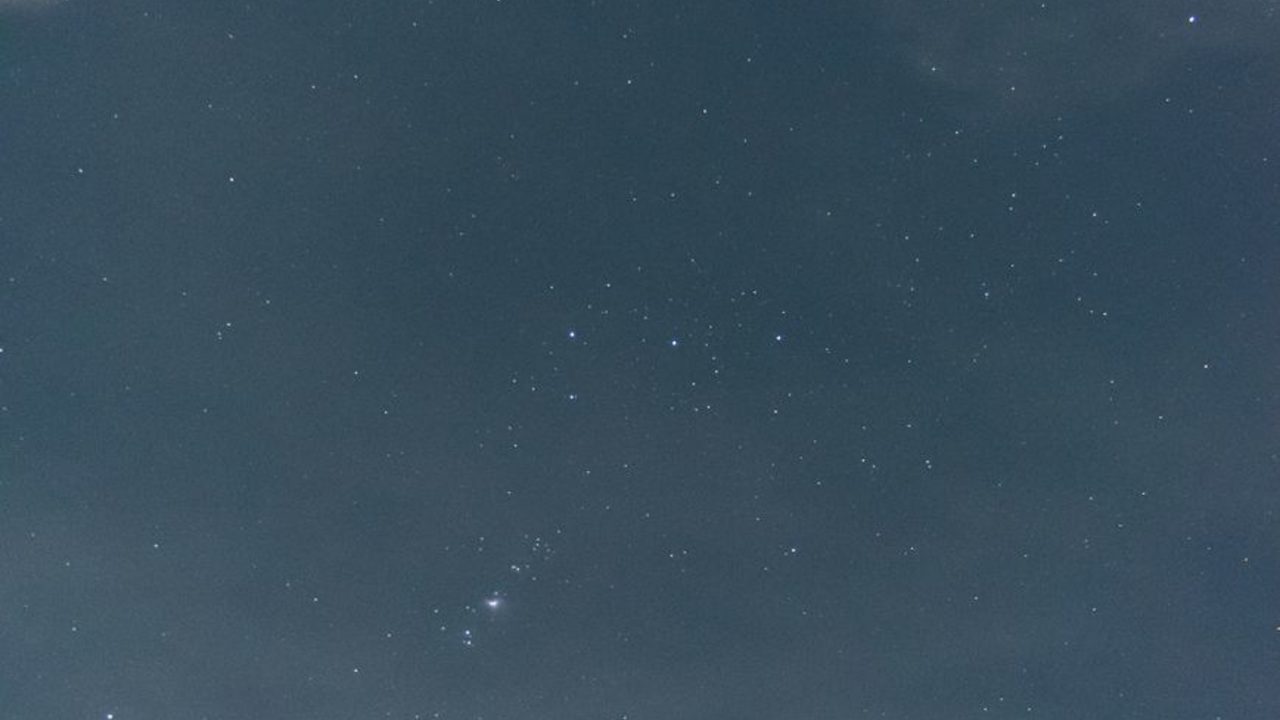
NASA's Voyager 1 is set to reach a distance of one light-day from Earth on Wednesday, NPR reported. The spacecraft is already the farthest anything humans have launched into space, and the agency is marking the milestone with a public event.

NASA is asking people to send Voyager's call sign, V-G-R, into the sky in Morse code on Tuesday night using a flashlight, a phone light or anything else that can blink. The agency calls the event the "Shine Bright for Voyager's Light-Day" and describes it as symbolic.

How to take part

What a light-day means

A light-day is the distance light travels in 24 hours, which is more than 16 billion miles. NPR said Voyager 1 is estimated to reach that mark at 5:16 a.m. ET on Wednesday, after 49 years, two months and 11 days of travel.

The journey so far

What Voyager 1 is still doing

Voyager 1 and its twin, Voyager 2, are the only spacecraft to have operated outside the heliosphere, the region that acts as a protective shield around the solar system. Voyager 1's interstellar mission continues to measure magnetic fields, particles and plasma waves beyond the sun's heliosphere and the atmosphere of other stars.

Two science instruments are still running: one that measures magnetic fields and another that listens for plasma waves.

Why it matters

For readers, the milestone is a chance to take part in something concrete. Anyone with a light can join the Tuesday night flash event and send a signal toward a probe that left Earth nearly 50 years ago.

It also shows how much a single spacecraft can keep delivering. NASA's decision to shut off one instrument to conserve power means the two remaining instruments carry on the science as the probe moves farther out.

Voyager also carries the Golden Record, a gold-plated interstellar time capsule meant to tell Earth's story to any extraterrestrials who find it. It holds 115 images, natural sounds such as surf, wind and animals, and spoken greetings in 35 different languages. Symbols on the record explain how to play it and where the probe came from.

Around Prague, based on reporting by NPR
Share: Telegram WhatsApp

More science news

Vulcan Rocket Loses 40 Amazon Internet Satellites 10 Minutes After Liftoff
United Launch Alliance's Vulcan rocket failed to reach orbit Sunday, Nov. 15, losing all 40 Amazon Leo internet satellites it was carrying. The company said an anomaly struck about 10 minutes after li
Voyager 1 Is About to Be a Full Light-Day From Earth, So Replies Take Two Days
NASA's Voyager 1, already the most distant human-made object, reaches a new marker on Nov. 18: it will be one light-day from Earth, so far away that light needs 24 hours to cross the gap, according to
A Knitted Sock That Stiffens the Arch Cut Walking Effort in a Small Test
A sock that squeezes the ball of the foot can make walking slightly less tiring, according to a new study from the University of Texas at Austin. ScienceAlert reported that the socks stiffened the foo
Man Sees His Cat's Face on Strangers After Brain Surgery, Study Reports
A 28-year-old man from the northeastern United States has spent two years seeing his pet cat's features in the faces of people he meets, according to ScienceAlert, which covered a case report in the j
Giant Planet Vanishes From View as an Unseen Neighbor Tilts Its Orbit
A gas giant about 1,000 light-years from Earth has slipped out of sight while astronomers were watching it. According to EarthSky, the planet, TOI-2535 b, did not really go anywhere: the gravity of an
Blaze Star Nova Could Flash Brighter Than Polaris, Then Fade in Days
Astronomers say a star system nicknamed the Blaze Star is very likely to erupt soon, but none can say exactly when. According to Space.com, skywatchers have waited about two years for the nova, and wh

Related news

United Launch Alliance's Vulcan rocket failed to reach orbit Sunday, Nov. 15, losing all 40 Amazon Leo internet satellites it was carrying. The company said an anomaly struck about 10 minutes after liftoff from Cape Canaveral Space Force St
NASA's Voyager 1, already the most distant human-made object, reaches a new marker on Nov. 18: it will be one light-day from Earth, so far away that light needs 24 hours to cross the gap, according to Live Science. NASA says the spacecraft
A sock that squeezes the ball of the foot can make walking slightly less tiring, according to a new study from the University of Texas at Austin. ScienceAlert reported that the socks stiffened the foot's arch and lowered the body's energy u
A 28-year-old man from the northeastern United States has spent two years seeing his pet cat's features in the faces of people he meets, according to ScienceAlert, which covered a case report in the journal Cortex. The episodes began after
A gas giant about 1,000 light-years from Earth has slipped out of sight while astronomers were watching it. According to EarthSky, the planet, TOI-2535 b, did not really go anywhere: the gravity of another, unseen planet has tilted its orbi
Astronomers say a star system nicknamed the Blaze Star is very likely to erupt soon, but none can say exactly when. According to Space.com, skywatchers have waited about two years for the nova, and when it comes it will make a faint, normal
Scientists may have an explanation for one of the oddest features of Uranus and Neptune: their lopsided magnetic fields. According to ScienceDaily, new computer simulations suggest that the way the planets’ deep interiors conduct electricit
A faint, little-noticed comet flared up twice this summer, and researchers now say they know why. According to Space.com, sunlight warmed ice below the surface of comet 220P/McNaught, the ice turned to gas, and the escaping gas tore through
NASA's Voyager 1 probe will reach a distance of 16.09 billion miles (25.89 billion kilometers) from Earth on Wednesday, Nov. 18, according to Live Science. At that range, light takes 24 hours to cross the gap, making the spacecraft the most
Dinosaurs that lived along ancient coastlines may have supplemented their diets with seaweed and other food from the ocean, according to a new study reported by ScienceDaily on Nov. 14. The evidence comes from the chemistry of fossilized te
The European Space Agency's Euclid space telescope has found 31 very ancient quasars, among them two that are now the earliest ever observed, according to ScienceDaily, which republished the agency's announcement. Powered by supermassive bl
One of New Zealand's least understood penguin species is doing well in one place and badly in another, according to a University of Otago study published in PLOS ONE. Erect-crested penguins breed on only two remote island groups, and a dron