Ice Age Oceans Stored Extra Carbon Because Sea Ice and Currents Worked Together
USD 22,18
Popular
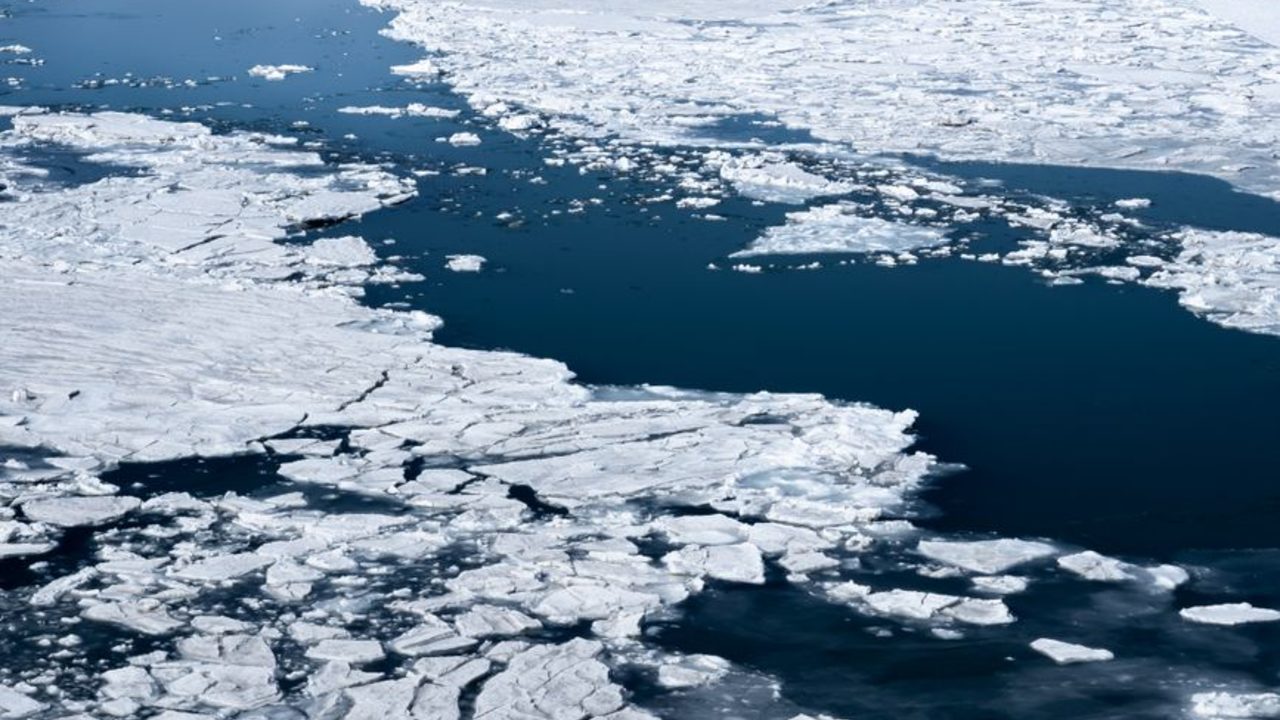
Earth’s climate has swung between warm periods and cold ones over the past 800,000 years, and carbon dioxide in the atmosphere has played a part alongside changes in Earth’s orbit. A new study in Science Advances, by researchers at MIT and the Université du Québec à Rimouski, suggests that sea ice and ocean circulation around Antarctica have to be considered together to explain how the ocean stored carbon during ice ages, according to MIT News.
What did the researchers look at?
The team studied how processes in the Southern Ocean around Antarctica during glacial periods, such as ocean cooling, sea-ice expansion and changes in ocean circulation, contribute to global ocean carbon storage and to the drawdown of atmospheric CO2. Instead of treating each factor separately, they looked at how the processes work together. Jonathan Lauderdale, a research scientist in MIT’s Department of Earth, Atmospheric and Planetary Sciences and an author of the paper, explained the work in a Q&A published by MIT News.
How does the ocean store carbon?
Lauderdale described three main ocean carbon stores. The first is solubility: cold water holds more dissolved CO2 than warm water, much like a cold soda versus a warm one, and because cold water is dense and sinks, that carbon ends up in the deep ocean.
The second is biology. Phytoplankton take up CO2 near the surface through photosynthesis, then die or get eaten by zooplankton and packaged into waste pellets. These particles sink into the deep ocean, where bacteria convert them back into dissolved CO2.
The third is disequilibrium, the difference between how much carbon a water mass could hold and how much is actually in it. Circulation matters here. The Southern Ocean Overturning Circulation brings carbon-rich water back to the surface, Lauderdale said, and how long that water stays at the surface determines how much CO2 it releases and how much returns to the ocean interior.
Why had these processes been studied one at a time?
According to Lauderdale, studying one process at a time helps isolate cause and effect. Early papers relied on very simple, idealized models that could not capture the tight link between physical and biogeochemical processes. Complex climate models can capture that link, but it is hard to say which process drives a result unless only one thing is changed at a time.
What did the models show?
When the team changed Antarctic sea ice alone, atmospheric CO2 rose slightly. The same happened when they ran only a glacial circulation. On its own, that might suggest sea ice and circulation are unimportant for ice age ocean carbon storage.
When they ran a “full” experiment with extensive sea ice, glacial circulation and cooler temperatures, atmospheric CO2 declined, meaning the ocean stored more carbon. That matches what other scientists have seen in different models. But the details puzzled the team: solubility, which they expected to dominate, produced only a small net increase in stored carbon, and most of the added storage appeared in the disequilibrium pool.
What does this mean for understanding past and future climate?
When the researchers coupled sea ice and circulation, they saw a significant CO2 drawdown and the disequilibrium carbon fingerprint of their full glacial ocean. Cooling still matters, Lauderdale said, but it is not the complete picture. He said scientists now get “the right answer for the right reasons.”
The explanation lies in exposure to the air. The disequilibrium change depends on how long water spends in contact with the atmosphere in the Southern Ocean. More sea ice or glacial circulation alone each reduce that exposure, but together they reduce it significantly, leaving a small window for CO2 exchange. As a result, much more of the deep-ocean carbon that wells up is sent back into the ocean interior.
Lauderdale noted there are caveats, but said the findings point to interactions among physical processes, such as sea ice and circulation, as an important driver of ice age ocean carbon storage. Scientists hope that understanding how CO2 moves between the atmosphere and the ocean will help them apply that knowledge to future climate scenarios.
Around Prague, based on reporting by MIT News