Science & Space By

NASA's Swift Space Telescope Could Fall to Earth Within Hours
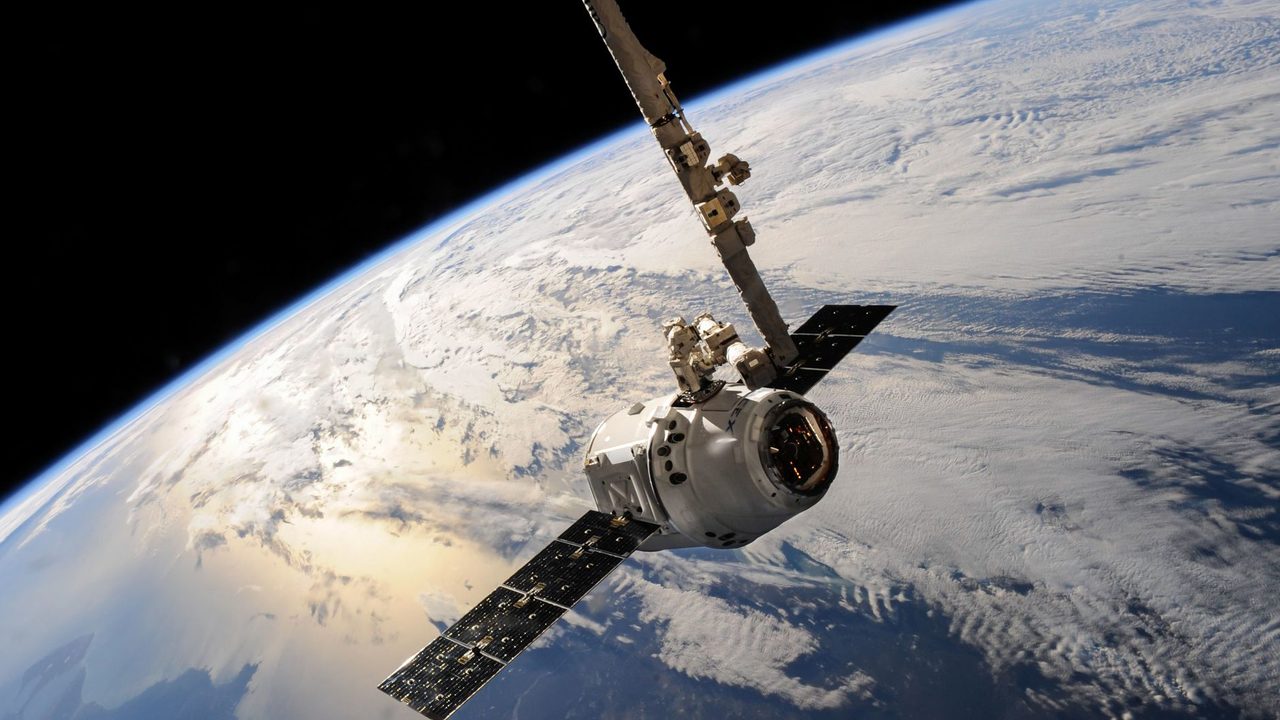
NASA's Neil Gehrels Swift Observatory, a space telescope that has been falling steadily out of orbit, could re-enter Earth's atmosphere as early as tonight, the agency says. Live Science reported that NASA's latest estimate, shared Nov. 2, points to about 3:30 a.m. EST on Nov. 4, give or take 11 hours.

The risk to people is small. Most of the roughly 3,200-pound (1,450 kilograms) spacecraft is expected to burn up on the way down, according to NASA.

When will the Swift telescope come down?

NASA's estimate is a window rather than a single moment. With an uncertainty of plus or minus 11 hours, the spacecraft could drop out of the sky as early as this evening, Live Science reported.

An independent analysis from the Aerospace Corporation, a private nonprofit that tracks thousands of objects in orbit, lands close by. It estimates reentry at 5:12 a.m. EST on Nov. 4, give or take eight hours. NASA says it will keep updating its predictions as the window narrows.

Where could pieces land?

Any fragments that survive the fiery descent are likely to fall somewhere between 20.6 degrees south latitude and 20.6 degrees north latitude, according to NASA. That band covers parts of Mexico, the Caribbean, Central and South America, the Arabian Peninsula, India, Africa and Oceania, as well as a great deal of open ocean.

Because the exact timing is still uncertain, the landing area cannot yet be narrowed further.

How big is the danger?

NASA puts the chance that Swift debris falls over a populated area at about 1 in 2,100. For comparison, the National Weather Service puts the odds of a person being struck by lightning over a lifetime at 1 in 15,300, Live Science noted.

What does this mean for people on the ground?

For nearly everyone, very little. The agency describes the risk to humans as minimal, as it is for all spacecraft reentries. Most of the observatory should vaporize in the atmosphere, and the zone where pieces could reach the surface includes large stretches of ocean.

The bigger loss is scientific. Swift gave astronomers a steady view of some of the most violent events in the universe, and its retirement ends a long run of observations.

What was Swift, and why is it coming down?

Swift is a multiwavelength telescope that observes in optical, ultraviolet and X-ray light. It launched in November 2004 to study the most powerful explosions in space. It was designed for a two-year primary mission but ended up working for more than 10 times that long, hunting supernovas, gamma-ray bursts and eruptions linked to black holes.

The spacecraft has been losing altitude for more than a year, after intense solar activity increased the drag on it, Live Science reported. In August, a costly attempt to raise Swift's orbit using a private spacecraft failed shortly after launch, which removed the last realistic way to keep it aloft.

Engineers shut down the observatory's science operations on Oct. 20, after it dropped too low in orbit to keep making steady observations of the sky.

What does Swift leave behind?

According to NASA, Swift's data have contributed to more than 7,000 scientific papers so far. That number is expected to grow as the telescope's final observations are processed.

Around Prague, based on reporting by Live Science
Share: Telegram WhatsApp

More science news

Neutrinos Could Warn of the Blaze Star's Explosion Hours Before Its Light Arrives
Astronomers are still waiting for the Blaze Star to erupt, and a new study suggests the first sign of the blast might not be light at all. According to EarthSky, researchers have proposed that neutrin
Webb Telescope Finds Dense Star Clusters That May Have Birthed Black Hole Seeds
Dense star clusters in two very early galaxies seen by the James Webb Space Telescope may have been birthplaces for intermediate-mass black holes, according to a new study reported by Universe Today.
Rats Exposed to Mars-Like Radiation Developed Twice as Much Heart Scarring
Radiation like that astronauts would face on a trip to Mars may raise the risk of a dangerous heart condition, a new study in rats suggests, according to Live Science. The effect appeared long after e
Paris Jackson Asks Court to Move $600 Million of Michael Jackson's Estate to Family Trust
Paris Jackson, the daughter of Michael Jackson, has asked a Los Angeles court to order that $600 million from her father's estate be moved into a family trust for her and her siblings. PEOPLE reported
After a Massive Undersea Eruption Buried Japan in Ash, Survivors Moved to the Coast
A new study suggests that people in prehistoric Japan were more resourceful after a catastrophic volcanic eruption than researchers had assumed. According to ScienceAlert, some regions were left uninh
Rubin Observatory Spots Two Faint Companions of the Milky Way in Early Data
The Vera C. Rubin Observatory has spotted two previously unknown companions of the Milky Way: a probable dim dwarf galaxy and a faint globular cluster. Universe Today reported that both turned up in t

Related news

Astronomers are still waiting for the Blaze Star to erupt, and a new study suggests the first sign of the blast might not be light at all. According to EarthSky, researchers have proposed that neutrinos, tiny particles that barely interact
Dense star clusters in two very early galaxies seen by the James Webb Space Telescope may have been birthplaces for intermediate-mass black holes, according to a new study reported by Universe Today. Such black holes are thought to be the s
Radiation like that astronauts would face on a trip to Mars may raise the risk of a dangerous heart condition, a new study in rats suggests, according to Live Science. The effect appeared long after exposure, which leads the authors to argu
Paris Jackson, the daughter of Michael Jackson, has asked a Los Angeles court to order that $600 million from her father's estate be moved into a family trust for her and her siblings. PEOPLE reported the petition on Nov. 2, and Star News K
A new study suggests that people in prehistoric Japan were more resourceful after a catastrophic volcanic eruption than researchers had assumed. According to ScienceAlert, some regions were left uninhabitable for a very long time, but in ot
The Vera C. Rubin Observatory has spotted two previously unknown companions of the Milky Way: a probable dim dwarf galaxy and a faint globular cluster. Universe Today reported that both turned up in the observatory's Early Data Preview 2, r
Caffeinated energy drinks and stimulant supplements turned up far more often in reports of serious heart problems than other foods and supplements did, according to a new analysis of U.S. government safety data. The pattern was strongest fo
A team of researchers says it has found what appear to be fossilized red blood cells inside a dinosaur bone that is 115 million years old, along with chemical traces of heme, the molecule that lets blood carry oxygen. The study was publishe
Researchers working in the Ethiopian highlands have documented what they describe as the first sustained same-sex sexual relationship between a bull and a donkey. The observations, reported in the journal Current Biology, suggest the two an
Nov. 2 marks an anniversary that changed how people live in space. On that date in 2000, the first long-term residents arrived at the International Space Station, according to Space.com. Because of that arrival, the orbiting outpost has now
Scientists at the University of California, Santa Cruz, report that they separated two effects of psilocybin in mice: the boost it gives to connections between brain cells and the trip-like response. The work was published in Nature Neurosc
People who report near-death experiences describe very different scenes, but a new study suggests those scenes follow a pattern. When 50 people drew the spaces they remembered, the shape of each space was linked to the colors they recalled,