Science & Space By

Supermoon Slides Past the Seven Sisters Star Cluster Before Dawn on Nov. 24
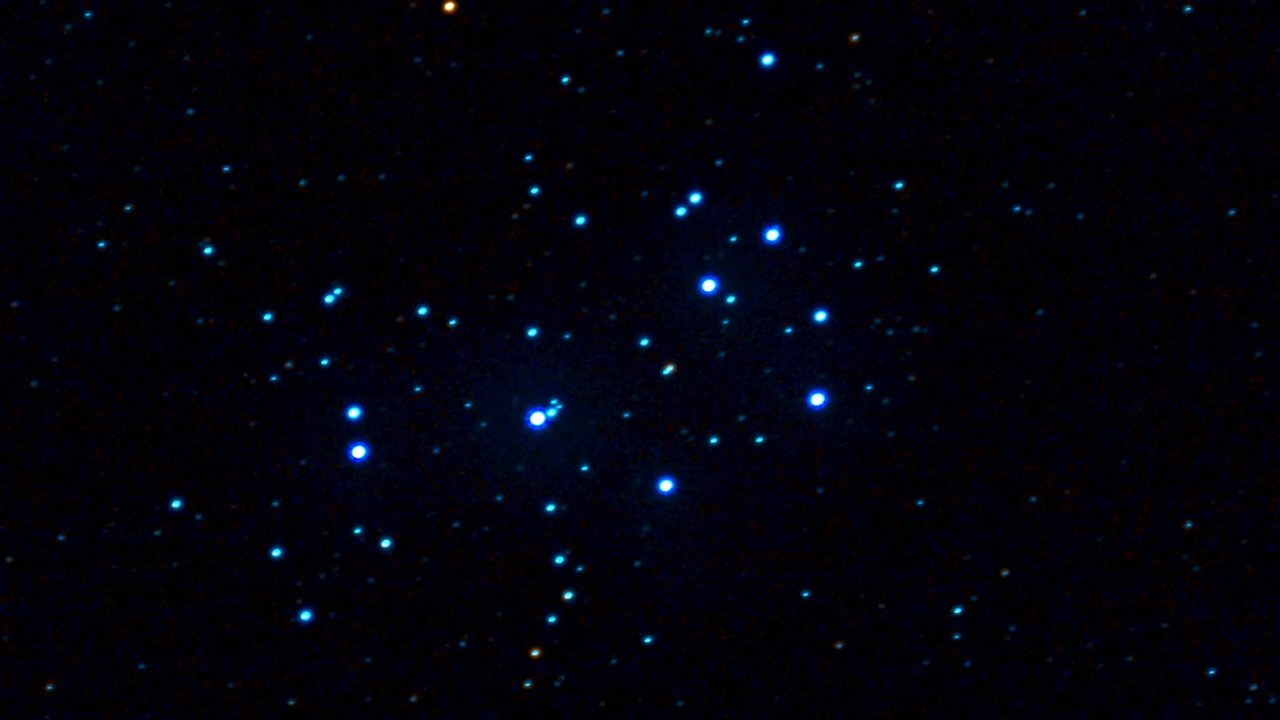
The full Beaver Moon of November 2026 arrives Tuesday, Nov. 24, and it is a Supermoon. Hours before dawn that morning, according to Starlust, the Moon will pass very close to the Pleiades star cluster, also called the Seven Sisters, in the western sky.

The pairing is visible to the naked eye, though the Moon's glare will drown out fainter stars. Binoculars or a small telescope give a much better view, Starlust reported.

The key numbers behind the Beaver Moon and Pleiades meetup

What makes this full moon a Supermoon

A Supermoon happens when the full phase coincides with the Moon's closest approach to Earth, known as perigee. At those times the Moon appears larger than usual, Starlust explained. This month the full phase falls on Nov. 24, while the closest approach comes a day later, which is why the distances above are tied to Nov. 25.

What this means for skywatchers: where to look

The best moment for the Moon-Pleiades pairing is early Tuesday, a few hours before dawn, rather than in the evening. By the time the Moon is exactly full in the morning, it is below the horizon for viewers in the U.S.

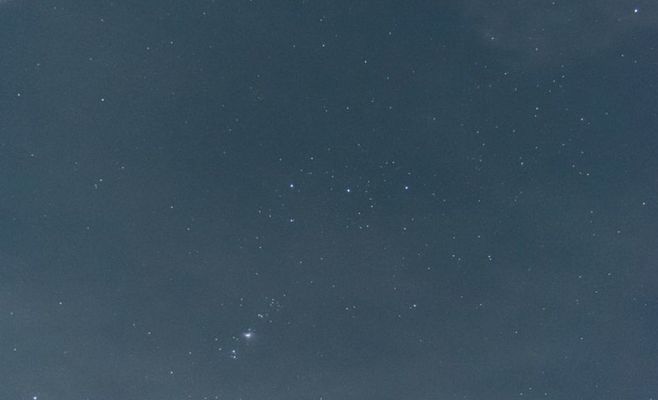
Starlust offers a way to find the cluster. Start with the three stars of Orion's belt and imagine a line running through them from left to right. Continue through Orion's bow to Aldebaran, the brightest star in Taurus. The Pleiades lie beyond Aldebaran along the same path.

Under normal conditions, the cluster stars visible without optical aid are Alcyone, Electra, Atlas, Maia and Merope. Alcyone is the brightest of them. With the Moon so near, fainter stars will be harder to see, so binoculars or a telescope can help bring out the cluster's blue-white stars through the moonlight. Starlust also noted that binoculars can reveal the Hyades star cluster near the Moon.

What comes next

For anyone who misses the Nov. 24 pairing, the Supermoon series continues with the Cold Moon on Dec. 23 and the Wolf Moon on Jan. 22, 2027. The exact timing of each full phase is given in Eastern time in the figures above, so viewers in other U.S. time zones will need to adjust.

Around Prague, based on reporting by Starlust.org

Cover photo: Gravitatas / Wikimedia Commons (public domain)
Share: Telegram WhatsApp

More science news

Webb Telescope Finds Dust Clues to a Star’s Last Hours Before Exploding
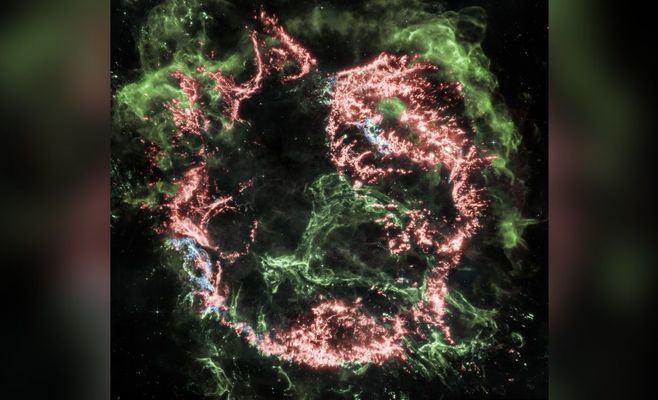
NASA’s James Webb Space Telescope has mapped the dust inside the supernova remnant Cassiopeia A, and the pattern suggests the star’s interior was reshuffled shortly before it exploded, according to NA
Orbiter Images Show Dead Martian Volcano Steeper Than Mauna Kea
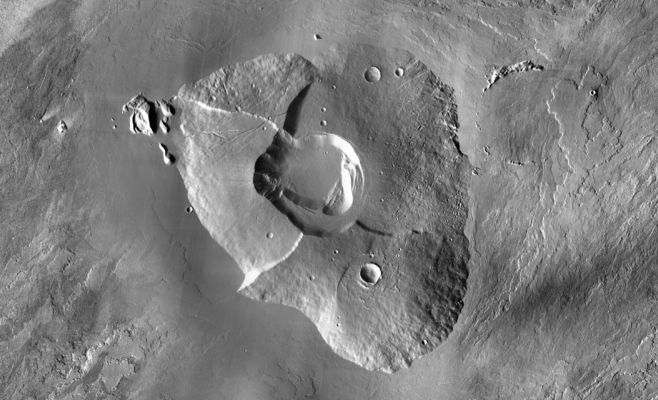
A spacecraft circling Mars has returned new images of Tharsis Tholus, an ancient volcano that is no longer active. According to Space.com, the European Space Agency's Mars Express orbiter captured the
Shroud of Turin Carries DNA From Maize, Peanuts and Red Coral, Study Finds
The most thorough DNA analysis of the Shroud of Turin to date has found genetic traces from many people, animals and plants, including crops native to the Americas. According to ScienceAlert, the inte
Part of the Milky Way’s Norma Arm May Be a Star Factory on the Galactic Bar
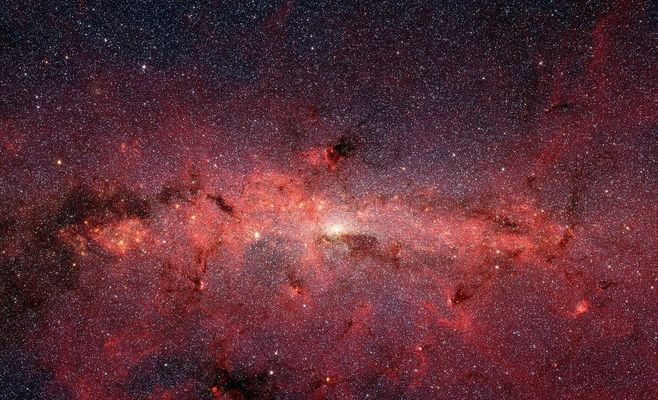
Part of what astronomers have long called the Norma spiral arm of the Milky Way may not be a spiral arm at all, according to a new study in Nature Astronomy. The researchers say it could instead be a
Why DNA Uses Thymine: A Built-In Sunscreen That May Have Shielded Early Life
A building block of DNA that looks like a weakness may actually have been a strength. Researchers at Texas A&M University report that thymine, which DNA uses in place of RNA's uracil, appears to chann
Arctic Laser Station Tracks Satellites With Thousands of Pulses a Second
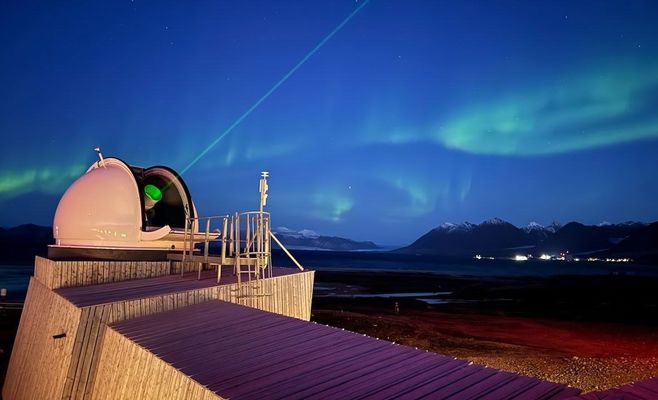
A faster and more precise satellite-tracking laser officially began operating on Oct. 12 at the Ny-Ålesund Geodetic Observatory in Svalbard, Norway, according to NASA. It is the first of NASA's next-g

Related news

NASA’s James Webb Space Telescope has mapped the dust inside the supernova remnant Cassiopeia A, and the pattern suggests the star’s interior was reshuffled shortly before it exploded, according to NASA. The researchers say the change may h
A spacecraft circling Mars has returned new images of Tharsis Tholus, an ancient volcano that is no longer active. According to Space.com, the European Space Agency's Mars Express orbiter captured the views, which show a worn but remarkably
The most thorough DNA analysis of the Shroud of Turin to date has found genetic traces from many people, animals and plants, including crops native to the Americas. According to ScienceAlert, the international team behind the study, publish
Part of what astronomers have long called the Norma spiral arm of the Milky Way may not be a spiral arm at all, according to a new study in Nature Astronomy. The researchers say it could instead be a region where stars are forming along the
A building block of DNA that looks like a weakness may actually have been a strength. Researchers at Texas A&M University report that thymine, which DNA uses in place of RNA's uracil, appears to channel ultraviolet damage into forms that ar
A faster and more precise satellite-tracking laser officially began operating on Oct. 12 at the Ny-Ålesund Geodetic Observatory in Svalbard, Norway, according to NASA. It is the first of NASA's next-generation satellite laser ranging system
A "Black Saturn" is a theoretical object: a round black hole circled by a ring-shaped black hole, with each keeping its own boundary. A new paper by theoretical physicist Jay Armas, submitted to the arXiv platform on Nov. 16, 2026, extends
A robotic submersible exploring the Mariana Trench has found the shattered debris of explosive volcanic eruptions on a trench wall about 20,000 feet below the surface, Popular Science reported. The researchers say it is the deepest evidence
Scientists exploring the deepest part of the ocean have found evidence of an explosive eruption where they did not expect any volcanic activity at all. According to Live Science, a robotic submersible spotted the deepest pyroclastic flow ev
Some massive stars may end their lives without the blast scientists usually expect, collapsing straight into black holes instead. A new Caltech-led study of gravitational wave data finds a pattern in black hole masses that fits that idea, a
Astronomers say the strange orbits of some icy objects far beyond Neptune could point to a hidden planet, and it would not be the long-sought Planet Nine. A new study proposes a second world, informally called Planet X2, according to Scienc
Black holes are known to collide and merge, but a new theoretical study suggests they might also break apart. Under extremely specific conditions, the researchers propose, a black hole could fragment into smaller ones, a bit like a pair of