Science & Space By

Why DNA Uses Thymine: A Built-In Sunscreen That May Have Shielded Early Life

A building block of DNA that looks like a weakness may actually have been a strength. Researchers at Texas A&M University report that thymine, which DNA uses in place of RNA's uracil, appears to channel ultraviolet damage into forms that are easier to reverse. That could help explain how early genetic material endured intense sunlight on the young Earth, according to ScienceDaily, which published the university's summary on Nov. 22.

The work appeared in the Proceedings of the National Academy of Sciences. Below are the main questions the findings raise.

What did the researchers find?

The team exposed thymine and uracil to carefully controlled ultraviolet light meant to mimic conditions on primordial Earth. They found that thymine, although vulnerable to UV radiation, tends to favor kinds of molecular damage that can be undone more readily.

Keyvan Khosh Abady, one of the research assistants, described the idea this way: early genetic molecules may have survived not by avoiding damage but by controlling it. He said thymine may have acted like a "molecular sunscreen," absorbing harmful UV energy and keeping the damage confined to the genetic bases rather than letting it reach more vulnerable parts of the molecule.

Why has thymine puzzled scientists?

One major step in the evolution of genetic systems was the shift from RNA, typically a single-stranded molecule, to DNA as the main way of storing genetic information. DNA uses thymine where RNA uses uracil.

That swap has long seemed odd, because thymine is more susceptible to certain forms of UV damage. The problem would have been sharper on early Earth, before an ozone layer formed to block much of the Sun's harmful radiation. The new study asks whether thymine offered an advantage that had been overlooked.

How was the idea tested?

The researchers used biophotonics, a field that studies biological materials by how they interact with light. According to the summary, their experiments combined absorption, fluorescence and Raman spectroscopy to analyze the two molecules after UV exposure. The team was led by Dr. Peter Rentzepis, a professor in the university's Department of Electrical and Computer Engineering, with research assistants Khosh Abady and Negar Karpourazar.

The experiments examined these molecules under simulated early-Earth light. The findings point to a possible explanation for thymine's role in DNA rather than a settled answer.

Why does it matter?

The main significance is scientific. The result suggests that surviving harsh early conditions may have depended on managing and recovering from damage, not only on resisting it. That would bear on how the molecular systems behind life took shape.

There are also possible practical uses. The team built a new set of reference measurements describing how these molecules respond to light. Khosh Abady said the distinct spectral signatures could eventually support faster, more sensitive detection of pathogens. They could also help check whether UV disinfection has actually inactivated microorganisms, particularly in water-treatment systems. These uses are described as potential, not as tools that exist today.

What comes next?

Rentzepis and his team plan to look at an even earlier stage of life's history. Their next goal is to understand the forces and chemical processes that brought together thymine, uracil and other essential components of primitive genetic systems.

A central question is whether those ingredients formed entirely on Earth or whether some arrived from beyond the planet. Meteorites may have delivered organic compounds that were later incorporated into the chemistry from which life developed, the researchers say.

Around Prague, based on reporting by ScienceDaily
Share: Telegram WhatsApp

More science news

Part of the Milky Way’s Norma Arm May Be a Star Factory on the Galactic Bar
Part of what astronomers have long called the Norma spiral arm of the Milky Way may not be a spiral arm at all, according to a new study in Nature Astronomy. The researchers say it could instead be a
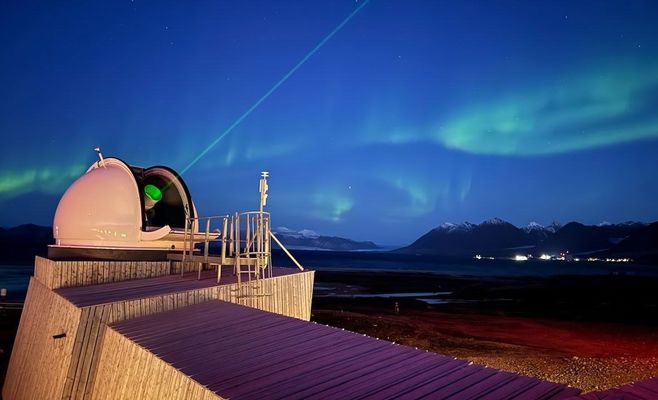
Arctic Laser Station Tracks Satellites With Thousands of Pulses a Second
A faster and more precise satellite-tracking laser officially began operating on Oct. 12 at the Ny-Ålesund Geodetic Observatory in Svalbard, Norway, according to NASA. It is the first of NASA's next-g
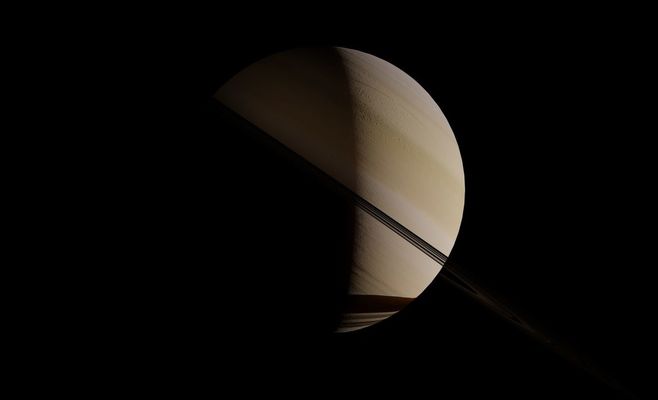
Why Black Saturn Needs a Fifth Dimension and a Spinning Ring
A "Black Saturn" is a theoretical object: a round black hole circled by a ring-shaped black hole, with each keeping its own boundary. A new paper by theoretical physicist Jay Armas, submitted to the a
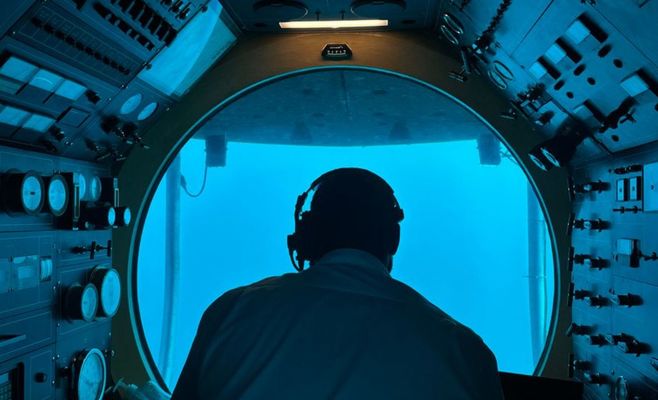
Robot Finds Explosive Volcanic Rock 20,000 Feet Down in Mariana Trench
A robotic submersible exploring the Mariana Trench has found the shattered debris of explosive volcanic eruptions on a trench wall about 20,000 feet below the surface, Popular Science reported. The re
Pompeii-Style Volcanic Flow Found on Wall of Earth's Deepest Trench
Scientists exploring the deepest part of the ocean have found evidence of an explosive eruption where they did not expect any volcanic activity at all. According to Live Science, a robotic submersible
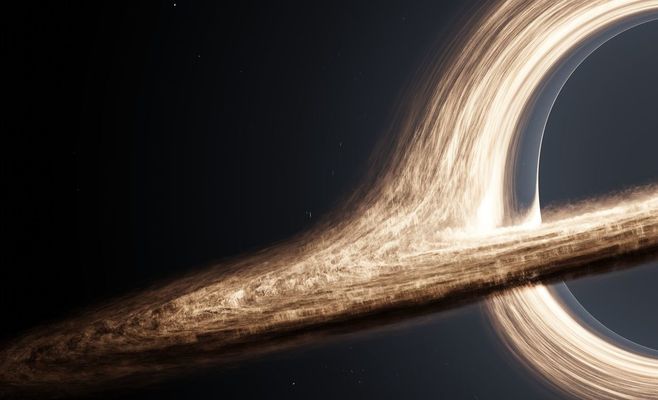
A Strange Gap in Black Hole Sizes Hints at Stars That Vanished Without Exploding
Some massive stars may end their lives without the blast scientists usually expect, collapsing straight into black holes instead. A new Caltech-led study of gravitational wave data finds a pattern in

Related news

Part of what astronomers have long called the Norma spiral arm of the Milky Way may not be a spiral arm at all, according to a new study in Nature Astronomy. The researchers say it could instead be a region where stars are forming along the
A faster and more precise satellite-tracking laser officially began operating on Oct. 12 at the Ny-Ålesund Geodetic Observatory in Svalbard, Norway, according to NASA. It is the first of NASA's next-generation satellite laser ranging system
A "Black Saturn" is a theoretical object: a round black hole circled by a ring-shaped black hole, with each keeping its own boundary. A new paper by theoretical physicist Jay Armas, submitted to the arXiv platform on Nov. 16, 2026, extends
A robotic submersible exploring the Mariana Trench has found the shattered debris of explosive volcanic eruptions on a trench wall about 20,000 feet below the surface, Popular Science reported. The researchers say it is the deepest evidence
Scientists exploring the deepest part of the ocean have found evidence of an explosive eruption where they did not expect any volcanic activity at all. According to Live Science, a robotic submersible spotted the deepest pyroclastic flow ev
Some massive stars may end their lives without the blast scientists usually expect, collapsing straight into black holes instead. A new Caltech-led study of gravitational wave data finds a pattern in black hole masses that fits that idea, a
Astronomers say the strange orbits of some icy objects far beyond Neptune could point to a hidden planet, and it would not be the long-sought Planet Nine. A new study proposes a second world, informally called Planet X2, according to Scienc
Black holes are known to collide and merge, but a new theoretical study suggests they might also break apart. Under extremely specific conditions, the researchers propose, a black hole could fragment into smaller ones, a bit like a pair of
Archaeologists in western Hungary have uncovered a hoard of more than 200 Celtic silver coins, each over 2,000 years old, according to Live Science. The cache is described as one of the largest found in the country in decades. The coins cam
Light that is supposed to push an interstellar spacecraft forward can start working against it, according to a new physics study. Once a laser-driven solar sail reaches about 75% of the speed of light, part of the scattered light produces d
Medicines you stopped taking years ago may still be shaping the bacteria in your gut. A large study from the University of Tartu Institute of Genomics found that many commonly prescribed drugs leave detectable changes in the gut microbiome
Why does the left side of your brain handle the right side of your body, and the other way around? Two neuroscientists at the University of Minnesota, Martin Wessendorf and Daniel Wang, have proposed a new evolutionary answer in the journal