NASA Unveils X-70 Fractal, a Crewed X-Plane Built to Carry 2,000 Pounds of Tests
USD 21,57
Popular
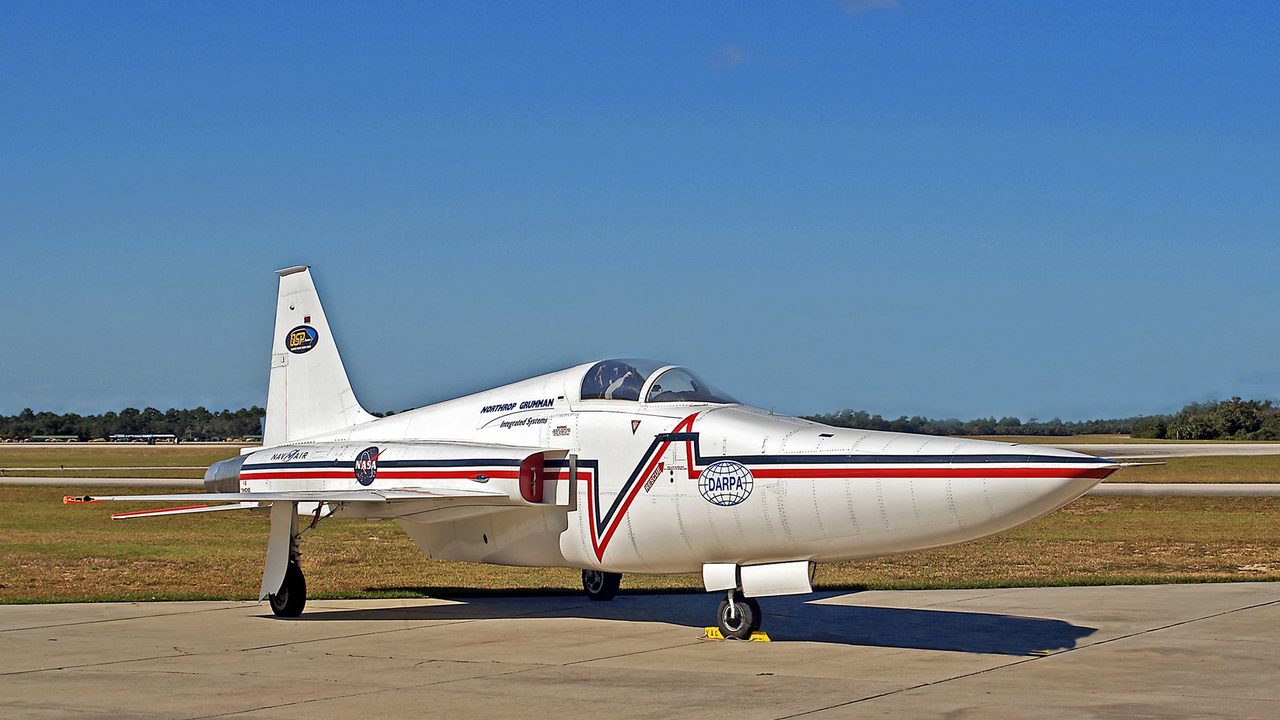
NASA has added a new experimental aircraft to its fleet of research planes. The agency unveiled the X-70 Fractal on Wednesday at the UP.Summit at Kennedy Space Center in Florida, describing it as a crewed, high-performance platform for testing advanced aviation technology in real flight.
According to NASA, the aircraft uses flight-control technology that can be quickly reconfigured, which the agency says will let it explore how aircraft maneuver in ways not yet shown in crewed flight. NASA Administrator Jared Isaacman said he expects its first flight under the NASA banner within the next two years.
The X-70 Fractal by the numbers
- 2,000 pounds: the amount of experimental payload the aircraft can carry, NASA said. Payloads can go in internal and external locations, which is meant to allow a wide range of tests.
- 10,000 pounds: the aircraft's takeoff weight, according to the agency.
- Mach .75: the planned cruise speed.
- 45,000 feet: the maximum altitude the aircraft is designed to reach.
- 1,726 miles: the operational range NASA says the plane exceeds, roughly. The agency also gave the figure as 1,500 nautical miles.
- Two years: the window in which Isaacman said the X-70's first flight under NASA's banner is expected.
What the aircraft is designed to do
The X-70 is a flying test bed, not a passenger or military design. NASA says its purpose is to speed up the development and testing of new aviation technologies. Its two main selling points, according to the agency, are the reconfigurable flight controls and a modular layout that lets teams swap payloads in and out.
Isaacman said that modular design should keep NASA teams "flying, learning, and moving quickly" from one experiment to the next. He also said the X-70 is only one part of what he called a new beginning for aeronautics at the agency. NASA did not describe the other parts in its announcement.
Laurie Grindle, director of the Aeronautics Division within NASA's Research and Technology Mission Directorate, said NASA Aeronautics has used X-planes for decades to develop technologies that advance aviation. She said the agency is pleased to bring on another one to accelerate and drive its research.
Where it fits in NASA's X-plane history
NASA placed the X-70 in a long line of experimental aircraft. It pointed to the Bell X-1, which first broke the sound barrier in 1947, and the X-15 hypersonic research aircraft. It also cited the X-59 quiet supersonic demonstrator, which it listed as a current X-plane.
The agency said the new aircraft will expand its capacity to conduct experimental flight research and speed up testing of emerging technologies. In his remarks, Isaacman described the work in simple terms: people come to NASA "to build, to learn, and most importantly, to fly."
Why it matters for aviation research
For most readers, the X-70 will not change anything day to day. Its significance is as a tool. Aircraft like it let engineers try out new flight-control approaches and other technologies in actual flight rather than only in simulations or on the ground, which is how NASA describes the aircraft's role. Over time, technologies proven on X-planes can feed into the wider aviation industry, as NASA says earlier X-planes have done.
The ability to carry up to 2,000 pounds of experiments, inside or outside the airframe, means one aircraft could serve many different research projects without being rebuilt each time. NASA has not said which technologies the X-70 will test first, and it has not disclosed the aircraft's cost or who built it.
What happens next
The next milestone is the first flight. Isaacman said NASA expects it within the next two years, but the agency has not given a specific date. NASA has also not announced which experiments will fly first or where the flights will be based.
Around Prague, based on reporting by NASA