Science & Space By

NASA Plans Faster, Cheaper Picks for Space Science Missions: What Changes

NASA is overhauling how it chooses and develops its science missions, with the stated aims of cutting costs, simplifying competition and getting spacecraft into space faster, Space.com reported. The new approach is called Competition Model 2.0, or CM 2.0.

Nicky Fox, associate administrator of NASA’s Science Mission Directorate, announced it on Oct. 21 in an open letter to the science community. According to Space.com, the changes were directed by NASA Administrator Jared Isaacman.

What is wrong with the current process?

NASA now picks many science missions through competitions known as Announcements of Opportunity, in which scientists and research institutions submit proposals. Under the current two-step process, teams must include thorough engineering and financial details before NASA chooses finalists for further study.

That process can take almost three years, Space.com reported, and it demands heavy investments of time and money from teams that may never be selected. In her letter, Fox said the burden of bringing forward good ideas has been too heavy for too long.

What does CM 2.0 change?

The new process puts scientific merit ahead of detailed engineering and financial planning in the first round. Teams can put off much of that work until later. Initial proposals will focus on a mission’s scientific goals and a preliminary plan for reaching them.

The changes vary by mission class. Discovery planetary missions, New Frontiers spacecraft and Astro-Probes, a program for mid-sized astronomy missions, keep a streamlined two-step process with nearly half of the material required for first proposals. Fox wrote that the original 35-months timeline would fall to about 19.5 months, with a stronger, more mature mission at the time of selection.

Medium-class Explorer and Earth Explorer missions will open to a wider range of applicants, including universities and commercial organizations, with similar changes to their two-step process. NASA plans to judge prospective developers on their track records with projects of similar size, cost and complexity. Teams led by a principal investigator can ask for help from NASA’s Goddard Space Flight Center or Jet Propulsion Laboratory during the first stage.

Flagship missions, the large and expensive ones such as the James Webb Space Telescope, will keep following their current procedures, which were recently revised using lessons from a study of how that telescope was developed.

Which missions get the biggest shake-up?

The smallest, lowest-cost programs will move to a single-stage selection with no second round of competing proposals. These include Small Explorer and Earth Venture missions, which cover astronomy, heliophysics and targeted studies of Earth and its climate. Missions of Opportunity, which let researchers add experiments to other missions, along with hosted payloads and rideshares, fall under the same one-step approach.

NASA expects final selection for these programs to drop from approximately 32 months to 19. “This means more missions, more often, with more incredible science at a lower cost,” Fox wrote.

What does this mean for the people and centers involved?

The reforms place more emphasis on Goddard and JPL in developing science missions. NASA hopes that involving the centers more directly will reduce competition between them while keeping the agency’s expertise.

The changes also bring tighter oversight. NASA is insisting on rigorous cost and schedule control across its mission classes, and Fox wrote that breaches of control thresholds will carry real consequences. Space.com reported that those could include canceling missions that miss expectations.

The agency hopes the longer-term result will be lower financial and technical burdens on competing research teams and faster progress from idea to orbit.

What happens next?

Fox and other senior NASA science officials were scheduled to give an overview of the reforms at a virtual town hall on Oct. 26 at 2 p.m. EDT, with a livestream and a chance for the public to submit questions, according to Space.com.

Around Prague, based on reporting by Space.com

Share: Telegram WhatsApp

More science news

Man Sees His Cat's Face on Strangers After Brain Surgery, Study Reports
A 28-year-old man from the northeastern United States has spent two years seeing his pet cat's features in the faces of people he meets, according to ScienceAlert, which covered a case report in the j
Giant Planet Vanishes From View as an Unseen Neighbor Tilts Its Orbit
A gas giant about 1,000 light-years from Earth has slipped out of sight while astronomers were watching it. According to EarthSky, the planet, TOI-2535 b, did not really go anywhere: the gravity of an
Blaze Star Nova Could Flash Brighter Than Polaris, Then Fade in Days
Astronomers say a star system nicknamed the Blaze Star is very likely to erupt soon, but none can say exactly when. According to Space.com, skywatchers have waited about two years for the nova, and wh
Uranus and Neptune’s Magnetic Poles May Swing Tens of Degrees in Decades
Scientists may have an explanation for one of the oddest features of Uranus and Neptune: their lopsided magnetic fields. According to ScienceDaily, new computer simulations suggest that the way the pl
Comet Brightened Thousands of Times as Gas Blasted Off Its Crust
A faint, little-noticed comet flared up twice this summer, and researchers now say they know why. According to Space.com, sunlight warmed ice below the surface of comet 220P/McNaught, the ice turned t
Voyager 1 Hits 16.09 Billion Miles, a Full Light-Day From Earth
NASA's Voyager 1 probe will reach a distance of 16.09 billion miles (25.89 billion kilometers) from Earth on Wednesday, Nov. 18, according to Live Science. At that range, light takes 24 hours to cross

Related news

A 28-year-old man from the northeastern United States has spent two years seeing his pet cat's features in the faces of people he meets, according to ScienceAlert, which covered a case report in the journal Cortex. The episodes began after
A gas giant about 1,000 light-years from Earth has slipped out of sight while astronomers were watching it. According to EarthSky, the planet, TOI-2535 b, did not really go anywhere: the gravity of another, unseen planet has tilted its orbi
Astronomers say a star system nicknamed the Blaze Star is very likely to erupt soon, but none can say exactly when. According to Space.com, skywatchers have waited about two years for the nova, and when it comes it will make a faint, normal
Scientists may have an explanation for one of the oddest features of Uranus and Neptune: their lopsided magnetic fields. According to ScienceDaily, new computer simulations suggest that the way the planets’ deep interiors conduct electricit
A faint, little-noticed comet flared up twice this summer, and researchers now say they know why. According to Space.com, sunlight warmed ice below the surface of comet 220P/McNaught, the ice turned to gas, and the escaping gas tore through
NASA's Voyager 1 probe will reach a distance of 16.09 billion miles (25.89 billion kilometers) from Earth on Wednesday, Nov. 18, according to Live Science. At that range, light takes 24 hours to cross the gap, making the spacecraft the most
Dinosaurs that lived along ancient coastlines may have supplemented their diets with seaweed and other food from the ocean, according to a new study reported by ScienceDaily on Nov. 14. The evidence comes from the chemistry of fossilized te
The European Space Agency's Euclid space telescope has found 31 very ancient quasars, among them two that are now the earliest ever observed, according to ScienceDaily, which republished the agency's announcement. Powered by supermassive bl
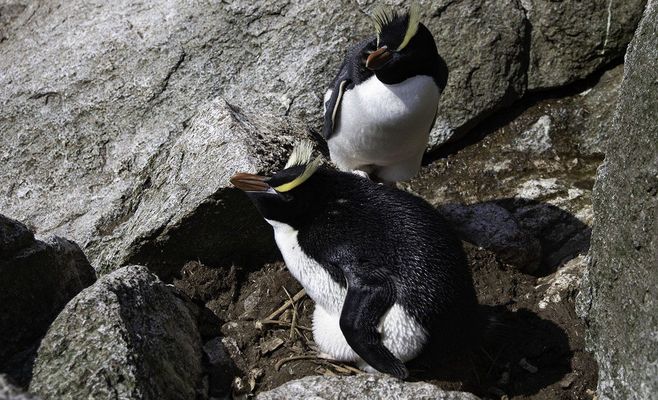
One of New Zealand's least understood penguin species is doing well in one place and badly in another, according to a University of Otago study published in PLOS ONE. Erect-crested penguins breed on only two remote island groups, and a dron
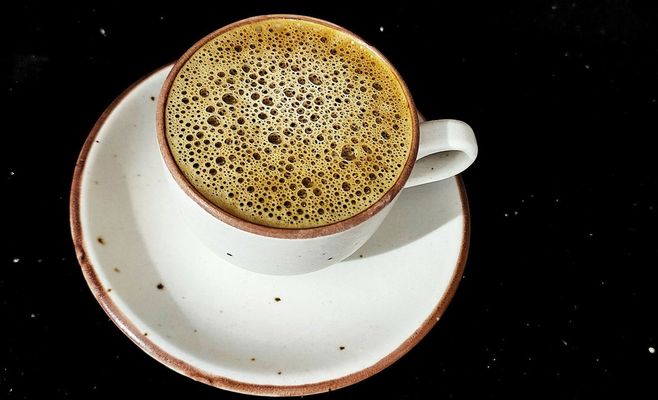
Coffee may do more inside the body than wake you up and get your bowels moving. A small new study in the journal Gut Microbiology links regular coffee drinking to differences in gut physiology and in the bacteria found in stool, according t
Some skeletons found at medieval monasteries in Denmark appear to be older than the monasteries themselves, and researchers now say a diet heavy in freshwater fish is the likely reason. According to ScienceAlert, scientists from the Univers
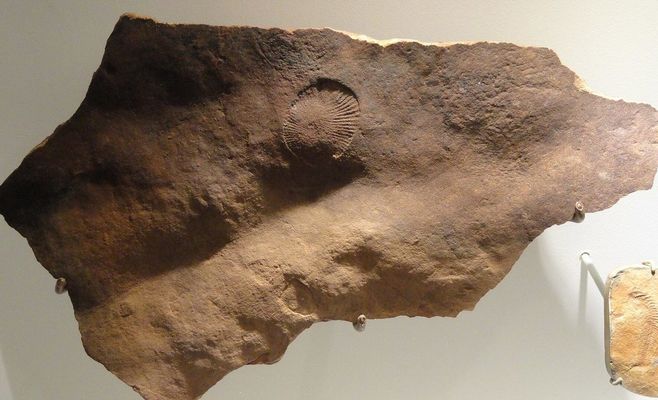
Huge canyons cut into the seafloor more than half a billion years ago may be the reason scientists can study some of Earth's earliest animals at all, according to a new study of rock formations in South Australia. ScienceAlert reported that