Science & Space By

Physicist Builds a Black Hole From Logic Gates, and It Leaks
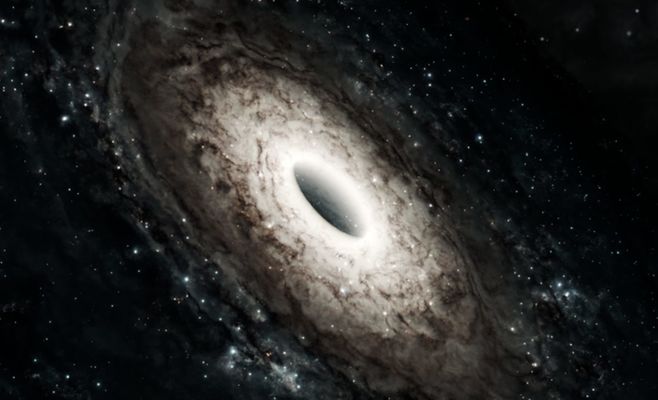
A physicist in Japan has built an analog black hole out of digital logic, and it behaved in a way a real black hole is not expected to. When he changed a single bit inside its horizon, a small part of the resulting disturbance got out, according to ScienceAlert.

The work comes from Antonino Flachi of Keio University and is described in a preprint on arXiv. It has not yet been peer-reviewed. The result does not mean real black holes leak. It does suggest that the behavior of such lab models depends on the physics of the system they are built in.

How do you build a black hole out of bits?

Real black holes are hard to study because they absorb light and let nothing detectable escape from inside their event horizons, which makes them invisible to telescopes that rely on the electromagnetic spectrum. Physicists therefore build laboratory systems that follow the same mathematics.

One approach uses sound. Sound waves in a moving fluid can act much like light moving through curved spacetime. If the fluid flows inward faster than sound can travel outward, the waves get trapped. Physicists call the result an acoustic black hole.

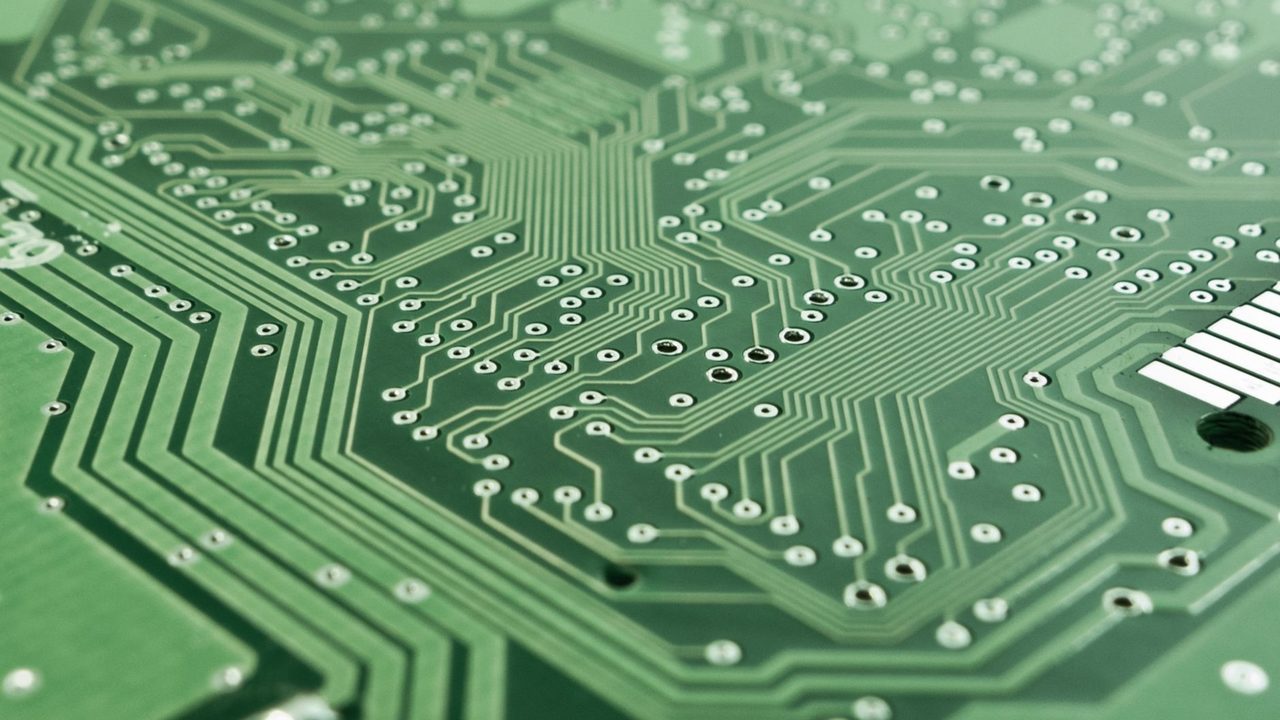
Flachi replaced speakers, fluids and currents with a digital circuit. He calls it a digital acoustic black hole. It is a grid of cells, each holding a string of bits, and the grid stored around 604 million bits in total. At every tick of a clock, logic gates update each cell using rules drawn from fluid dynamics, which creates the digital equivalent of water flowing toward a drain.

The same rules govern how disturbances move across the grid. Where the simulated flow carries them inward as fast as they can spread outward, an acoustic event horizon forms. In the preprint, Flachi describes the horizon as a property of the circuit's state rather than its wiring.

What did the tests show?

Flachi measured five properties of the simulated black hole: the stability of the horizon, the horizon itself, how disturbances propagate, how the system rings down after being disturbed, and superradiance, in which waves gain energy from a rotating black hole.

According to ScienceAlert, the horizon stayed stable for 3 hours, and the circuit showed both ringdown and superradiance in line with mathematical predictions.

Then Flachi flipped one of the 604 million bits inside the horizon. That created an acoustic disturbance. Most of it stayed behind the boundary, as expected. A small fraction escaped, carried by short-wavelength waves that could travel faster than the effective speed of sound in the circuit.

In other words, the horizon held against longer waves but was not fully sealed against shorter ones. The deeper inside the horizon the bit was flipped, the less of the disturbance got out, and the leakage fell off exponentially with distance from the boundary.

Why it matters for physics

The finding does not say anything about the event horizons of actual black holes. Its value is as a lesson about analogs: how a horizon behaves is not necessarily universal and can depend on the underlying physics of the system in which it emerges.

The digital design also has a practical appeal. A physical fluid can be unpredictable and hard to control, while the rules of the digital version are exactly defined. Experiments can be repeated under identical conditions, down to individual bits.

That makes the system a new tool for probing black hole horizons. Researchers could use it to explore which properties hold regardless of the underlying rules and which change when those rules are altered, as ScienceAlert described it.

What to keep in mind

The study is a preprint, so other physicists have not yet reviewed its methods or conclusions. It describes a simulation built from logic gates rather than observations of anything in space, and the leak it reports belongs to that digital system.

Around Prague, based on reporting by ScienceAlert

Share: Telegram WhatsApp

More science news

Scientists Hunting a Shipwreck Found a Seafloor Littered With Washing Machines
A NOAA expedition in the Gulf of Mexico went looking for a shipwreck and found a seafloor strewn with refrigerators, freezers and washing machines, ScienceAlert reported. The cargo, lost from a shippi
Giant Early Black Holes Leave Astronomers Unsure What Came First
Astronomers have long assumed that galaxies formed first and their central black holes grew later. Observations from the James Webb Space Telescope (JWST) are shaking that assumption, Live Science rep
Drones Swooping Through Whale Blows Let Scientists Read a Whole Whale Genome
Scientists have sequenced the entire genome of a whale using snot collected from its breath by small commercial drones, according to NPR. The team says it is the first time a whole whale genome has be
Lucy’s Relatives May Belong in Our Genus, a New Proposal Argues
A researcher in Australia is proposing a sweeping change to how scientists label our ancient relatives: put nearly all of them in the same genus as modern humans. According to ScienceDaily, which summ
A Roman Coffin at Westminster Abbey May Have Held a Saxon Abbot
A puzzle that has lingered for more than 150 years at Westminster Abbey may be close to an answer. According to ScienceDaily, new research suggests the skeleton found inside a Roman stone coffin at th
Do Vital Genes Mutate Less? Huge Bacteria and Yeast Study Says No
An idea about evolution that has circulated for more than 50 years may rest on a measurement illusion. Researchers at the University of Bath analyzed what they describe as the largest collection of sp

Related news

A NOAA expedition in the Gulf of Mexico went looking for a shipwreck and found a seafloor strewn with refrigerators, freezers and washing machines, ScienceAlert reported. The cargo, lost from a shipping container that never reached its dest
Astronomers have long assumed that galaxies formed first and their central black holes grew later. Observations from the James Webb Space Telescope (JWST) are shaking that assumption, Live Science reported, and researchers it spoke with say
Scientists have sequenced the entire genome of a whale using snot collected from its breath by small commercial drones, according to NPR. The team says it is the first time a whole whale genome has been produced from this kind of sample. Th
A researcher in Australia is proposing a sweeping change to how scientists label our ancient relatives: put nearly all of them in the same genus as modern humans. According to ScienceDaily, which summarized the work from Monash University,
A puzzle that has lingered for more than 150 years at Westminster Abbey may be close to an answer. According to ScienceDaily, new research suggests the skeleton found inside a Roman stone coffin at the abbey was a medieval abbot, not the Ro
An idea about evolution that has circulated for more than 50 years may rest on a measurement illusion. Researchers at the University of Bath analyzed what they describe as the largest collection of spontaneous genetic mutations assembled to
Winter brings long nights and a crowded sky. From December through February, stargazers can see three supermoons in a row, one of the year’s brightest meteor showers, Jupiter and Mars at their closest, and a view of Saturn that is slowly im
Children who spent more time on screens between about age 8 and age 16 tended to do better on thinking tests as teenagers, according to a Finnish study reported by ScienceAlert. The finding runs against a common assumption that screens simp
The Pleiades star cluster, also called the Seven Sisters or Messier 45, can be seen from almost every part of the globe, according to EarthSky. It appears as a tiny, misty dipper of stars, and November is the month when it shines from dusk
A team of physicists says today’s best atomic clocks could be used to look for a strange quantum effect: a single clock experiencing more than one rate of time at the same moment. ScienceDaily, citing materials from Kyushu University,
A previously unknown camel with long, curved fangs once roamed the Great Plains of North America, and its bones have been sitting in museum collections for about a century. ScienceAlert reported that paleontologists have now named it Vampyr
For the first time, astronomers have watched two stars merge as it happened, according to Live Science. The pair, a supergiant and a star slightly smaller than the sun, orbited each other for thousands of years and then came together in jus