Science & Space By

Radar Satellite That Sees Through Clouds and Night Set to Launch on Electron Rocket
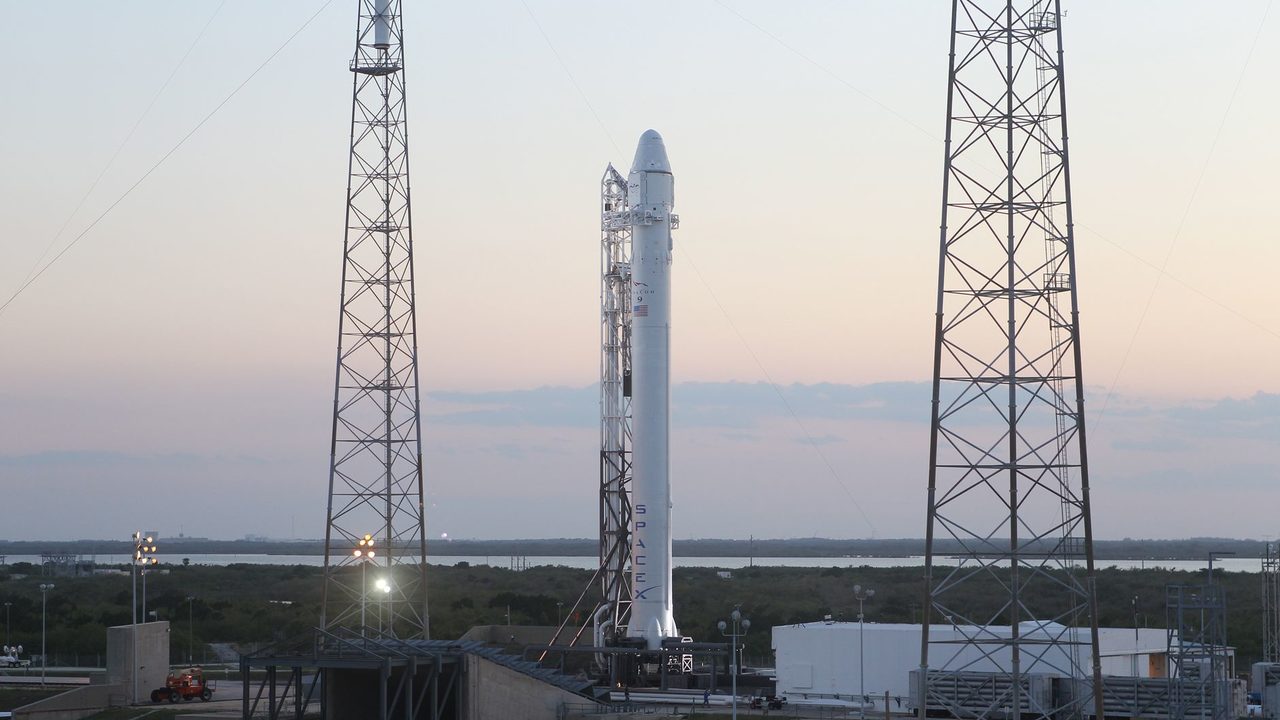
Rocket Lab is scheduled to launch an Earth-observing radar satellite for the Japanese company iQPS on Nov. 2, according to Space.com. The mission would be the company's 99th launch overall, and the launch can be watched live online.

The satellite is meant to see the ground through cloud cover and in the dark, which is the main reason radar spacecraft are valued as a complement to cameras that work in visible light.

When and where the launch is planned

An Electron rocket is set to lift off from Rocket Lab's launch site in New Zealand. The launch window opens at 11:30 a.m. EST on Nov. 2, which is 1630 GMT and 5:30 a.m. on Nov. 3 local time in New Zealand, Space.com reported.

Rocket Lab calls the mission “The Sea God Surveys.” Space.com said viewers can follow the launch through Rocket Lab's own broadcast, which is expected to begin about 30 minutes before liftoff. Space.com plans to carry the company's feed if it is made available.

What the satellite does

The payload is a synthetic aperture radar satellite, usually shortened to SAR. Instead of recording sunlight reflected from the ground, as an optical camera does, a radar satellite sends out its own signal and builds a picture from what comes back.

According to Space.com, that gives SAR satellites advantages over those that view Earth in optical wavelengths. They can look through clouds, and they can study the planet at night as well as during the day.

The satellite belongs to iQPS, which is assembling a constellation of three dozen SAR satellites in low Earth orbit. This will be Rocket Lab's 10th launch for the company.

About the Electron rocket

Space.com described Electron as a two-stage rocket that stands 59 feet (18 meters) tall and gives small satellites dedicated rides to space. The flight would be the 90th for Electron, which has already flown 16 times this year, the outlet said.

Rocket Lab's other nine launches to date used HASTE, a suborbital version of Electron. HASTE, short for Hypersonic Accelerator Suborbital Test Electron, lets customers test their technology in the hypersonic flight environment. It debuted in June 2023 and generally flies classified payloads, according to Space.com.

What it means for readers

For most people the effect of a mission like this is indirect. Radar satellites can keep imaging when weather or darkness would block an optical view, and iQPS is assembling a constellation of three dozen such satellites in low Earth orbit.

The launch also shows the pace of a company that now counts 16 Electron flights so far this year, and it is its 10th launch for iQPS. As is usual with rocket launches, the timing is a plan and not a guarantee, so the schedule could change before liftoff.

What to watch for

The next confirmed step is the liftoff attempt inside the window that opens at 11:30 a.m. EST. Rocket Lab's webcast is expected to start roughly half an hour earlier for anyone who wants to follow along.

Around Prague, based on reporting by Space.com
Share: Telegram WhatsApp

More science news

Falcon 9 Booster Flies for the 14th Time to Launch Secret Spy Satellites
SpaceX launched a batch of classified satellites for the National Reconnaissance Office on Sunday, Nov. 22, on a mission called NROL-136, Space.com reported. A Falcon 9 rocket lifted off from Launch C
Physicist Builds a Black Hole From Logic Gates, and It Leaks
A physicist in Japan has built an analog black hole out of digital logic, and it behaved in a way a real black hole is not expected to. When he changed a single bit inside its horizon, a small part of
Scientists Hunting a Shipwreck Found a Seafloor Littered With Washing Machines
A NOAA expedition in the Gulf of Mexico went looking for a shipwreck and found a seafloor strewn with refrigerators, freezers and washing machines, ScienceAlert reported. The cargo, lost from a shippi
Giant Early Black Holes Leave Astronomers Unsure What Came First
Astronomers have long assumed that galaxies formed first and their central black holes grew later. Observations from the James Webb Space Telescope (JWST) are shaking that assumption, Live Science rep
Drones Swooping Through Whale Blows Let Scientists Read a Whole Whale Genome
Scientists have sequenced the entire genome of a whale using snot collected from its breath by small commercial drones, according to NPR. The team says it is the first time a whole whale genome has be
Lucy’s Relatives May Belong in Our Genus, a New Proposal Argues
A researcher in Australia is proposing a sweeping change to how scientists label our ancient relatives: put nearly all of them in the same genus as modern humans. According to ScienceDaily, which summ

Related news

SpaceX launched a batch of classified satellites for the National Reconnaissance Office on Sunday, Nov. 22, on a mission called NROL-136, Space.com reported. A Falcon 9 rocket lifted off from Launch Complex-4E at Vandenberg Space Force Base
A physicist in Japan has built an analog black hole out of digital logic, and it behaved in a way a real black hole is not expected to. When he changed a single bit inside its horizon, a small part of the resulting disturbance got out, acco
A NOAA expedition in the Gulf of Mexico went looking for a shipwreck and found a seafloor strewn with refrigerators, freezers and washing machines, ScienceAlert reported. The cargo, lost from a shipping container that never reached its dest
Astronomers have long assumed that galaxies formed first and their central black holes grew later. Observations from the James Webb Space Telescope (JWST) are shaking that assumption, Live Science reported, and researchers it spoke with say
Scientists have sequenced the entire genome of a whale using snot collected from its breath by small commercial drones, according to NPR. The team says it is the first time a whole whale genome has been produced from this kind of sample. Th
A researcher in Australia is proposing a sweeping change to how scientists label our ancient relatives: put nearly all of them in the same genus as modern humans. According to ScienceDaily, which summarized the work from Monash University,
A puzzle that has lingered for more than 150 years at Westminster Abbey may be close to an answer. According to ScienceDaily, new research suggests the skeleton found inside a Roman stone coffin at the abbey was a medieval abbot, not the Ro
An idea about evolution that has circulated for more than 50 years may rest on a measurement illusion. Researchers at the University of Bath analyzed what they describe as the largest collection of spontaneous genetic mutations assembled to
Winter brings long nights and a crowded sky. From December through February, stargazers can see three supermoons in a row, one of the year’s brightest meteor showers, Jupiter and Mars at their closest, and a view of Saturn that is slowly im
Children who spent more time on screens between about age 8 and age 16 tended to do better on thinking tests as teenagers, according to a Finnish study reported by ScienceAlert. The finding runs against a common assumption that screens simp
The Pleiades star cluster, also called the Seven Sisters or Messier 45, can be seen from almost every part of the globe, according to EarthSky. It appears as a tiny, misty dipper of stars, and November is the month when it shines from dusk
A team of physicists says today’s best atomic clocks could be used to look for a strange quantum effect: a single clock experiencing more than one rate of time at the same moment. ScienceDaily, citing materials from Kyushu University,