Uranus and Neptune’s Magnetic Poles May Swing Tens of Degrees in Decades
USD 22,10
Popular
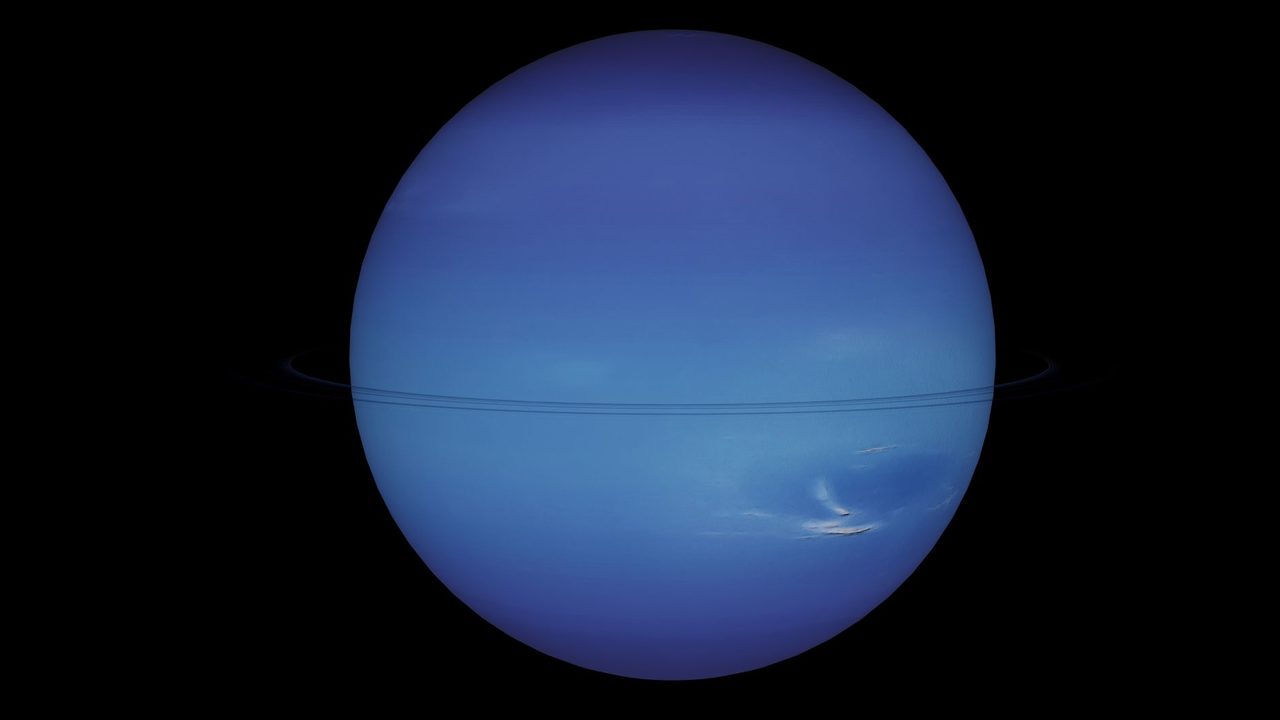
Scientists may have an explanation for one of the oddest features of Uranus and Neptune: their lopsided magnetic fields. According to ScienceDaily, new computer simulations suggest that the way the planets’ deep interiors conduct electricity could account for the tilt, and could also mean the magnetic poles move far faster than Earth’s.
The findings are predictions from models, not observations. The work was published in Communications Physics and led by researchers at The University of Texas at Austin, with colleagues at the University of California, Los Angeles, Imperial College London and Northumbria University.
What is strange about the magnetic fields of Uranus and Neptune?
NASA’s Voyager 2 spacecraft flew past both planets in the 1980s and found fields that look nothing like Earth’s. Earth has a fairly tidy field with clear north and south poles, and its main magnetic axis is tilted by only 11 degrees from the planet’s spin axis.
Uranus is far more skewed, with a magnetic dipole tilted by 59 degrees. Neptune’s is tilted by 47 degrees. Researchers have struggled for decades to say why.
How do planets make magnetic fields in the first place?
The process is called a dynamo. Deep inside a planet, moving fluid that can carry electric current generates magnetic forces. On Earth, this happens in the outer core, a layer of molten metal. Liquid iron circulates as the planet rotates, producing a field similar to that of a giant bar magnet.
What did the new study find?
Uranus and Neptune are known as ice giants, a label that reflects their presumed makeup rather than meaning they are frozen solid. Each is about four times wider than Earth. Scientists think the interiors hold large amounts of hydrogen, helium, water, ammonia, methane and rocky material, although the exact recipe is still uncertain.
Chi Yan, the study’s lead author and a research associate at the UT Jackson School of Geosciences, said pressures and temperatures deep inside the planets are extreme. Under those conditions water molecules can break apart into ions, charged particles that carry current, so the material may conduct electricity better and better with depth.
The team built simulations that tried to reproduce the fields Voyager 2 recorded. The models assumed conductivity rises deeper down, and the researchers tested a range of possible internal structures, looking at how circulating fluids, temperature changes and magnetic forces interact over time. The results suggest this changing conductivity could play a major part in producing the odd fields seen at both planets.
Could the magnetic poles really move that quickly?
That is the most surprising result. In some scenarios, the simulated magnetic tilt shifted by tens of degrees within only a few decades. Yan said Earth’s tilt drifts by only a degree or so over 50 years, while the ice giants in the models can swing sharply in some stretches and barely move in others.
If that is right, the magnetic fields of Uranus and Neptune today could differ substantially from what Voyager 2 measured. The researchers stress that this remains a model prediction, not a confirmed observation.
Why does it matter, and how could it be tested?
Magnetic fields shape how a planet interacts with charged particles from the Sun, so understanding them helps explain how distant worlds work. The finding also suggests that planetary magnetism can behave very differently from Earth’s, which is the only example most people know.
There may be a way to check. According to ScienceDaily, the team is examining detailed infrared images of Uranus and Neptune from the James Webb Space Telescope, focusing on the planets’ auroras. Auroras form when charged particles from the Sun interact with gases in an atmosphere, so they are closely tied to the magnetic field. Changes in how these glowing features look and are arranged could show whether the poles have moved since the Voyager 2 encounters.
For now, the idea rests on simulations. Whether the real planets behave this way will depend on whether those telescope observations match the models.
Read next
Physicists Say Gravity Could Break and Reconnect Like the Sun's Magnetic Fields
Earth's Magnetic Shield Takes Harder Hits on Its Winter Side, Simulations Show
Dust From Beyond Neptune Carries Water Unlike Anything on Earth
Around Prague, based on reporting by ScienceDaily