Brno traffic gridlock: tunnel closures force future mayor to walk
USD 21,79
Popular
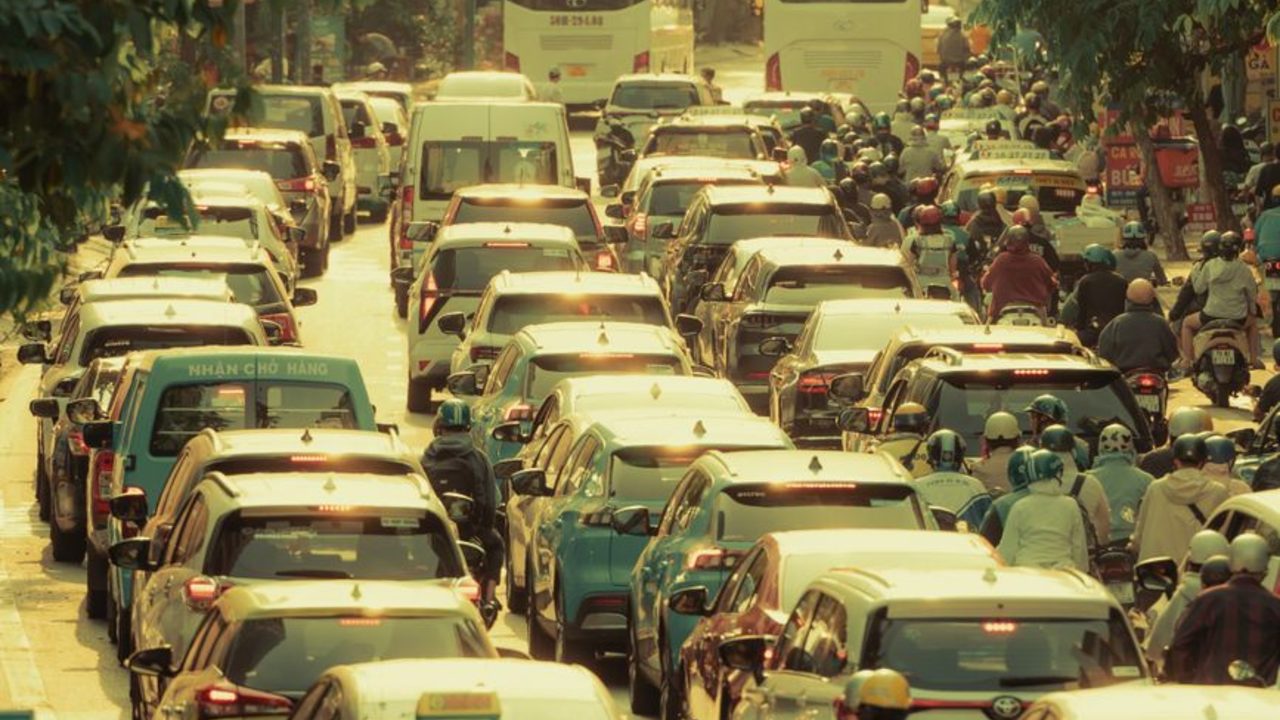
The 40-day closure of the Pisárky and Hlinky tunnels has paralysed traffic in Brno, especially in the south and west. On Tuesday morning even Brno’s likely next mayor, Jakub Hruška (KDU-ČSL), ran into transport trouble: he arrived half an hour late for post-election talks with potential coalition partners because he had to walk part of the way from Kohoutovice, where he is the district mayor.
“It is a complete catastrophe,” he said. “I myself had to walk along that ‘car park’ that stretched from Kohoutovice all the way down. Even trolleybuses no longer reached us, because they were all standing in that queue. This must never happen again. I am convinced that my colleagues and I will really not let it.”
Chaos on the second day of the closure
On just the second day of the closure, every road user is trying to adapt. Ambulances are using their flashing lights more often, and police have switched off some traffic lights and are directing traffic by hand. According to Hruška, the city should have prepared “more persistently”, but the Road and Motorway Directorate (ŘSD) also underestimated the situation. “I cannot imagine a universe in which someone decided to close such important arteries of Brno. That is definitely on ŘSD’s conscience,” he added.
Queues are forming on the main roads and on neighbouring streets, where drivers look for detours. Buses and trolleybuses are late too: some services on Monday arrived tens of minutes behind schedule.
Criticism on social media is aimed at both the city and ŘSD. “A person knows about the closure, leaves the car at home, takes public transport and is rewarded by getting stuck in the same traffic jam. Absurd,” designer Veronika Rut wrote on Facebook. In her view, the city should have prepared alternatives for passengers before the closure. “Before a planned closure of this scale, people should know months ahead where there will be extra services, where to leave the car before Brno and on which routes public transport will get priority. Dedicated lanes where possible, traffic-light adjustments and other measures for the specific location,” she said.
A member of the public Facebook group “Brňáci”, signing as Lili A., also criticised how ŘSD has communicated about the closure. She disliked the jokey tone of the open letter in which the road builders addressed the city with the words “Dear Brno, it’s not you, it’s us”. “When people sit in traffic for hours and everyday life in the city collapses, it looks not funny but like a complete mockery,” she wrote. She also criticised the words of the head of ŘSD’s Brno branch, David Fiala, who admitted in an interview that he is himself curious where people will drive.
Police direct traffic, ambulances drive with flashing lights
Police have also joined the effort to ease the traffic problems. At the busiest intersections they switched off the traffic lights and directed traffic by hand. According to South Moravian police spokesperson Pavel Švab, about 15 police officers took part, and Brno’s traffic patrols were reinforced by colleagues from other units.
They had to step in most often at the intersections of Poříčí–Herspická, Hlinky–Pisárecká and Poříčí–Nové Sady. “The situation was slightly calmer, so we could go out to the intersections more often,” Švab said. This allowed officers to briefly give priority to the less congested directions. If necessary, manual control will continue during the next rush hours.
South Moravian rescuers also have to respond to the traffic jams. On Monday the operations centre allowed some ambulances to return to their districts with their flashing lights on, even though they were not carrying patients and were not heading to a call. “So that ambulances do not crawl in traffic, we allowed them to return to their district with flashing lights,” said South Moravian rescue service spokesperson Michaela Botová.
According to her, the closure has not disrupted ambulance service overall: because of the jams, rescuers did not reach patients later than usual, and drivers in most cases managed to make way even in clogged streets. On Monday rescuers recorded 340 calls compared with the usual roughly 300 a day, but the spokesperson said this is unrelated to the closure: they have recorded similar figures since the summer.
“We expected complications”
Brno’s transport councillor Petr Kratochvíl (ODS) admits the situation is very unpleasant. The city, he said, expected complications and had warned about them for a long time. “This really is ŘSD’s investment,” he said, referring to the state road manager. The state road builders are responsible for repairing the tunnels, but they coordinate preparations and traffic restrictions with the city as well.
Kratochvíl names the need to close both tubes at the same time as the main problem. He said he tried to persuade ŘSD to find a different technological solution, but the road builders told the city that closing them separately was impossible. The city turned to the police for help, and they began directing traffic at congested intersections. There are no other measures yet, such as dedicated public transport lanes. “Where would you get through there? The only option is via Nový Lískovec, and there is simply nowhere to drive,” he said.
Why the tunnels were not closed in summer
In an interview, the head of ŘSD’s Brno branch, David Fiala, said he had initially preferred a summer date, when traffic is lighter. But many other repairs in Brno already fell into the holidays. Kratochvíl could not say whether the tunnel closure should have given way to them: “I cannot judge whether it was possible or impossible,” he noted, adding that the contract was awarded not by the city but by ŘSD.
The repairs had been postponed before. According to Fiala, the road builders wanted to start in 2023, but the city then had objections because of the overlap with the construction of the multifunctional arena. Kratochvíl rejected the idea that the city deliberately delayed the repairs because of the arena. He did not remember the exact circumstances and recalled that the city also did not want an overlap with works on the large city ring road in Žabovřesky.
What this means for foreigners
This affects everyone who travels in the south and west of Brno by car, bus or trolleybus, including foreigners. The Pisárky and Hlinky tunnels are closed for 40 days, and public transport is running tens of minutes late.
Read also: Brno: what to see and where to go
Source: seznamzpravy.cz