Silky Gang: Martina Karafiátová’s Prague silk scarf brand
USD 21,75
Popular
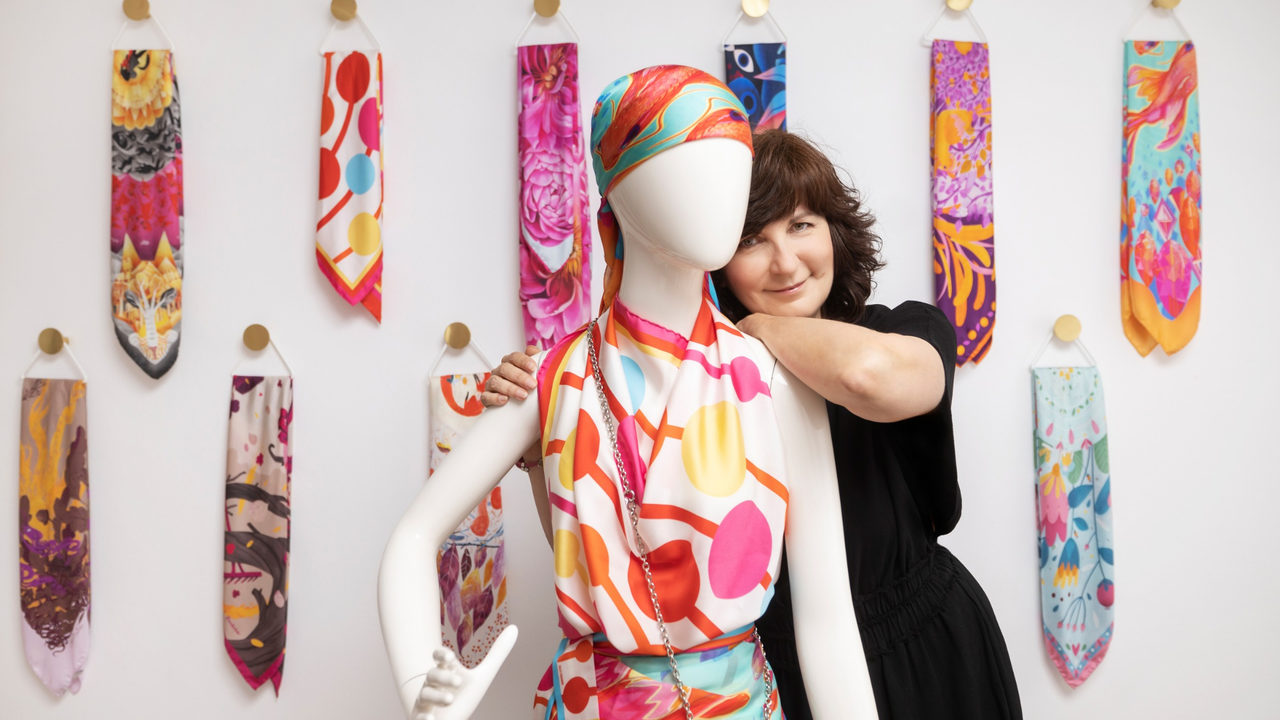
Martina Karafiátová founded Silky Gang after turning fifty, a brand that makes silk scarves with illustrations inspired by fairy tales and literary stories. Her new collection draws on the thousand-year-old Japanese novel about Prince Genji.
As a child, Martina would sneak up to her grandmother's dressing table, with its three-panel mirror and countless little drawers, and try on her jewelry. “I remember dressing up there, and I absolutely loved it,” she recalls. Decades later, she stands in her own showroom in Prague, inviting women to step up to the mirror and choose the scarf that suits them best.
In her youth, Martina dreamed of studying architecture, but the communist regime stood in the way: her father had been expelled from the party back in 1968. She graduated from a civil engineering faculty and for many years ran an architecture studio together with a colleague. Fashion was a hobby: she went to shows, photographed backstage, and got to know designers. She founded the brand when she was in her fifties and her children had grown up and left home. “You can start realizing your dreams at a later age, too,” she says with a smile.
Martina chose scarves deliberately, for their timelessness. Any clothing collection goes out of date within six months, whereas a scarf, as she puts it, is like a painting: square and illustrated, only it does not hang on a wall. Each design is created by a different Czech illustrator; for the new collection, Barbora Srp Žižková was invited.
A difficult start. The beginning was expensive and risky. For several weeks Martina searched for a manufacturer willing to print just a few pieces of silk, and eventually found one in England. The first scarves, featuring magic ravens, Otesánek and Smolíček, were paid for from the family's savings. The first advertising campaign starred friends and relatives: her younger son posed as Smolíček with borrowed deer antlers under his arm. “I told him Mum needs this, so you're doing it,” Martina recalls with a laugh.
Then came the first notable success: the brand appeared on four pages of a Czech fashion magazine, next to a Tiffany ad. More than five hundred people came to the Fashion Stars Night show, where Silky Gang took part. But three days later, a state of emergency was declared because of Covid, and shops and shows came to a halt. Instead of sewing face masks, as dozens of brands did, Martina began giving away coloring pages with the patterns of her scarves for free. Sales were modest, but a community of people who keep coming back to the website grew.
The showroom and the numbers. In 2023 she opened the Silky Gang showroom on Navrátilova street, with a corner display window, following Tomáš Baťa's recipe. The more prominent location in central Prague also attracted foreign customers, mostly from Asia and America. Revenue last year was around CZK 3.5 million, and it has been growing by roughly 10% a year since the showroom opened.
Asia inspired the new collection as well. Japan had been on the list of motifs since the brand's launch, and Martina first visited the country in 2023. That is how The Tale of Genji, a story of love intrigues and the fleeting beauty of life at the imperial court, became silk scarves.