Czech men "don't know how to date," and women grow disillusioned with relationships — new study finds

USD 21,81
Popular
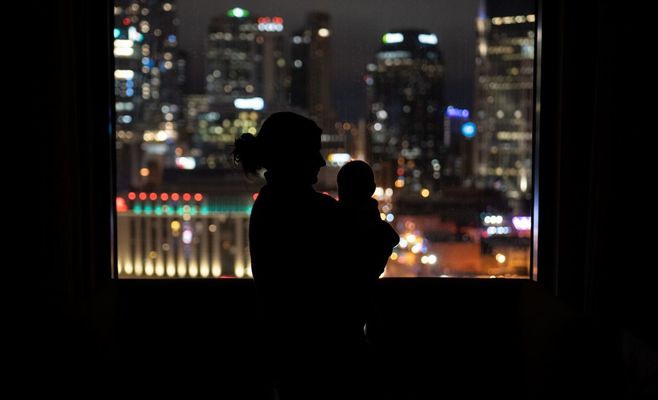
Around 20% of people in Czechia — across all age groups, from young adults to pensioners — are currently not in a relationship and don't even live with anyone, according to sociologist Martin Kreidl, coordinator of the "Modern Czech Family" study. He says the lack of a partner is now the main reason young Czechs aren't having children.
"We really are witnessing a mass retreat from partnership. And without partnership, there are no children," says Kreidl. He points out that around 90% of children in Czechia are born within stable relationships, but nowadays couples either aren't forming at all, or aren't seen as stable enough to have and raise children in.
Plans derailed by crises
According to the study, between 2022 and 2025, only a third of people who had originally planned to become parents within the next few years actually managed to have a child. Parenthood, the sociologist explains, usually sits alongside plans for career, finances and housing — and any external shock can knock it off that list entirely.
The COVID-19 pandemic offered a telling example. In early 2020–2021, the birth rate in Czechia even ticked up slightly, as couples treated lockdown as a chance to spend more time together. But a survey from late 2021 revealed a sharp reversal: while normally only 5–7% of people in a relationship consider splitting up, by December 2021 that figure had jumped to nearly 30%. Among the most vulnerable groups — women with low income and education — almost 40% were considering a breakup.
Men "don't know how to date"
One particular finding of the study concerns young men: many openly admit they don't know how to build relationships — they struggle to meet someone, keep up communication, or maintain a connection with a partner. This is the most common reason cited by single young men. Notably, half of men aged 30–39 admit to the same inability.
Women, according to the sociologist, follow a different path: they start out looking for a partner, then run into disappointment and painful experiences, and by their 30s and 40s many consciously stop searching for a relationship and feel quite comfortable being single. Men, by contrast, often don't look for a relationship at all in their youth — and later, once they start trying, it doesn't work out, leaving them single but unhappy about it.
Women frequently note in surveys that men in relationships behave like "just another child in the house" — expecting care, attention and intimacy while giving little in return. Rising mental health problems are also affecting partnerships and family planning: data from Scandinavia show that people taking psychotropic medication are significantly less likely to find a partner or build a life together.
What could help
Discussing state-level support measures for families, Kreidl stresses that the issue isn't just about accessible nurseries and kindergartens or the size of parental allowances. Affordable housing, financial and job stability, and attention to the mental and physical health of young people overall are all crucial.
The sociologist also highlights that nearly a quarter of women in the study reported that they had tried to conceive at least once in their lives but were unable to. In his view, people often put off having children "for later," waiting until every other piece of life falls into place — education, career, income, housing, relationships. But as experience shows, by the time everything finally does come together, it may already be too late to have a child.
Source: seznamzpravy.cz