Czechia's Minimum Wage to Rise by 2,500 Crowns — 180,000 Workers Set to Benefit
USD 21,74
Popular
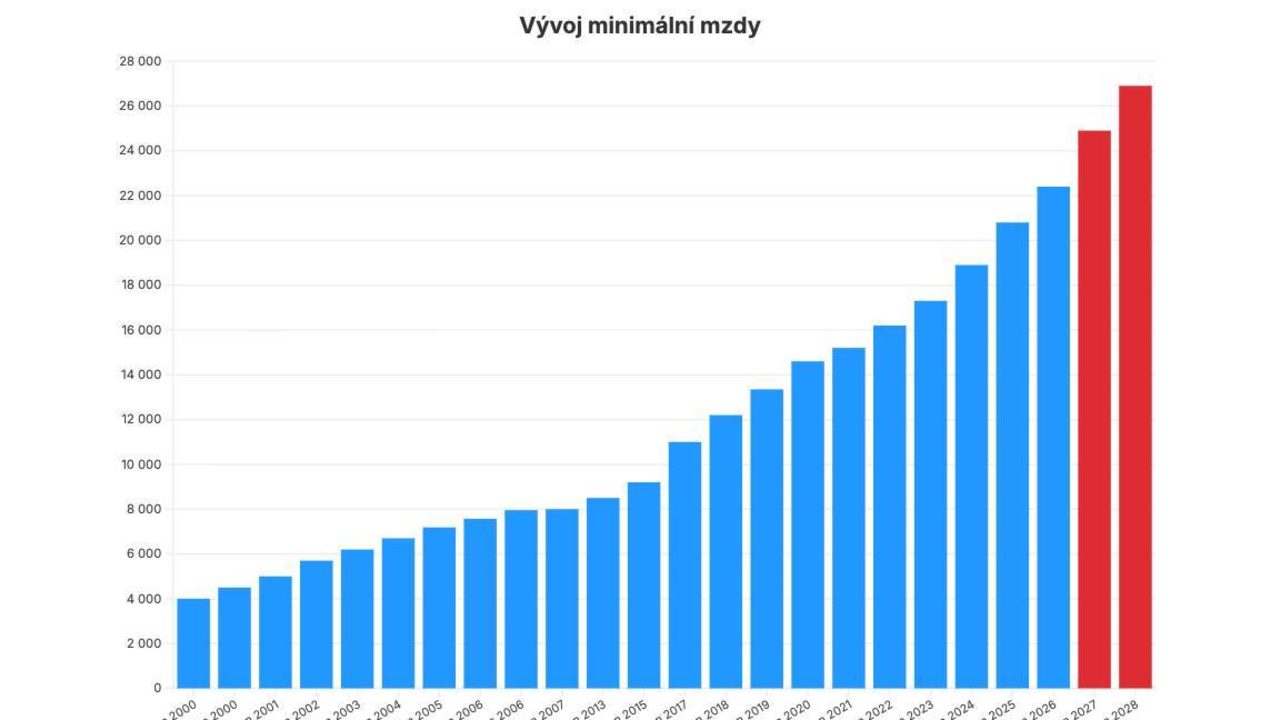
The Czech government has agreed to raise the minimum wage by 2,500 crowns. According to Labour and Social Affairs Minister Aleš Juchelka (ANO), the minimum wage is set to reach 45.8% of the national average salary by 2028, and rise further the following year to around 26,900 crowns — equal to 47% of the average wage.
This trajectory follows a pre-agreed automatic indexation mechanism backed by all parties to the negotiations — the government, trade unions and employers. The debate now centers on what happens to the minimum wage after 2029.
Unions Push for 50%
Trade unions are demanding that the ratio between the minimum and average wage be raised to 50%. "That's the threshold the European Union requires," said Josef Středula, head of the Czech-Moravian Confederation of Trade Unions. He argues the country's minimum wage remains too low.
Employers disagree. Jan Rafaj, president of the Confederation of Industry and Transport, pointed out that average wages in Czechia are already growing by 7–8% a year, and that the country has the lowest poverty rate among post-socialist nations. In his view, there's no need to increase the minimum wage's share relative to the average.
Who Will Be Affected
According to the Information System on Average Earnings (ISPV), 4.9% of all Czech employees — around 181,000 people — currently earn the minimum wage. These are mostly workers in the lowest-skilled jobs: cleaners, and staff in catering, retail and light manufacturing.
Experts also point to a knock-on effect: raising the minimum wage typically pushes up pay in other, slightly higher-paid professions too, triggering a chain reaction across the labour market.
Source: novinky.cz