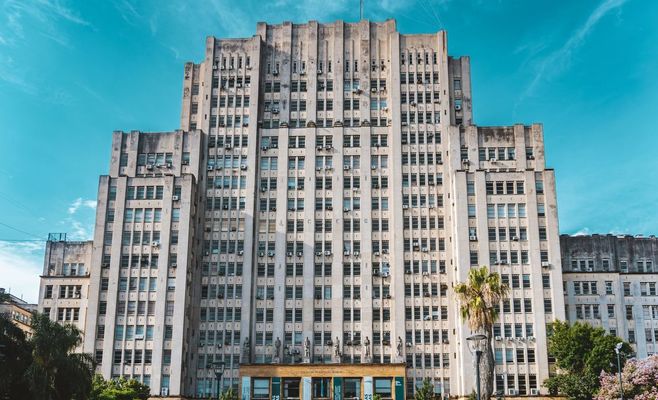
Official copied a company's letter word for word and closed a billion-crown pollution case
USD 21,75
Popular
On July 1, an official at the Czech Ministry of the Environment, Tomislav Střelec, closed the country's largest environmental case, clearing the Ostrava-based firm Rydera Bohemia of suspicion that it had illegally dumped hundreds of thousands of tonnes of construction waste at the Heřmanice heap in Ostrava. A comparison of documents showed that part of the ruling's text had been copied almost word for word from a letter submitted by the company itself.
The ruling spared Rydera Bohemia not only a fine, but far more serious consequences: had the firm been found guilty, it would, according to preliminary estimates, have had to remove all the material it had brought in — a job that could have cost roughly one billion crowns.
"Ctrl+C, Ctrl+V": matching phrases and matching mistakes
One of the key pieces of evidence against the firm consisted of photographs supplied by the state-owned company Diamo, whose staff had been monitoring the heap and documenting that unauthorized material was being dumped into the dividing wall. Official Střelec refused to accept the photos as evidence, arguing that most of them lacked a scale marker, making it impossible to even roughly estimate the volume of material brought in, and that for some of the images it was impossible to establish when or where they were taken, or whether they even showed the dividing wall at all.
Just days earlier, Rydera Bohemia itself had raised almost identical doubts about the photographs in a letter sent to the ministry — using nearly the same wording. Not only the phrasing matches, but so do identical punctuation errors, suggesting the official had, in effect, simply copied the firm's text via clipboard. In the two documents that could be compared, fully identical sentences turned up as well. In all, Střelec's 12-page ruling contained at least seven passages that repeat, almost verbatim or very closely, the Rydera Bohemia letter — including references to the same case law, identical introductory phrasing, and quotations from court rulings. The official's final conclusion — that none of the evidence proved the company's guilt "reliably and beyond any doubt" — likewise echoes, almost word for word, an earlier formulation used by Rydera Bohemia itself.
Asked why he had copied entire paragraphs from the suspect firm's own submissions into his ruling, Střelec, who heads the ministry's department of state administration enforcement, would only say: "Please contact our press secretary." He also declined to clarify whether this was his usual practice when drafting decisions.
The Heřmanice heap and the dividing wall
The case concerns the Heřmanice heap in Ostrava — a hundred-hectare cluster of spoil-tip "mountains" left over from coal mining. A fire has been smouldering inside the heap for years, and to stop it from spreading to a neighboring site containing highly toxic coking waste — which would trigger an environmental disaster — the state ordered the construction of a so-called dividing wall: in effect, a giant trench 440 metres long and 40 metres wide. Filling it with gravel and other safe materials was contracted to the Ostrava firm Rydera Bohemia, hired for the job by the state company Diamo, which manages the heap.
Three years ago, an inspection found chunks of concrete, wood, plastic and cables inside the pile. Since then, the Czech Environmental Inspectorate (ČIŽP) has been investigating whether Rydera Bohemia had brought hundreds of thousands of tonnes of construction waste into the dividing wall disguised as safe fill material. The firm has denied any wrongdoing from the outset.
How the case was taken away from the inspectorate
In April, the Ministry of the Environment — led since February by representatives of the Motoristé party — took the case away from ČIŽP, saying it would decide it itself, since the inspectorate had failed to untangle the complicated case even after years of work. The request to transfer the case came from Rydera Bohemia itself, which said the inspectorate had been acting to the firm's detriment: ignoring evidence in its favor, missing deadlines for issuing a final ruling, and failing to hold oral hearings with experts whose opinions confirmed that Rydera had brought only approved material, not waste, to the heap.
In June, the ministry also replaced the head of the inspectorate, installing Pavel Straka, a lawyer with no confirmed relevant experience who had run for office on the Motoristé party's ticket. The July decision to close the case coincided with firefighters preparing a key report for the inspectorate on whether the material in the dividing wall would actually hold back a potential fire from reaching the toxic-waste site. Inspectorate director Straka terminated the contracts with those experts, leaving the question of fire-spread risk unanswered. Industry Minister Karel Havlíček (ANO), whose ministry is responsible for the heap, later ordered that the study continue under his ministry's direction instead.
The ministry refuses to explain its actions
The ministry has still not officially published Střelec's ruling. A request for its release under the Freedom of Information Act was filed back in August. However, the ministry chose to process it not under that law but under the Nature Conservation Act, which allowed it to extend the deadline for a response — first to 30 days instead of the usual 15, and then by another 30 days, citing the "need to obtain the position of the bodies conducting criminal proceedings," without further explanation. Police had investigated the Heřmanice heap case since 2023 and closed it a year later, finding no criminal offense, passing the file on suspicion of an administrative violation to ČIŽP. The deadline for the ministry to release the document expires at the start of October.
Asked why the official had used the suspect firm's own submissions in this way, Ministry of the Environment spokeswoman Jana Šillerová said the ministry "will not provide any information given the allegedly ongoing court proceedings." She was unable to say, however, which court dispute exactly was meant, stating only: "I read somewhere yesterday that there's a criminal trial underway." The ministry declined to answer further questions.
Rydera Bohemia itself said that during the proceedings it had merely submitted its explanations and legal arguments to the ministry, as is standard practice in such cases. "How the ministry then drafted its decision, and which legal conclusions or arguments it included in it, is not and cannot be a matter for our company," said the firm's media relations representative, Eva Kijonková.
Read also: Prague metro: map and tickets
Source: seznamzpravy.cz