Voyager 1 Is About to Be a Full Light-Day From Earth, So Replies Take Two Days
USD 22,10
Popular
NASA's Voyager 1, already the most distant human-made object, reaches a new marker on Nov. 18: it will be one light-day from Earth, so far away that light needs 24 hours to cross the gap, according to Live Science. NASA says the spacecraft will hit the mark at 5:16:07 a.m. ET.
The milestone is symbolic. It does not change how NASA talks to the probe, but it makes every conversation slower, and the spacecraft's dwindling power supply is forcing the team to keep trimming what it does.
Voyager 1 by the numbers
- 24 hours: the time a radio signal takes to reach Voyager 1 once it is a light-day away. A reply needs another 24 hours to come back.
- Nearly 38,000 mph: the probe's speed, which Live Science gives as 61,000 km/h. Even so, it covers only a tiny part of the way to other stars.
- Just shy of 16 billion miles: its distance from Earth, about 26 billion kilometers, which is the distance light travels in a day.
- About 300 years: how long NASA says Voyager 1 still needs to reach the inner edge of the Oort Cloud, the shell of icy bodies around the solar system. Crossing it could take possibly 30,000 years.
- 1.7 light-years: how close the probe will pass to the dim star Gliese 445 in about 40,000 years. At that point it will be nearer to that star than to the sun.
- 4.24 light-years: the distance to Proxima Centauri, the nearest star system to our own, which is more than 1,500 times farther than Voyager 1 will be on Nov. 18.
Far out, but not out of the solar system
Voyager 1 left the heliosphere, the bubble of plasma the sun blows outward, in 2012. It is still inside the sun's gravitational reach, though, so scientifically it has barely left home.
Pascal Lee, a planetary scientist at the SETI Institute who worked on the Voyager 2 team at NASA's Jet Propulsion Laboratory during the 1989 Neptune flyby, told Live Science the distance still looks small on the scale of space. He described the spacecraft as a mote of dust that has only just drifted out of the solar system.
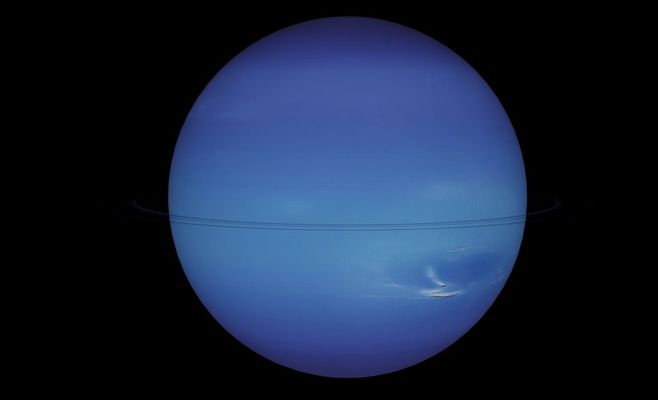
Voyager 2 took a different route after both probes launched in 1977, passing Uranus and Neptune after revisiting Jupiter and Saturn. It is in interstellar space about 13 billion miles from Earth, and NASA expects it to reach its own light-day mark in November 2035.
Why it matters: patience, power and a long legacy
NASA talks to Voyager 1 by radio, and radio travels at the speed of light. Suzanne Dodd, the Voyager project manager at JPL, said in a recent statement that sending a greeting means waiting two days for the answer. That delay will keep growing as the probe moves outward.
The bigger constraint is energy. Sunlight is too faint out there for solar panels, so Voyager 1 runs on nuclear batteries that turn heat from decaying plutonium into electricity. The supply is shrinking, and NASA has been switching off nonessential instruments to stretch the mission. Kelly Perry, a data systems engineer on the program at JPL, told Live Science the team's priority is still to keep the spacecraft going as long as possible.
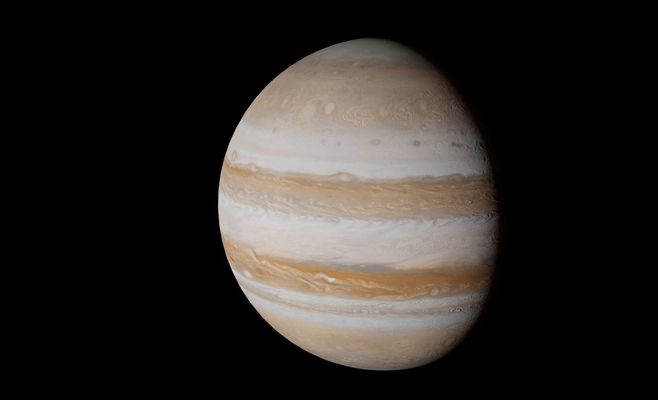
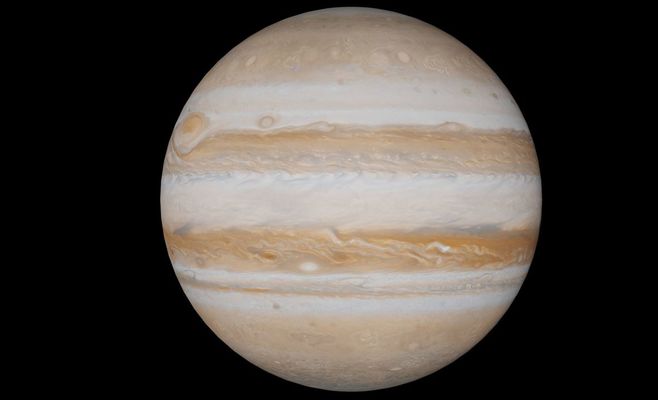
The payoff from the Voyagers extends well beyond distance records. According to Live Science, the pair used a planetary alignment that comes around only once every 176 years to slingshot past the giant planets. Together they found 23 moons in the outer solar system, revealed faint rings around Jupiter and captured the first detailed atmospheric profiles of Saturn, Uranus and Neptune. They also gave the first close-up views of Jupiter's moon Europa, now a leading candidate in the search for extraterrestrial life.
In 1979, Voyager 1 spotted active volcanoes on Jupiter's moon Io, the first time they had been seen on any world other than Earth. Lee said those worlds turned from unknowns into places that could be mapped. The findings helped set the stage for later missions, including NASA's Galileo mission to Jupiter and the Cassini mission to Saturn.
Lee said the probes are still out there, “moving into the unknown.”
Around Prague, based on reporting by Live Science