Science & Space By

Giant Planet Vanishes From View as an Unseen Neighbor Tilts Its Orbit
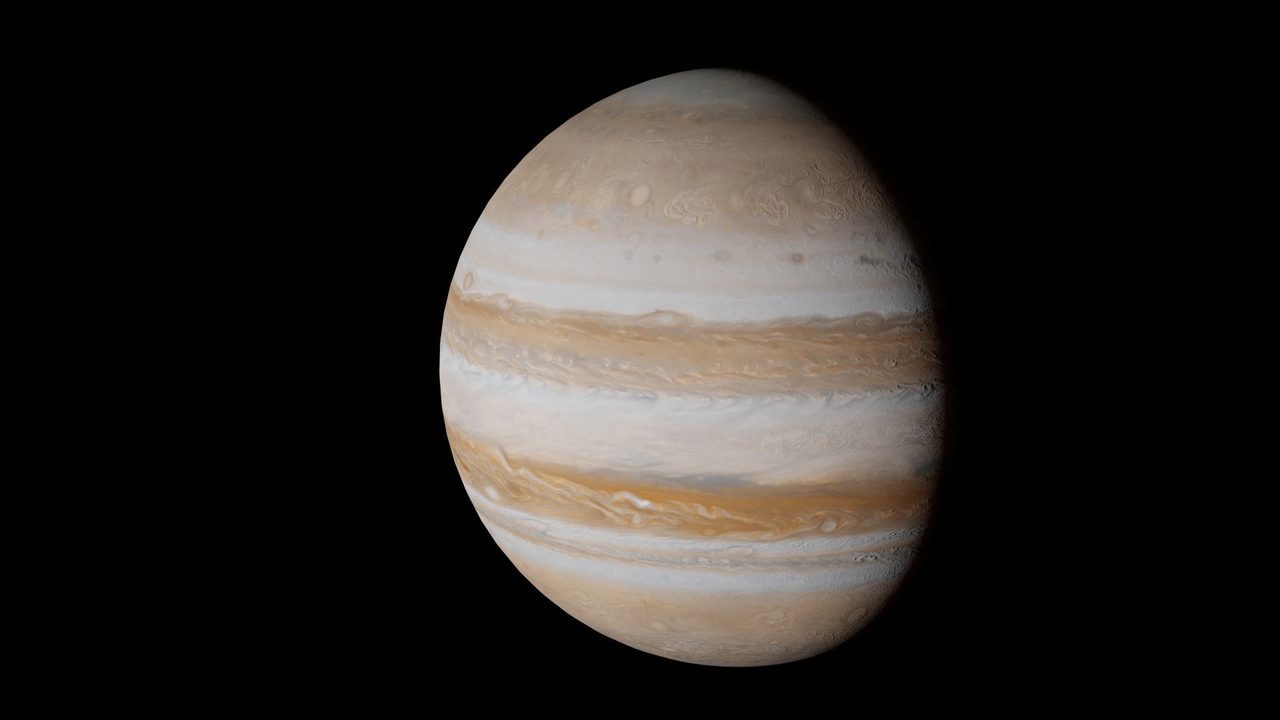
A gas giant about 1,000 light-years from Earth has slipped out of sight while astronomers were watching it. According to EarthSky, the planet, TOI-2535 b, did not really go anywhere: the gravity of another, unseen planet has tilted its orbit so far that it no longer passes in front of its star as seen from Earth. The next visible pass is not expected for another 30 to 50 years.

Researchers from the University of California, Los Angeles (UCLA) published the peer-reviewed findings in The Astrophysical Journal on Nov. 9, 2026.

What astronomers saw

TOI-2535 b is a hot Jupiter, a gas giant similar to Jupiter in mass and makeup that circles extremely close to its star. It completes an orbit in just 8.25 days. Mercury, the innermost planet of our solar system, takes 88 days.

Astronomers first found the planet in data from NASA's TESS space telescope, which spots planets by catching the small dimming that occurs when one crosses its star, an event called a transit. They tracked TOI-2535 b over seven years. During that time its transits were off schedule, arriving earlier or later than expected by up to six hours, and they grew shorter and shallower. Then, earlier this year, the transits stopped.

The unseen planet

From the pattern of those changes, the team concluded that another planet, not yet observed, must be tugging on TOI-2535 b. That planet's orbit is tilted relative to the first planet's. The pull goes both ways: each planet makes the other wobble like a top. Because both circle the star at an angle, there are times when their orbits fall out of alignment and the planet no longer crosses our line of sight.

Lead author Samuel Yee of UCLA said astronomers tend to picture the universe as clockwork, but planets in the same system can affect each other. He said this is “the most extreme example we’ve seen” because the two planets interact so strongly that the transit vanished within the span of the observations.

A comparison with eclipses

Co-author Erik Petigura offered an everyday comparison. If the Moon's orbit lined up perfectly with Earth's orbit around the sun, eclipses would occur every month. The Moon's orbit is tilted, so they are rarer. Petigura said that tilt is a relic of the Moon's violent formation in a collision with the early Earth.

Why it matters

Hundreds of hot Jupiters are known, but most have no neighbor close enough to disturb their orbits this way. This one offers a clue to how such planets form. Early models held that hot Jupiters needed a lot of ice to form, which means they began far from their stars and migrated inward.

The researchers weighed two scenarios, EarthSky reported. In one, a Jupiter-like world nearly collides with another planet, and the encounter flings it into an elliptical orbit like the one seen here. In the other, all the planets are pulled inward through the disk of material from which they formed. That second path should leave a flat system with all orbits on one plane, but the two planets in this system have tilted orbits. That makes the first scenario more likely, according to the researchers.

For readers, the finding is a reminder that planetary systems are not always tidy. Even a large, well-studied planet can drop out of view when a hidden neighbor reshapes its path.

What happens next

TOI-2535 b is expected to stay hidden for some time. The researchers said the unseen neighbor could come into view sooner than the 30 to 50 years it may take for TOI-2535 b to transit again.

Around Prague, based on reporting by EarthSky
Share: Telegram WhatsApp

More science news

Blaze Star Nova Could Flash Brighter Than Polaris, Then Fade in Days
Astronomers say a star system nicknamed the Blaze Star is very likely to erupt soon, but none can say exactly when. According to Space.com, skywatchers have waited about two years for the nova, and wh
Uranus and Neptune’s Magnetic Poles May Swing Tens of Degrees in Decades
Scientists may have an explanation for one of the oddest features of Uranus and Neptune: their lopsided magnetic fields. According to ScienceDaily, new computer simulations suggest that the way the pl
Comet Brightened Thousands of Times as Gas Blasted Off Its Crust
A faint, little-noticed comet flared up twice this summer, and researchers now say they know why. According to Space.com, sunlight warmed ice below the surface of comet 220P/McNaught, the ice turned t
Voyager 1 Hits 16.09 Billion Miles, a Full Light-Day From Earth
NASA's Voyager 1 probe will reach a distance of 16.09 billion miles (25.89 billion kilometers) from Earth on Wednesday, Nov. 18, according to Live Science. At that range, light takes 24 hours to cross
Fossil Teeth Hint That Coastal Dinosaurs Ate Seaweed 100 Million Years Ago
Dinosaurs that lived along ancient coastlines may have supplemented their diets with seaweed and other food from the ocean, according to a new study reported by ScienceDaily on Nov. 14. The evidence c
Euclid Finds Two Quasars Shining Like a Trillion Suns, Earliest Ever Seen
The European Space Agency's Euclid space telescope has found 31 very ancient quasars, among them two that are now the earliest ever observed, according to ScienceDaily, which republished the agency's

Related news

Astronomers say a star system nicknamed the Blaze Star is very likely to erupt soon, but none can say exactly when. According to Space.com, skywatchers have waited about two years for the nova, and when it comes it will make a faint, normal
Scientists may have an explanation for one of the oddest features of Uranus and Neptune: their lopsided magnetic fields. According to ScienceDaily, new computer simulations suggest that the way the planets’ deep interiors conduct electricit
A faint, little-noticed comet flared up twice this summer, and researchers now say they know why. According to Space.com, sunlight warmed ice below the surface of comet 220P/McNaught, the ice turned to gas, and the escaping gas tore through
NASA's Voyager 1 probe will reach a distance of 16.09 billion miles (25.89 billion kilometers) from Earth on Wednesday, Nov. 18, according to Live Science. At that range, light takes 24 hours to cross the gap, making the spacecraft the most
Dinosaurs that lived along ancient coastlines may have supplemented their diets with seaweed and other food from the ocean, according to a new study reported by ScienceDaily on Nov. 14. The evidence comes from the chemistry of fossilized te
The European Space Agency's Euclid space telescope has found 31 very ancient quasars, among them two that are now the earliest ever observed, according to ScienceDaily, which republished the agency's announcement. Powered by supermassive bl
One of New Zealand's least understood penguin species is doing well in one place and badly in another, according to a University of Otago study published in PLOS ONE. Erect-crested penguins breed on only two remote island groups, and a dron
Coffee may do more inside the body than wake you up and get your bowels moving. A small new study in the journal Gut Microbiology links regular coffee drinking to differences in gut physiology and in the bacteria found in stool, according t
Some skeletons found at medieval monasteries in Denmark appear to be older than the monasteries themselves, and researchers now say a diet heavy in freshwater fish is the likely reason. According to ScienceAlert, scientists from the Univers
Huge canyons cut into the seafloor more than half a billion years ago may be the reason scientists can study some of Earth's earliest animals at all, according to a new study of rock formations in South Australia. ScienceAlert reported that
China plans to launch its Shenzhou 24 mission to the Tiangong space station on Nov. 25, and one of the three people aboard will be a Pakistani astronaut, the first foreigner to travel to the station, according to Universe Today. The crew wi
Astronomers have identified another of the strange radio sources known as long-period transients, an object that sent out powerful flares every 62.2 minutes and then went quiet, ScienceAlert reported. The discovery, led by Scott Hyman of Sw