Science & Space By

Blaze Star Nova Could Flash Brighter Than Polaris, Then Fade in Days
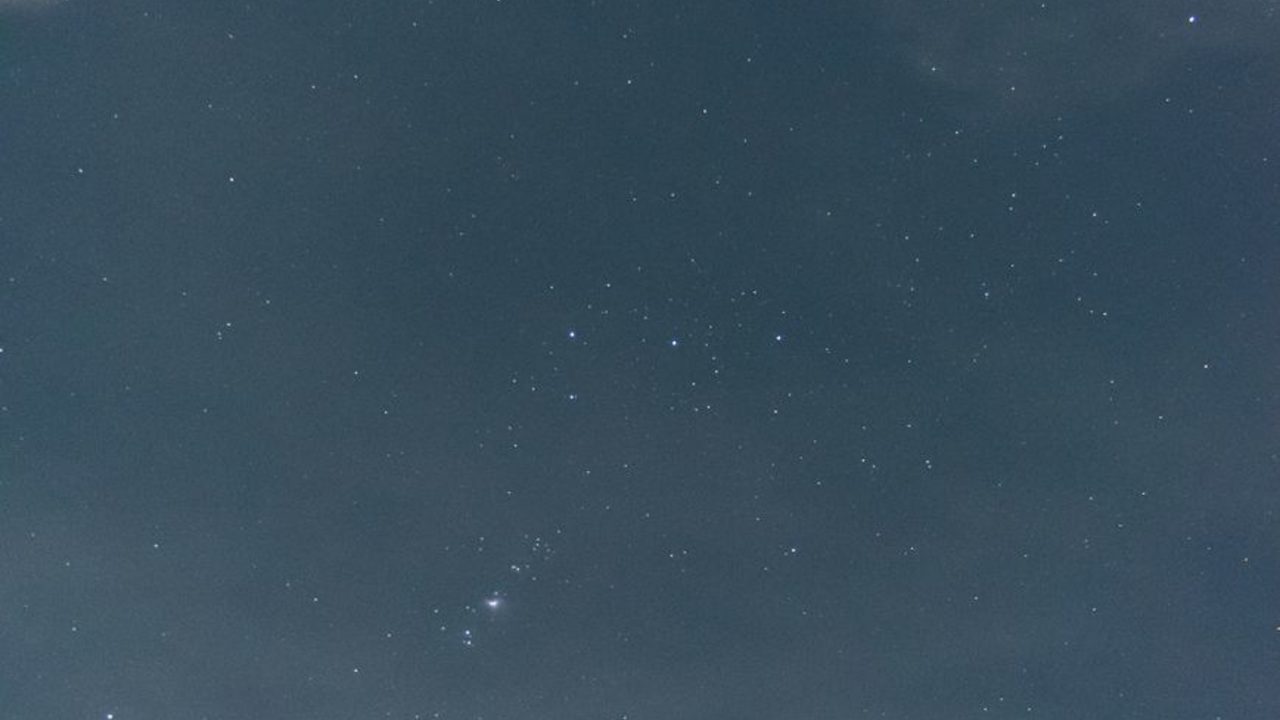
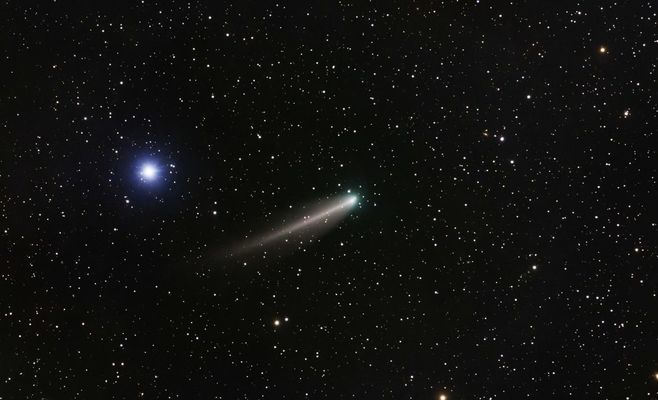
Astronomers say a star system nicknamed the Blaze Star is very likely to erupt soon, but none can say exactly when. According to Space.com, skywatchers have waited about two years for the nova, and when it comes it will make a faint, normally invisible star briefly outshine Polaris.

The system, T Coronae Borealis (T CrB), last erupted in 1946. Two researchers told Space.com the eruption could come within a few years, but they stressed that the exact timing is unknown.

What the Blaze Star is and why it erupts

T CrB is not a single star. It is a binary system made up of a dense white dwarf and a bloated red giant. Over a period of around 80 years, the white dwarf's gravity pulls material off its companion. When the gas that has piled up reaches a critical threshold, a nova explosion follows, and the system flares to 1,000 times its usual brightness. It then settles down and starts the cycle again.

Why no one can name a date

Bradley Schaefer of the Louisiana State University Department of Physics and Astronomy told Space.com that experts are confident of the outcome. In his words, T CrB "will erupt sometime soon." The difficulty, he said, is that astronomers cannot measure precisely how fast gas is falling onto the white dwarf. They also lack an accurate figure for the trigger mass, the amount of gas that sets off the explosion.

Elizabeth Hays, lab chief at NASA's Astroparticle Physics Laboratory at Goddard, said the glare of the red giant swamps the dimmer white dwarf, which makes detailed observation hard. She added that there is no way to precisely measure the temperature and pressure of matter near the white dwarf's surface. She compared nova forecasting to predicting the weather: conditions can be right while the timing of the storm stays uncertain.

Astronomers have tried to forecast the eruption by comparing a recent change in the system's light with a similar change before the 1946 event. Hays told Space.com that earlier dimming and brightening episodes caused excitement but did not turn into the main event. She said she would be a little surprised if the eruption had not happened by 2030, which would be 84 years after the last one, though she could not offer a guaranteed prediction.

What the eruption will look like

According to Space.com, the system normally sits at magnitude +10, beyond what the naked eye can see. In the nova it is expected to jump to magnitude +1.7. That would look as if a star brighter than Polaris had suddenly appeared in the sky.

The rise will be fast. Schaefer said that once the runaway nuclear process starts, it will peak in less than a day. Hays said the glow should drop below naked-eye visibility in dark places within a couple of days and become too faint for binoculars in about a week. Radio, X-ray and gamma-ray light from the eruption could be detectable for months or even years.

What this means for stargazers

Do not expect a visible warning. Hays said there will be none in ordinary light before the eruption reaches Earth, although an early flash could show up in X-rays. Amateur astronomers around the world are watching the system about every minute or two, Schaefer said. When it has brightened by around one magnitude, alerts should spread worldwide within minutes. Observatories and telescopes will then start observing programs they have prepared in advance.

For anyone hoping to see it, the window is short. Because the naked-eye glow lasts only a couple of days, people who want to catch it will need to act quickly once an alert goes out.

Space.com said T CrB sits near Epsilon Coronae Borealis, a star of magnitude +4.28, in the constellation Corona Borealis. In November it can be found in the early evening, with Hercules and Bootes on either side. For viewers in the U.S., it dips below the horizon a few hours after sunset and reappears in the northeastern sky before dawn.

Around Prague, based on reporting by Space.com
Share: Telegram WhatsApp

More science news

Uranus and Neptune’s Magnetic Poles May Swing Tens of Degrees in Decades
Scientists may have an explanation for one of the oddest features of Uranus and Neptune: their lopsided magnetic fields. According to ScienceDaily, new computer simulations suggest that the way the pl
Comet Brightened Thousands of Times as Gas Blasted Off Its Crust
A faint, little-noticed comet flared up twice this summer, and researchers now say they know why. According to Space.com, sunlight warmed ice below the surface of comet 220P/McNaught, the ice turned t
Voyager 1 Hits 16.09 Billion Miles, a Full Light-Day From Earth
NASA's Voyager 1 probe will reach a distance of 16.09 billion miles (25.89 billion kilometers) from Earth on Wednesday, Nov. 18, according to Live Science. At that range, light takes 24 hours to cross
Fossil Teeth Hint That Coastal Dinosaurs Ate Seaweed 100 Million Years Ago
Dinosaurs that lived along ancient coastlines may have supplemented their diets with seaweed and other food from the ocean, according to a new study reported by ScienceDaily on Nov. 14. The evidence c
Euclid Finds Two Quasars Shining Like a Trillion Suns, Earliest Ever Seen
The European Space Agency's Euclid space telescope has found 31 very ancient quasars, among them two that are now the earliest ever observed, according to ScienceDaily, which republished the agency's
Drone Survey Finds Erect-Crested Penguins Stable on One Island, Falling on Another
One of New Zealand's least understood penguin species is doing well in one place and badly in another, according to a University of Otago study published in PLOS ONE. Erect-crested penguins breed on o

Related news

Scientists may have an explanation for one of the oddest features of Uranus and Neptune: their lopsided magnetic fields. According to ScienceDaily, new computer simulations suggest that the way the planets’ deep interiors conduct electricit
A faint, little-noticed comet flared up twice this summer, and researchers now say they know why. According to Space.com, sunlight warmed ice below the surface of comet 220P/McNaught, the ice turned to gas, and the escaping gas tore through
NASA's Voyager 1 probe will reach a distance of 16.09 billion miles (25.89 billion kilometers) from Earth on Wednesday, Nov. 18, according to Live Science. At that range, light takes 24 hours to cross the gap, making the spacecraft the most
Dinosaurs that lived along ancient coastlines may have supplemented their diets with seaweed and other food from the ocean, according to a new study reported by ScienceDaily on Nov. 14. The evidence comes from the chemistry of fossilized te
The European Space Agency's Euclid space telescope has found 31 very ancient quasars, among them two that are now the earliest ever observed, according to ScienceDaily, which republished the agency's announcement. Powered by supermassive bl
One of New Zealand's least understood penguin species is doing well in one place and badly in another, according to a University of Otago study published in PLOS ONE. Erect-crested penguins breed on only two remote island groups, and a dron
Coffee may do more inside the body than wake you up and get your bowels moving. A small new study in the journal Gut Microbiology links regular coffee drinking to differences in gut physiology and in the bacteria found in stool, according t
Some skeletons found at medieval monasteries in Denmark appear to be older than the monasteries themselves, and researchers now say a diet heavy in freshwater fish is the likely reason. According to ScienceAlert, scientists from the Univers
Huge canyons cut into the seafloor more than half a billion years ago may be the reason scientists can study some of Earth's earliest animals at all, according to a new study of rock formations in South Australia. ScienceAlert reported that
China plans to launch its Shenzhou 24 mission to the Tiangong space station on Nov. 25, and one of the three people aboard will be a Pakistani astronaut, the first foreigner to travel to the station, according to Universe Today. The crew wi
Astronomers have identified another of the strange radio sources known as long-period transients, an object that sent out powerful flares every 62.2 minutes and then went quiet, ScienceAlert reported. The discovery, led by Scott Hyman of Sw
NASA has announced that its Voyager 1 probe will soon become the first human-made object to travel one light-day from Earth, according to Al Jazeera. The milestone is due on Wednesday, when the spacecraft will have covered at least 16 billi