Science & Space By

Rare Blue-Tailed Damselfly Returns to a Rebuilt Chalk River Near Hertford
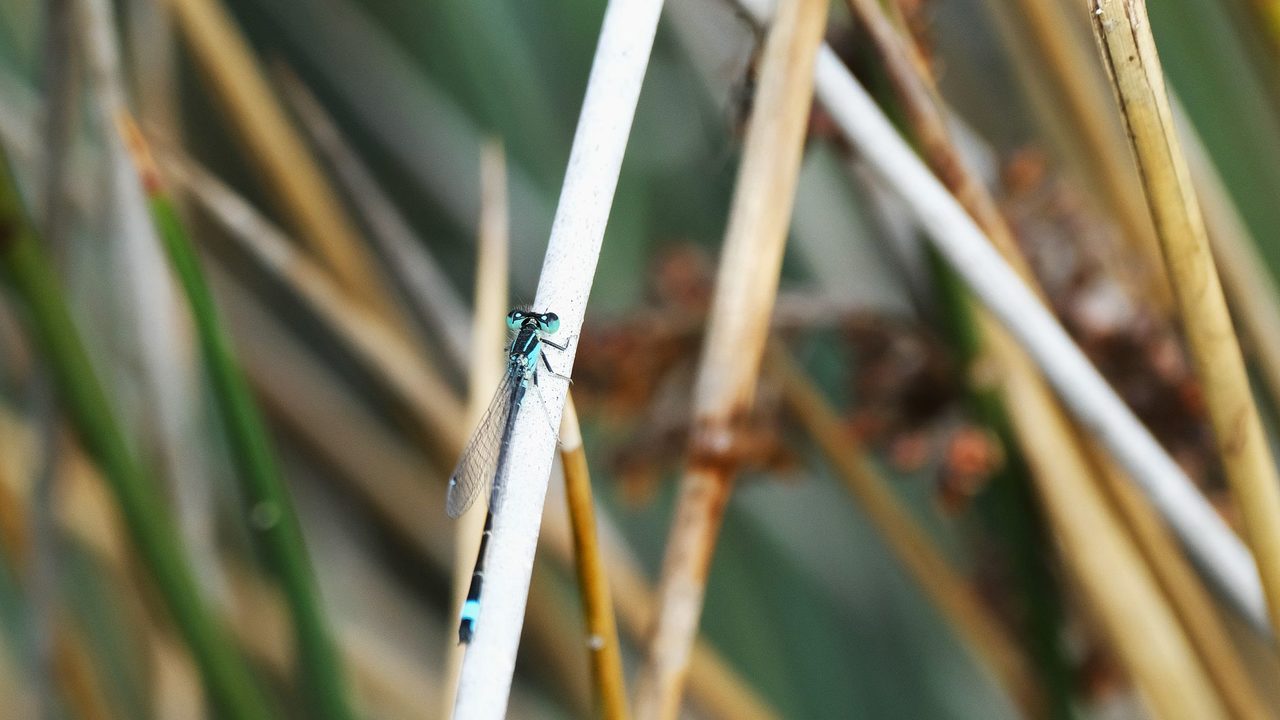
An endangered insect from one of the oldest flying lineages has turned up beside a chalk river that was put back on its original course. The scarce blue-tailed damselfly, described by BBC News as one of the world's earliest flying insect species, was recorded along the River Ash near Hertford, in wetlands created by a restoration project.

The sighting arrives at a worrying moment for these insects. A new national assessment has moved the species into a higher category of risk, which makes any sign that it can use restored habitat notable to conservationists.

The restoration and the sighting by the numbers

What changed on the river

The Herts and Middlesex Wildlife Trust said the restoration included creating new gravel beds in the river. The trust reported that brown trout were already spawning on them.

Monitoring carried out before and after the restoration also found an increase in river invertebrates, including mayflies and stoneflies, the trust said, according to BBC News. The damselfly was recorded in the same area during late summer.

Why it matters for a species under pressure

The British Dragonfly Society's review reclassified the scarce blue-tailed damselfly from Near Threatened to Endangered. The same assessment highlighted growing concern about the future of some other species of dragonflies and damselflies in Britain.

Against that backdrop, the wildlife trust said that for species facing increasing pressure, creating and restoring suitable habitats is vital to reversing declines. The River Ash sighting is a single record from two close-together sites, so it does not show that the species is recovering. It does show that the insect has been found at a spot where the river was recently reshaped.

Sarah Perry, rivers recovery manager at the trust, said natural rivers, connected floodplains and healthy wetlands support biodiversity by giving wildlife places to feed and breed. She added that these landscapes help water move through the countryside and can contribute to resilience against both flooding and drought. In her view, the damselfly sightings offer a hopeful example of what such efforts can achieve.

For ordinary readers, the practical point is that restoring a river can bring benefits beyond the water itself. The trust ties healthier rivers, floodplains and wetlands to places where wildlife can feed and breed, and to the way water moves through the landscape during both floods and droughts.

What the early results suggest

The damselfly is one part of a wider picture. Before-and-after monitoring found more river invertebrates, trout were using the new gravel beds to spawn, and a species whose status has just worsened was recorded at the site. The trust presents the sightings as a hopeful example rather than as proof that the species has recovered. The damselfly was recorded at two monitoring sites that sit close together, and the sighting came in late summer.

The trust's message is that creating and restoring suitable habitats is vital to reversing declines, especially for species facing increasing pressure. The River Ash project, with its restored course and its new gravel beds, is being held up as one example of that approach in action.

Around Prague, based on reporting by BBC News
Share: Telegram WhatsApp

More science news

Falcon 9 Booster Flies for the 14th Time to Launch Secret Spy Satellites
SpaceX launched a batch of classified satellites for the National Reconnaissance Office on Sunday, Nov. 22, on a mission called NROL-136, Space.com reported. A Falcon 9 rocket lifted off from Launch C
Physicist Builds a Black Hole From Logic Gates, and It Leaks
A physicist in Japan has built an analog black hole out of digital logic, and it behaved in a way a real black hole is not expected to. When he changed a single bit inside its horizon, a small part of
Scientists Hunting a Shipwreck Found a Seafloor Littered With Washing Machines
A NOAA expedition in the Gulf of Mexico went looking for a shipwreck and found a seafloor strewn with refrigerators, freezers and washing machines, ScienceAlert reported. The cargo, lost from a shippi
Giant Early Black Holes Leave Astronomers Unsure What Came First
Astronomers have long assumed that galaxies formed first and their central black holes grew later. Observations from the James Webb Space Telescope (JWST) are shaking that assumption, Live Science rep
Drones Swooping Through Whale Blows Let Scientists Read a Whole Whale Genome
Scientists have sequenced the entire genome of a whale using snot collected from its breath by small commercial drones, according to NPR. The team says it is the first time a whole whale genome has be
Lucy’s Relatives May Belong in Our Genus, a New Proposal Argues
A researcher in Australia is proposing a sweeping change to how scientists label our ancient relatives: put nearly all of them in the same genus as modern humans. According to ScienceDaily, which summ

Related news

SpaceX launched a batch of classified satellites for the National Reconnaissance Office on Sunday, Nov. 22, on a mission called NROL-136, Space.com reported. A Falcon 9 rocket lifted off from Launch Complex-4E at Vandenberg Space Force Base
A physicist in Japan has built an analog black hole out of digital logic, and it behaved in a way a real black hole is not expected to. When he changed a single bit inside its horizon, a small part of the resulting disturbance got out, acco
A NOAA expedition in the Gulf of Mexico went looking for a shipwreck and found a seafloor strewn with refrigerators, freezers and washing machines, ScienceAlert reported. The cargo, lost from a shipping container that never reached its dest
Astronomers have long assumed that galaxies formed first and their central black holes grew later. Observations from the James Webb Space Telescope (JWST) are shaking that assumption, Live Science reported, and researchers it spoke with say
Scientists have sequenced the entire genome of a whale using snot collected from its breath by small commercial drones, according to NPR. The team says it is the first time a whole whale genome has been produced from this kind of sample. Th
A researcher in Australia is proposing a sweeping change to how scientists label our ancient relatives: put nearly all of them in the same genus as modern humans. According to ScienceDaily, which summarized the work from Monash University,
A puzzle that has lingered for more than 150 years at Westminster Abbey may be close to an answer. According to ScienceDaily, new research suggests the skeleton found inside a Roman stone coffin at the abbey was a medieval abbot, not the Ro
An idea about evolution that has circulated for more than 50 years may rest on a measurement illusion. Researchers at the University of Bath analyzed what they describe as the largest collection of spontaneous genetic mutations assembled to
Winter brings long nights and a crowded sky. From December through February, stargazers can see three supermoons in a row, one of the year’s brightest meteor showers, Jupiter and Mars at their closest, and a view of Saturn that is slowly im
Children who spent more time on screens between about age 8 and age 16 tended to do better on thinking tests as teenagers, according to a Finnish study reported by ScienceAlert. The finding runs against a common assumption that screens simp
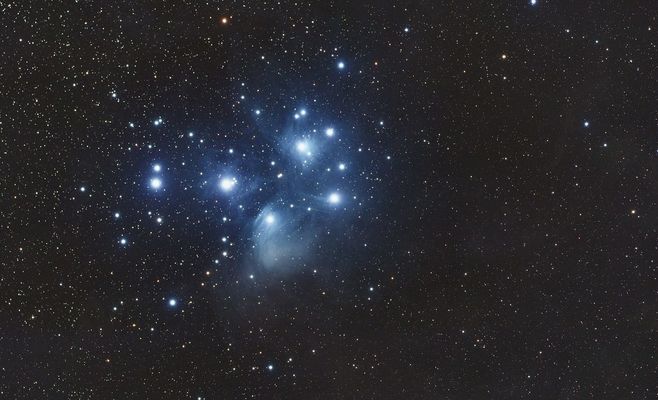
The Pleiades star cluster, also called the Seven Sisters or Messier 45, can be seen from almost every part of the globe, according to EarthSky. It appears as a tiny, misty dipper of stars, and November is the month when it shines from dusk
A team of physicists says today’s best atomic clocks could be used to look for a strange quantum effect: a single clock experiencing more than one rate of time at the same moment. ScienceDaily, citing materials from Kyushu University,