Science & Space By

Why Halloween Is Really an Astronomy Holiday Tied to Earth's Orbit
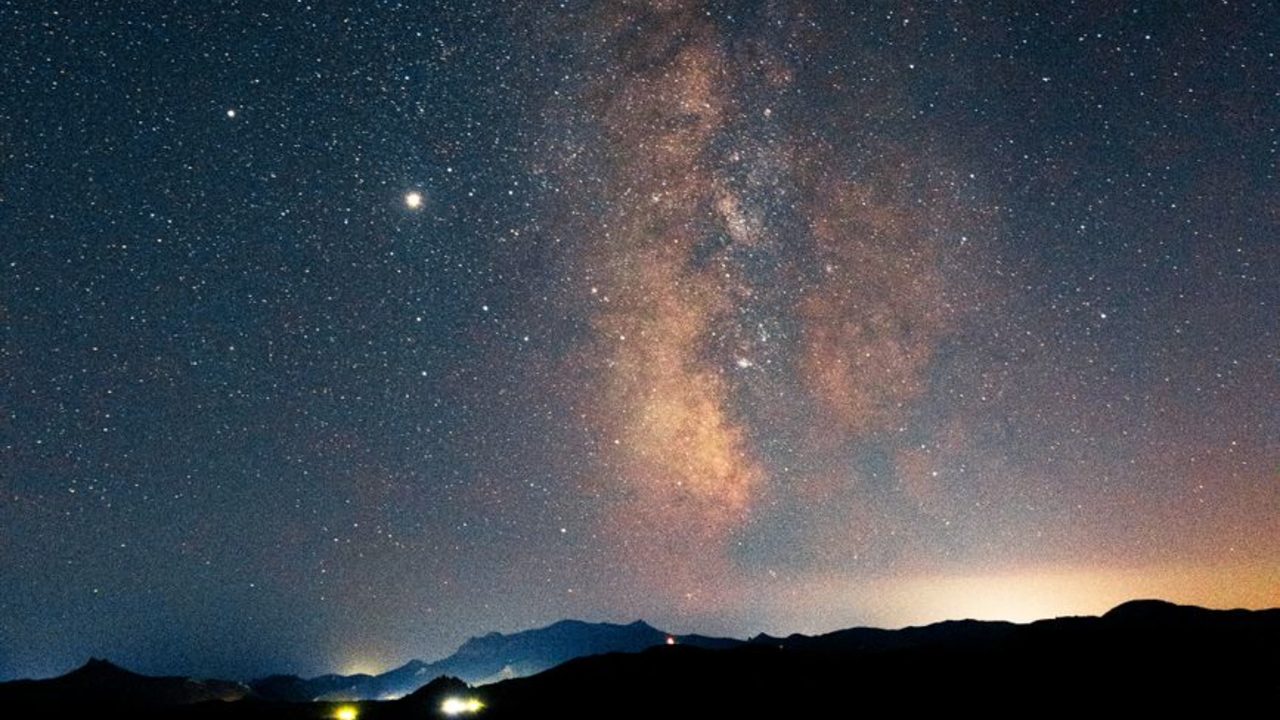
Halloween has deep roots in folklore, but according to EarthSky, its heart is astronomical. The holiday on Oct. 31 is a cross-quarter day, a point on the calendar that falls roughly midway between an equinox and a solstice, and so it is tied to Earth's path around the sun.

EarthSky describes the date as the approximate midpoint between the September equinox and the December solstice. That places Halloween among four such markers spread through the year.

What a cross-quarter day is

Astronomers mark the year with equinoxes, when the sun sets due west, and solstices, when it sets at its most northern or southern point on the horizon. Cross-quarter days sit more or less halfway between each pair.

In traditional astronomy, that gives eight major seasonal subdivisions every year: the March and September equinoxes, the June and December solstices, and the four cross-quarter days in between.

EarthSky notes that these four days are now usually known by familiar names: Groundhog Day on Feb. 2, May Day on May 1, Lammas on Aug. 1 and Halloween on Oct. 31.

Why Halloween feels like the darkest of them

For people in the Northern Hemisphere, EarthSky says, Halloween is the darkest of the four cross-quarter days. It arrives while daylight is shrinking.

Old tradition held that the spirits of the dead roam from sunset until midnight around this time. After midnight, on Nov. 1, which is now called All Saints' Day, the ghosts were thought to return to rest.

The holiday itself descends from Samhain, a sacred festival of the ancient Celts and Druids in the British Isles, and its name is short for All Hallows' Eve, according to EarthSky.

A week off the true date

The Oct. 31 date is fixed by tradition and does not track the sky exactly. EarthSky reports that the true cross-quarter day falls on Nov. 7, a difference of about a week. The ancient Celts, it adds, treated a cross-quarter day as the start of a season rather than its middle.

The Pleiades connection

Some people believe an early forerunner of Halloween, Samhain, took place on the night the Pleiades star cluster reached its highest point in the sky at midnight. EarthSky presents this link as a belief, not an established fact.

Today that midnight peak of the Pleiades comes on Nov. 21, not Oct. 31. But if the connection is real, EarthSky says, the two events would have landed on or near the same date in the 11th century (1001-1100) and the 12th century (1101-1200), several centuries before the Gregorian calendar was introduced.

The explanation lies in the calendar of the time. The Julian calendar then in use was about one week out of step with the seasons. Under the Gregorian calendar, EarthSky says, the cross-quarter celebration would have fallen on Nov. 7.

What this means for stargazers and trick-or-treaters

For ordinary readers, the idea does not change anything about the evening. It offers a different way to see a familiar holiday: as a seasonal marker, one of four spaced through the year, that reflects how earlier generations watched the sky and kept track of the seasons.

EarthSky's bottom line is that Oct. 31 marks the approximate halfway point between the September equinox and the December solstice, which is why it calls Halloween an astronomy holiday and one of the year's four cross-quarter days.

Around Prague, based on reporting by EarthSky
Share: Telegram WhatsApp

More science news

Thanksgiving Dinner for 10 Costs $58.63 as Turkey Prices Jump 10%
A traditional Thanksgiving dinner for 10 people will cost an average of $58.63 this year, about 6% more than in 2025, according to the American Farm Bureau Federation's annual survey, released Wednesd
Scientists Flooded Los Santos From Grand Theft Auto to Show Rising Seas’ Toll
Researchers in Germany have put a virtual version of Los Angeles underwater to make a point about climate change. Timed to the launch week of Grand Theft Auto VI, the study simulates coastal flooding
Early Dinner, Early Breakfast: Study Ties Longer Overnight Fast to Lower BMI
People who ate dinner earlier, ate breakfast earlier and did not snack in between tended to have lower body mass index five years later, according to a Spanish study of 7,074 adults. The findings do n
Atmospheric River Breaks 76-Year Rain Record in San Francisco, Floods Bay Area
An atmospheric river drenched Northern California on Wednesday, setting rainfall records in downtown San Francisco and causing flooding and power outages around the Bay Area, The Guardian reported. Th
Experts Trying to Persuade Reach for Words Over Numbers, Study Finds
When people want to convince others that a statistic is big or small, they tend to describe it in words instead of just stating it, according to a new study. Audiences find those word-based descriptio
Rare One-Horned Rhino Calf Takes First Steps on Zoo Camera in England
A rare greater one-horned rhinoceros calf was born at Chester Zoo in England on the evening of Oct. 11, and security cameras recorded the birth, Popular Science reported. The footage shows the mother,

Related news

A traditional Thanksgiving dinner for 10 people will cost an average of $58.63 this year, about 6% more than in 2025, according to the American Farm Bureau Federation's annual survey, released Wednesday. It is the first yearly increase sinc
Researchers in Germany have put a virtual version of Los Angeles underwater to make a point about climate change. Timed to the launch week of Grand Theft Auto VI, the study simulates coastal flooding in Los Santos, the fictional city from G
People who ate dinner earlier, ate breakfast earlier and did not snack in between tended to have lower body mass index five years later, according to a Spanish study of 7,074 adults. The findings do not prove cause and effect, but they add
An atmospheric river drenched Northern California on Wednesday, setting rainfall records in downtown San Francisco and causing flooding and power outages around the Bay Area, The Guardian reported. The storm was expected to reach Southern C
When people want to convince others that a statistic is big or small, they tend to describe it in words instead of just stating it, according to a new study. Audiences find those word-based descriptions persuasive even when they are told th
A rare greater one-horned rhinoceros calf was born at Chester Zoo in England on the evening of Oct. 11, and security cameras recorded the birth, Popular Science reported. The footage shows the mother, Asha, giving birth and the calf taking
Across the world, sedimentary rock from the Cambrian period, around 540 million years ago, sits directly on far older granite and other crystalline rock, with the layers in between missing. A new study in the journal Nature suggests the cau
Researchers in Hong Kong have built a floss-shaped device that collects the fluid between teeth and reads sugar and uric acid levels from it. In a small early test, its glucose and uric acid readings closely tracked those from blood tests,
Uranus and Neptune have long been called “ice giants,” but a new paper proposes a way to test whether they hide large amounts of rock beneath their thick atmospheres. The idea hinges on a noble gas, argon, according to Universe Today, which
A Cygnus XL cargo spacecraft carrying about 11,000 pounds of science, supplies and equipment is targeted to launch to the International Space Station no earlier than 10:47 a.m. EST on Sunday, Nov. 29, NASA announced. The agency, Northrop Gr
Every year, masses of endangered bogong moths in Australia travel up to 1,000 kilometers (620 miles) south, and each moth makes the trip for the first and only time in its short life. A new study in Nature shows they are guided in part by E
Fossils from two caves in southern China suggest that Homo erectus, an ancient human relative, lived in dense rainforest and survived on the Asian mainland for around 200,000 years longer than scientists had thought, according to Scientific