Ukrainian Refugees Challenge "Hidden" Exploitation at Czech Warehouse in Court
USD 21,75
Popular
A young married couple of refugees from Ukraine refused to accept a sudden dismissal and a demand to pay their employer 25,000 crowns allegedly for damages — the company blamed the couple for both falling ill. For several weeks they worked as warehouse laborers for the Makro retail chain in Ústí nad Labem, while in fact fulfilling orders for the well-known online supermarket Košík.cz.
The dispute has exposed a practice experts call "hidden labor brokering": according to them, even large, well-known companies on the Czech market are not immune to it. The couple kept video recordings from the warehouse, an employment contract listing the Makro warehouse address as their place of work, correspondence with management, and shift schedules — documents that support their version of events.
"Work at Makro" — But Actually Košík.cz
In the spring, the couple was drawn to an ad in Ukrainian on social media promising "work at the Makro supermarket." What made it attractive was the offer of a full-fledged employment contract with paid health and social insurance — the couple got in touch via the listed number on WhatsApp. They were hired by a little-known firm, KonstantaCZ, at a minimum wage of 22,400 crowns, even though this company is not even registered as an employment agency.
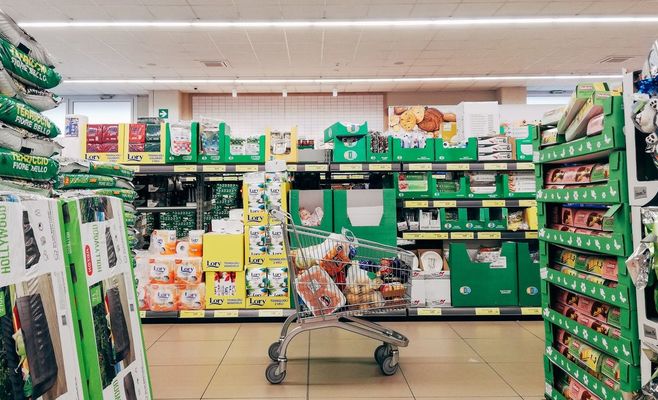
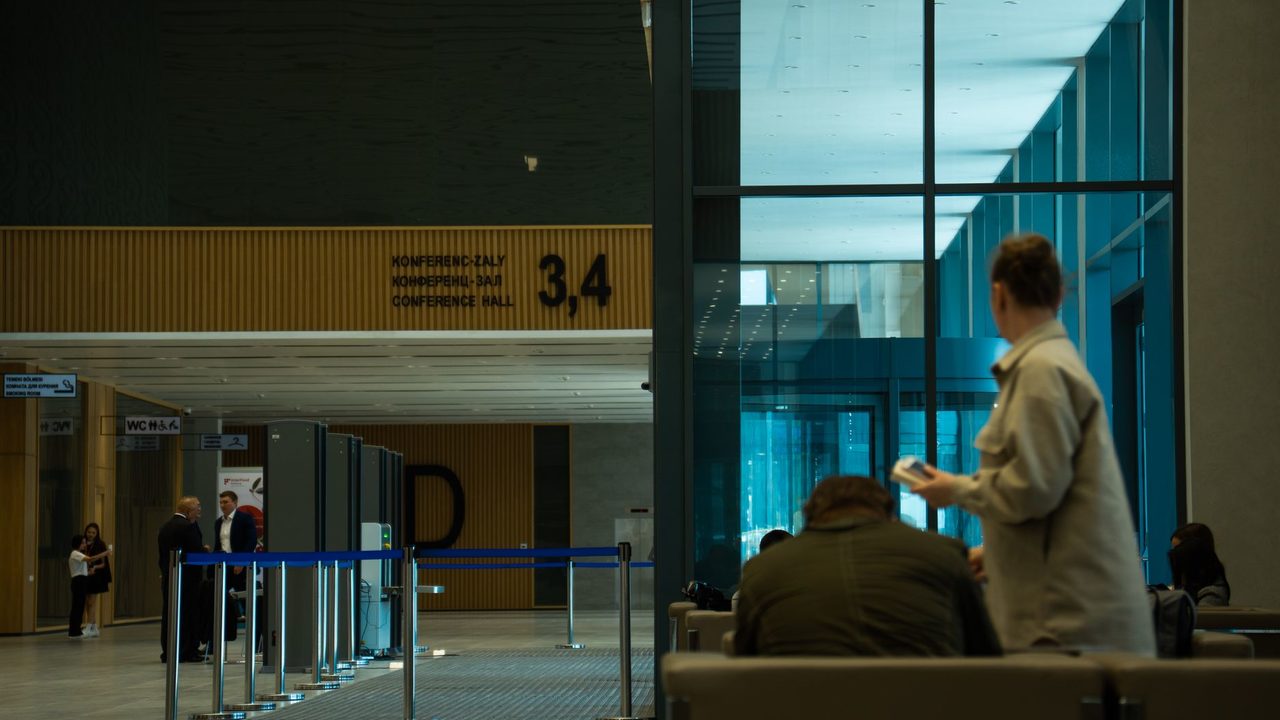
In practice, however, the work was for Košík.cz. Orders were picked both in the sales area and in Makro's warehouse spaces; tasks were assigned and shifts distributed by team leaders from Košík itself — they decided who would work with chilled goods and who would go to the dry storage. Makro staff only occasionally helped when workers could not find an item. The wife names "the people from Košík" as her direct supervisors, though she is not entirely sure whether they were formally employed by Košík itself. The couple started at the warehouse in late April, and by early June had been suddenly dismissed.
Fines, Cold, and Fear of Injury
According to the woman, the atmosphere at the warehouse was toxic: senior team leaders constantly shouted at people, demanding they move at a run. Employees literally dashed across the entire Makro premises with heavily loaded trolleys, while forklifts operated in the same space at the same time. If someone got injured — which happened regularly — they were still not allowed to leave and were made to keep working.
The couple were not issued warm clothing for work in the cold-storage rooms, and were forbidden from wearing hoods or hats — unlike Makro's own staff, who wore warm clothing freely. "There were constant threats of fines. A fine for not showing up for work ranged from 500 to 2,000 crowns, and there was also a threatened fine for the wrong temperature in the cold room if an inspection came," the woman says, adding that the refrigeration equipment itself was old, leaked, and held temperature poorly.
"For about two weeks I lived in constant fear and anxiety. Even now, months later, when we drive past Makro in the car, I feel sick," she admits.
What Makro, Košík.cz, and Labor-Market Experts Say
Makro is distancing itself from the situation. "It's possible the people in question were on Makro's premises in Ústí nad Labem. We lease part of the space to our business partner, Košík.cz, which runs its own operations there. So we cannot rule out that they may have been carrying out work for that company or one of its external partners," said Makro communications manager Nikola Formanová.
Košík.cz spokesperson František Brož says the company only keeps administrative staff at the warehouses. "In logistics operations, we work with suppliers who provide the service externally. These suppliers act independently, and our company has no way to communicate directly with their employees," he says.
According to the Czech Ministry of Labour's public register, KonstantaCZ does not have, and has never had, a permit for labor brokering, meaning it is formally not entitled to send its workers to perform work at other companies' facilities. The ministry confirmed this officially upon request. As the State Labour Inspection Office explains, "hidden brokering" refers to the effective hiring-out of labor disguised as a different legal relationship: instead of the usual agreement on the temporary assignment of an employee between an agency and a user company, the parties sign a framework service or contracting agreement and present themselves as equal business partners rather than as an agency and a client. A company found using such a scheme faces a fine of up to 10 million crowns.
KonstantaCZ director Konstantin Sergeyevich Bokovoy rules out that this was a case of staff secondment. "In fact, they worked for my company," he stated, asking that questions be sent in writing, but he was never able to say when he would answer them.
Eva Malá of the organization "Člověk v tísni" (People in Need), which works on labor exploitation issues, is inclined to believe the situation described goes beyond the bounds of the law. "If a company supplies workers for ordinary warehouse-worker positions at other companies' sites without holding the mandatory labor-brokering permit from the Ministry of Labour, it is breaking the law. In my view, the outsourcing argument doesn't apply here: genuine outsourcing means hiring outside specialists for specific expert tasks — for example in IT, tax, accounting, or app development — where the contracting company guarantees a result and professionally manages the process," she says. In her view, the decisive factor is who actually manages the workers: if warehouse staff on-site are directed and assigned by managers from the client company rather than by representatives of the supplier — which, moreover, lacks the required permit — that constitutes hidden agency employment.
Viktor Rumpík of Diakonie Západ, an organization that deals with illegal employment, notes that the question of hidden employment depends on a number of factors — chiefly on who actually manages the workers, and whether a chain of several interlinked companies has been set up at the warehouse. "In that case, I do see some signs of hidden employment here — especially if people are taking instructions from the end employer and are not paid comparably to other workers. It's also a way of shifting the risk of workplace injuries onto others," Rumpík believes.
Radovan Burkovič, president of the Czech Association of Staffing Agencies, a longtime critic of unfair practices on the local labor market, calls online supermarkets a genuine breeding ground for such problems. "There you get a mix of legal and illegal employment of foreigners from outside the EU, as well as EU citizens — Bulgarians, Romanians and others — and Czech employees. And on top of that, there are people working as self-employed contractors," he notes.
Read also: Free Czech Courses for Foreigners: Where to Learn
Source: seznamzpravy.cz