Climate change threatens world cultural heritage — from frescoes to Stradivarius violins
USD 21,62
Popular
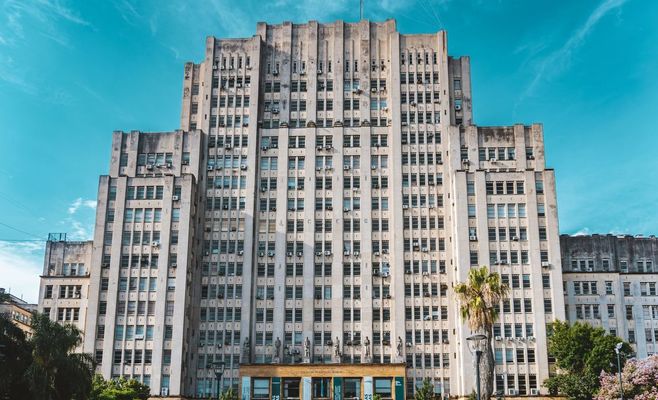
Climate change threatens not only harvests and infrastructure but cultural heritage as well: according to data from the EDHEC climate institute, 43% of Europe's UNESCO World Heritage sites are highly exposed to extreme weather events, flooding and rising sea levels.
Floods, mould and acid rain
Anthony Schrapffer, research director at the climate institute of the EDHEC Business School, notes that the same storms, fires and floods threatening people's lives today are also destroying monuments built centuries and even millennia ago. This is not just about Venice, gradually sinking beneath the waves — the problem also affects less visible objects scattered across churches, libraries, local assembly halls and small museums. Works of art and museum collections suffer directly from flooding, humidity fluctuations, heatwaves and failures of the climate-control systems that keep rare exhibits safe.
The Louvre evacuates a quarter of a million exhibits
A telling example is the Louvre in Paris, which has already begun moving around a quarter of a million of its stored exhibits to a conservation centre in the city of Liévin: Paris itself faces a flood risk that could threaten its national collections. But not everyone has the resources the Louvre does. Other galleries and museums remain unprotected against rising humidity and the mould growth that damages paintings, as well as against the acid rain that corrodes frescoes.
Even Stradivari violins are at risk
"Even music has been affected," says Schrapffer. Making musical instruments depends on natural materials that are especially sensitive to global warming. The resonance spruce wood from the Val di Fiemme valley in the Italian Dolomites, used for centuries to craft the legendary Stradivari violins, is now under threat from rising temperatures and the spread of pests — bark beetles and engraver beetles. Once they destroy the valley's last old spruces, no new Stradivari violins will ever be made again.
What no longer exists can no longer be bought
From an economic standpoint, natural resources have traditionally been treated as interchangeable raw materials: coal, wood, sand or oil are used as ordinary commodities until they become scarce and expensive, and are then replaced thanks to technological progress. That is precisely why recycling raw materials only becomes economically worthwhile once a resource turns genuinely scarce. But according to Schrapffer, this logic does not apply to cultural heritage: a fresco destroyed by moisture cannot be recycled and replaced, an ancient mosaic damaged by heat or acid rain cannot be recreated in its original form, and a flooded archaeological site is lost forever. It is precisely this irreversibility that sets cultural heritage apart from other economic goods.
Money is needed most where there is least of it
Added to the vulnerability of these monuments is another problem — the ability to finance their protection. According to EDHEC's economic forecasts, by the end of the century a number of Europe's major cultural regions could suffer severe economic losses from the physical risks linked to climate change. Mediterranean cities will be hit hardest: by 2100, losses in local gross regional product could reach 32% in Madrid and 41% in Rome — far higher than Italy's projected overall GDP decline of 19%. Other European capitals will also be noticeably affected, with losses estimated at 13% in Vienna and 18% in Berlin. In other words, just when investment in protecting heritage will be needed most, the funds available for it may be at their scarcest.
Time to act is running out
The difficulty is that this is not simply about protecting individual objects or buildings, but about preserving the very physical conditions that ensure the continuity of history, cultural heritage and artistic creation. The environmental and energy crisis can also be seen as a chance for profound change in industrial societies — an opportunity to rebuild production systems and redefine the criteria for wellbeing. "But it is still possible to preserve our shared cultural heritage," Schrapffer concludes, "though there is less and less time left to take effective action."
Source: ekolist.cz