ČSOB banker defrauded a client of hundreds of thousands of crowns

USD 21,75
Popular
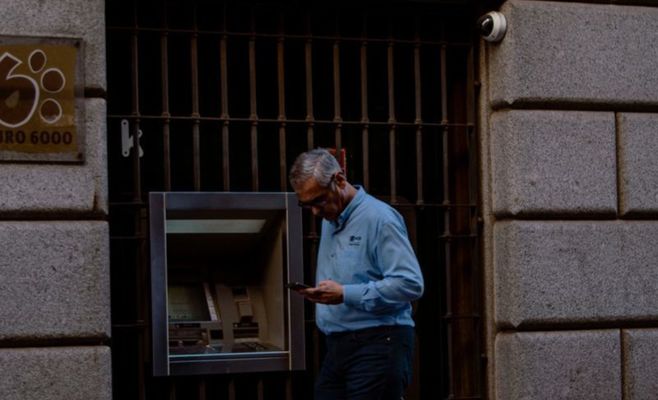
Banks warn clients about fraudsters, but Ms. Ludmila was cheated not by a stranger but by her own personal banker, right in an office of the ČSOB branch in Prague’s Letňany. He swindled hundreds of thousands of crowns out of her, and the bank refused to take responsibility, calling the incident one employee’s personal failing.
The woman told her story on the podcast Ve stínu. She and the banker, a former branch manager, had known each other for years. Last April, Ludmila came in to take out a loan of 160,000 crowns for rehabilitation equipment for her disabled daughter.
How the banker lured her into a trap
“He shut me in his small office and didn’t process the loan I had come for at all. He looked awful, sort of grey and on edge,” the woman recalls. Knowing her situation in life, the banker suddenly started telling her about an alleged drama in his own family: his money held by a notary would only be released in ten days, his parents faced ending up on the street, his father was in a wheelchair, and his brother had taken his own life.
In the end he persuaded her to borrow far more than she had planned. Besides psychological pressure, fear of losing her reputation as a reliable client played a role: Ludmila herself once worked in banking and knew how important that is. “I was afraid he could do me terrible harm as a client and that I would have no way to defend myself. I was paralyzed,” she said.
The woman gave in and agreed to increase the loan and transfer the money to the banker’s account at another bank. For the amount of 320,000 crowns he had already prepared an IOU and promised to repay her 50,000 more within ten days. But the deadline passed, there was no money, and the banker’s work email stopped working.
The bank: one employee’s failure
Realizing she had been deceived, the woman turned to the ČSOB ombudsman, expecting compensation. The bank fired the employee but rejected any financial responsibility. “They gave him a weapon and then said: ‘Oh, he fired it, you should have run away,’” the victim says angrily.
Bank spokesman Petr Milata replied briefly: “Client security remains our long-term priority. In this case it was an individual and completely unacceptable failure of a specific employee, which is in direct conflict with our rules. The bank reacted without undue delay. Given banking secrecy, we will not comment further.”
That the bank is indeed probably off the hook legally is confirmed by banking-law attorney Tomáš Ulip: “If someone decides to commit fraud, they usually do it for their own enrichment, not the employer’s. For the act to be attributed to the bank, it would have to be proven that it failed to put sufficient control mechanisms in place.”
Lost a million on the stock market, repaid 1,500 crowns
The fraudster banker bypassed controls at “his” bank more than once. When the police investigated, after Ludmila turned to them through her lawyer, it emerged that he had picked out and manipulated at least seven people, both clients and bank colleagues. The method was the same: he lied about his world collapsing and his family suffering, and begged for quick loans. In total he conned them out of more than 1.6 million crowns and promptly lost all of it on risky trading on the American stock market.
In May this year, the former branch manager received a sentence in court of two years in prison, suspended for a probation period of five years. If he keeps paying off his debts, he will not go to prison. So far he has sent Ludmila 1,500 crowns, while the installment on her loan is far higher. The consequences for her are not only financial: “When the bank recently gave me the contact of a new adviser, I felt physically sick. I don’t go to branches at all now.”
A similar case at another bank
Ludmila’s case is far from the only one. A woman named Markéta said that her 91-year-old childless aunt faced similar manipulation at Česká spořitelna several years ago. This time it was not a one-off loan; the lifelong savings of a longtime client were at risk. While checking account statements, Markéta happened to discover that her aunt’s personal banker had had himself listed as the beneficiary of her supplementary pension insurance, meaning the person to whom the money would go after the policyholder’s death. According to Markéta, the banker had also had almost a million crowns moved from the elderly woman’s current account into that pension insurance.
He supposedly won her trust through a love of dogs: “My aunt was afraid of strangers, but she was won over when someone said he would give the money to dogs. He sent her postcards, and on a statement he even wrote the word ‘doggies’ in his own hand,” Markéta explains. He probably promised to hand the savings to an animal shelter after her death.
Because the niece had power of attorney, she immediately cancelled the contracts and moved the money back. But a criminal complaint led nowhere: the elderly woman was legally competent and free to dispose of her money as she pleased. A spokesperson for Česká spořitelna declined to comment on the case, citing personal data protection.
Read also: Как перевести деньги в Чехию и из Чехии в 2026: сервисы, комиссии, сроки
Source: seznamzpravy.cz