End of Summer Holidays in Czechia: The Most Dangerous Time on the Roads — Two Days at Highest Risk
USD 21,68
Popular
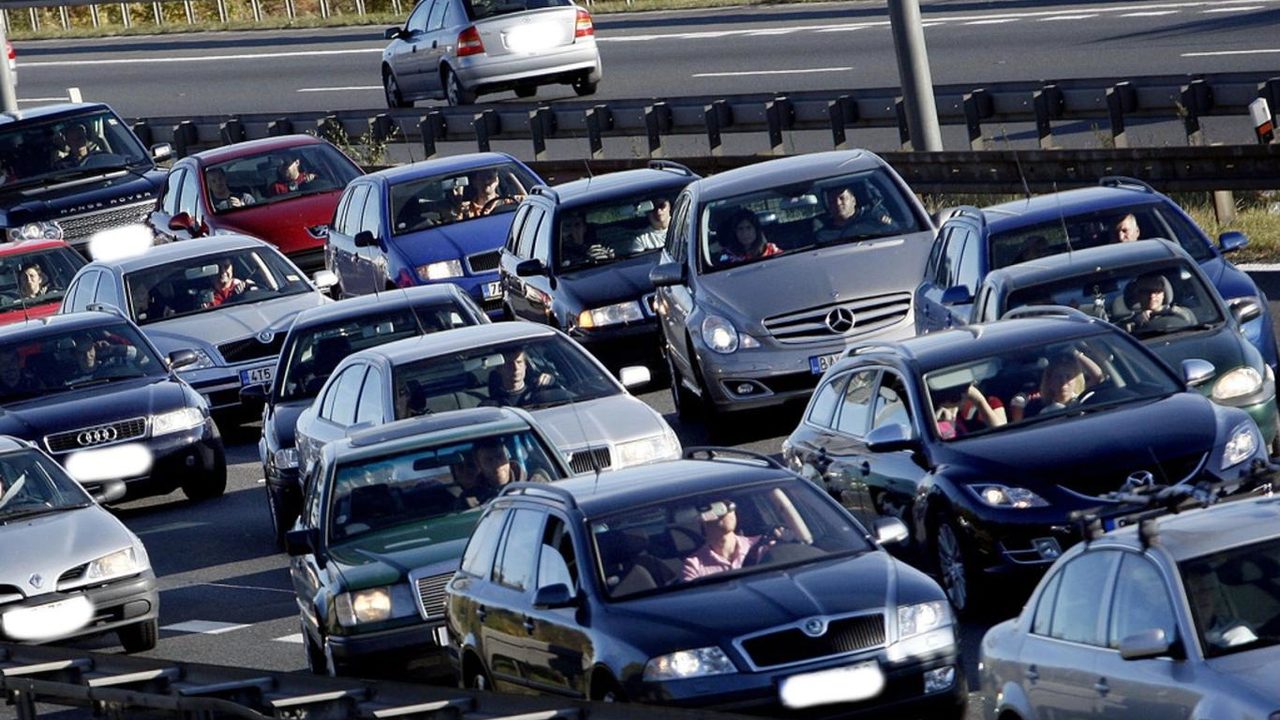
The last days of August and the return of Czechs from their holidays traditionally mark the most dangerous period on the country's roads. According to police data, 18 people died in accidents during the first half of August alone, and the second weekend of the month claimed eight lives in a single stretch. Full statistics for the month will only be available in September.
For comparison, last year the deadliest days were Sunday, August 10, and Saturday, August 23 — five people died on each of those days, out of 53 road fatalities recorded for the entire month.
Increased police patrols
Just as at the start of the summer season, police will once again deploy extra patrols on the roads — not only on major highways and known accident hotspots, but also in quieter areas. The main focus will be on speeding, inattentive driving, dangerous overtaking, driving under the influence of alcohol or drugs, and protecting pedestrians and cyclists.
"We will focus on the main causes of fatal accidents — speed, inattention, risky overtaking, alcohol and drugs behind the wheel — as well as on protecting the most vulnerable road users: pedestrians and cyclists. But checks alone aren't enough — safety starts with every individual driver. I ask everyone not to rush, to soberly assess their abilities, and to remember that getting home safely always matters more than saving a few minutes," said Michal Hodboď, director of the traffic police.
Friday and Sunday — the most dangerous days
Analysts from DataFriends, which runs a specialized portal tracking road accidents, examined crash data from 2010 to 2025 on motorways and first-class roads in Czechia's southern regions — the very routes most commonly used to travel to South Bohemia, South Moravia, and, above all, to southern Europe.
"In July, the average number of accidents is almost a fifth higher than the usual monthly figure, and in August it's up by nearly a quarter. Precisely when people are most likely to be heading on holiday, the main roads become noticeably more dangerous," said DataFriends analyst Marek Sibal.
According to him, summer accidents are more likely to result in serious injuries: the share of accidents involving minor injuries, serious injuries, or fatalities exceeds 53% in July and August, compared to the yearly average of 47.8%. In other words, summer brings not only more accidents but also more severe consequences.
Contrary to popular belief, the leading cause of fatal accidents turns out not to be speed but poor driving behavior — inattention behind the wheel, failure to maintain distance, and driving in the oncoming lane. Such accidents account for over 50% of cases in summer, compared to under 40% in winter. Meanwhile, the share of speed-related accidents actually drops below 20% in summer.
Friday and weekends remain the most dangerous days. "After Friday, Saturday is the riskiest day, and in August, Sunday climbs to third place among the most accident-prone days — even though it's typically the safest day of the year overall. This reflects the summer reality well: people aren't just heading off on holiday, they're also coming back. And the return trip after several days of rest — often following a hot day, a swim, or a mountain hike — can be just as exhausting as the journey there," Sibal noted.
Road crews to pause construction work
To improve safety and reduce the risk of traffic jams, road maintenance crews will suspend repair work during the final weekend of the summer holidays. "During the busiest days of late summer, from August 29 to 31, work that narrows traffic lanes will be restricted. Unless absolutely necessary, such work will be moved off the motorways or carried out in a way that doesn't affect traffic flow," the Ministry of Transport announced.
The hidden danger of microsleep
Besides heavy traffic, experts point to accumulated fatigue as the main threat. Long drives back from southern European resorts, combined with heat and the urge to get home quickly, often lead to tragic mistakes. Not just early morning, but surprisingly, the afternoon too, is considered a critical period.
"Drowsiness most often hits drivers between 1 and 3 a.m. A lesser-known fact is that another critical window falls during the day, between 2 and 4 p.m. And the most dangerous stretch is often the final leg of the journey, when a driver subconsciously lets their guard down, sensing that the destination is near," explained Tomáš Neroľd, head of the BESIP road safety department.
The main danger for drivers is microsleep, during which a person fails to respond to external stimuli for up to 15 seconds. To put that in perspective: on a motorway at 130 km/h, three seconds of microsleep means the car travels more than 100 meters completely uncontrolled — roughly the length of a football pitch.
"Ideally, you should stop no later than every two to three hours of driving, stretch your legs, take a walk, drink some water, and have a light snack. If a driver feels tired, they need to stop immediately. Neither an energy drink nor an open window is a substitute for sleep. A severely fatigued driver is just as dangerous as someone under the influence of alcohol — reaction times slow down, situational awareness worsens, and the risk of a fatal mistake rises sharply," warned Roman Budský, an expert with the VIZE 0 platform.
Route planning reduces risk
Beyond getting proper rest, drivers shouldn't underestimate the importance of trip planning — experts say it matters just as much as having your car in good technical condition. "A well-planned route takes the stress out of driving — you don't have to figure out on the fly where to stop for a break, grab lunch, or let the kids stretch their legs. These days, this can be done in just a few minutes using handy apps, even for destinations abroad," said Igor Sirota, a representative of the Central Automotor Club.
Rush hours should also factor into route planning. "If possible, it's better to drive at night and avoid major cities and busy areas during the morning and evening rush hours. If that's not an option, it's worth keeping an eye on traffic conditions through navigation apps," Sirota added.
Read also: Prague Metro: map and tickets
Source: denik.cz