Glaciologist warns: a disaster like Nepal's could also strike Europe
USD 21,86
Popular
A massive surge of water, rocks and ice debris tore through the narrow valley of the Trishuli River on the border between Nepal and Tibet — the water level rose by nearly nine metres in just half an hour. Roads and homes were destroyed, and electricity, phone lines and internet were knocked out. According to glaciologist Jan Kavan from the Institute of Geography at the Faculty of Science, Masaryk University in Brno, a similar catastrophe could also happen in Europe.
What happened in Nepal
"It was a kind of icy slurry — essentially a rock-and-snow avalanche," Kavan says, describing the event. According to him, the rushing mass pushed water ahead of it down the valley, followed by a flow of mud, rocks and melting ice. The debris blocked the main valley and formed an unstable natural dam — water from neighbouring streams is already building up behind it, raising the risk of a breach and a new, potentially even more destructive wave.
The Swiss precedent
The collapse of part of a glacier or mountain slope followed by flooding is a risk not only in the Himalayas. In May of last year, a similar disaster struck the Swiss village of Blatten: a mass of rock and ice that broke away from the mountain literally buried the alpine settlement, and the debris dammed the river, forming a lake. The difference is that local authorities managed to evacuate residents in time, unlike in Nepal.
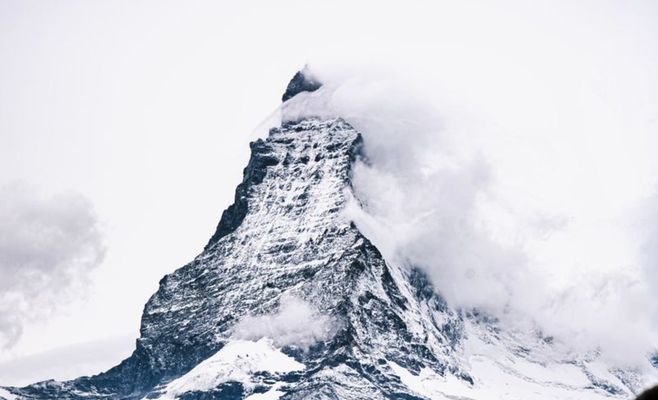
The likelihood of a glacier fragment breaking off depends primarily on the terrain — areas where a glacier crosses a sharp drop in elevation are especially dangerous, since the ice deforms there and becomes less stable. "In Switzerland it looked very similar; the process was essentially the same," Kavan notes. Unstable rock massifs above some Norwegian fjords pose a similar danger: their collapse into the water can trigger a tsunami-like wave.
That said, the scale of a potential disaster in European mountains is smaller than in the Himalayas. "Nepal is an environment that's extreme by an order of magnitude — the mountains and glaciers there are far larger, and there are so many of them," the expert explains. He notes that vast, hard-to-reach areas simply cannot be fully monitored by staff or equipment the way they are in Europe, where regular satellite imagery, automated surface-change analysis, seismic sensors and avalanche-risk maps are used. It was precisely thanks to this that specialists in Switzerland had known about the instability of the slope above Blatten for years and managed to evacuate residents in time.
How melting ice speeds up collapses
Climate conditions affect glacier stability. During abnormally warm weather, which is becoming more frequent, more meltwater accumulates between a glacier and its rocky base. "Water acts as a lubricant — the glacier slides more easily and, accordingly, breaks off more easily," Kavan explains. That's why such collapses are more likely in summer: in winter, a glacier is more firmly frozen to its base and moves more slowly.
The exact mechanism behind the Nepal collapse has not yet been established and may never be determined with certainty. Climatologist Aleš Farda from CzechGlobe — the Global Change Research Institute of the Czech Academy of Sciences — notes: "Higher temperatures could have affected the speed of the ice's movement and its centre of gravity. Meltwater could have seeped into the base, destabilised the slope and contributed to the glacier and rock giving way. The hypothesis that climate-change-driven warming contributed to the disaster is plausible, and we will continue to investigate it."
Thawing permafrost in the surrounding rock massifs also plays a role — ice in cracks had long held the rock together, and as it melts, the rock loses support, allowing stones and even entire blocks to break free. Czech mountaineers have also noticed changes in high-altitude terrain. Jan Bloudek, chairman of the Czech Alpine Union, notes: "Warming is freeing up more rocks that used to be held in place by ice higher up. The terrain is becoming looser, and rocks fall both when people move through the area and on their own."
The retreat of glaciers is clearly visible, for example, in the Mont Blanc massif — Western Europe's highest mountain — where, on the way to some mountain huts, tens or even hundreds of metres of missing ice now have to be compensated for with ladders that are constantly being lengthened and relocated. Well-known alpinist Radek Jaroš observed a similar picture on the north face of Peru's Huascarán: where solid ice used to stretch, bare smooth rock is now exposed. In Nepal itself, hit by the disaster, the main climbing season doesn't start until autumn, and according to Bloudek, there is currently no information about any Czech expeditions in the disaster zone.
Read also: Prague Metro: map and tickets
Source: seznamzpravy.cz