Hundreds of migrants stage beach protest demanding asylum in Spain's Ceuta
USD 21,62
Popular
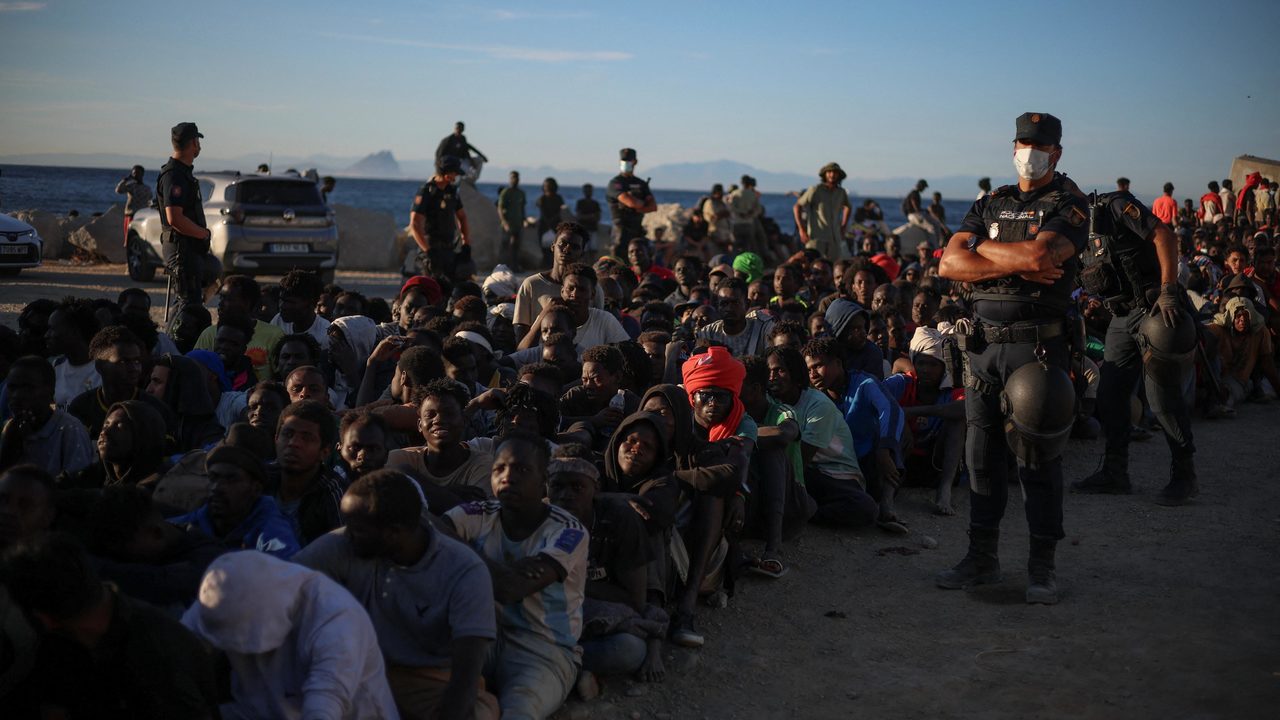
In the Spanish enclave of Ceuta on the northern coast of Africa, hundreds of migrants staged a protest on the city beach on Sunday, demanding that Spanish authorities grant them asylum and not deport them back to Morocco. The news was reported by Reuters.
The protesters are part of a much larger group — numbering somewhere between 5,000 and 8,000 people — who remain in Ceuta. As a reminder, in late July more than 72,000 migrants broke through from Moroccan territory into the enclave, which has a population of around 80,000. Most returned voluntarily in the following days, but a portion of the group stayed behind.
Life on the beach, waiting for a chance
Those who remain are enduring harsh conditions on Del Tarajal Beach on the outskirts of Ceuta, hoping for an opportunity to reach mainland Europe. "We sleep right by the sea, in the cold and the stench. We are suffering," said one migrant who arrived from Tetouan in Morocco. According to him, police are not allowing them into the city center.
Protesters brought Spanish flags and signs reading "We don't want to go back to Morocco" and "We are people too." They shouted that they were exhausted and demanded a resolution to their situation. Nearby, on the rocky shore, other migrants were washing laundry and fishing with makeshift bamboo rods.
The authorities' stance and the health situation
Spain's Interior Minister Fernando Grande-Marlaska said earlier that those who entered Ceuta illegally will not be granted permission to stay in the city or travel on to mainland Spain, and that, barring a few exceptions, they will not receive legal status.
Local health officials say the city's already understaffed medical personnel are working at the limits of their capacity. They have also criticized what they describe as a slow response from the government in Madrid. Intestinal infections and scabies are spreading among the newcomers, and the number of injuries from clashes is rising.
Spain's Health Minister Mónica García rejected claims that medical services in Ceuta have completely collapsed, though she acknowledged the system is under heavy strain. "Linking migration to disease is unfair and xenophobic," she told reporters in Ceuta.
Most Moroccan migrants told Reuters they left their homeland due to poor job prospects, even though many of them are well-qualified. Besides Moroccans, the migrant population also includes citizens of Nigeria and Bangladesh.
Read also: 8 best places for a swim near Prague: lakes, quarries and beaches within an hour of the capital
Source: seznamzpravy.cz