Nord Stream Blast: Saboteurs Reveal How It All Happened — From Storms to Being Tailed on Land

USD 21,74
Popular
Four years after the explosion that ripped through the Nord Stream pipeline in the Baltic Sea, American journalist Bojan Pancevski of The Wall Street Journal has published a book based on interviews with people directly involved in the sabotage. Pancevski reached the operatives through his contacts in Ukraine — every character in the book appears only under a codename: Captain, Colonel, Cousteau, Freya, Iceman.
According to German prosecutors, one Ukrainian citizen, identified by German media as Serhiy K., has already been charged in the pipeline bombing case. Another Ukrainian, Volodymyr Z., was detained by Croatian police at the request of German investigators. Germany also sought the extradition of a third Ukrainian from Poland, but a local court released him from custody and allowed him to return home.
Seven People and One Yacht
According to Pancevski's account, the plan to blow up the pipeline was drawn up by a group of officers from Ukraine's SBU intelligence service. Professional divers with experience in the Caribbean and South China Sea were brought in for the operation, and several Ukrainian businessmen provided the funding. In the end, the operation was carried out by a team of seven — six men and one woman.
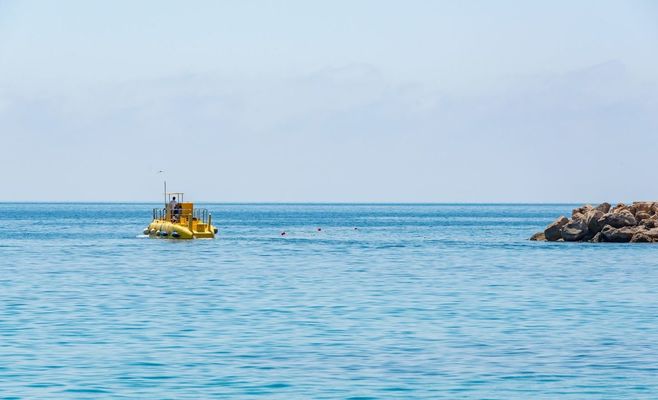
The team searched for a suitable vessel equipped with a decompression chamber in Sweden and Germany, but couldn't find one, so they had to make do without it. They settled on the yacht Andromeda, chartered from Mola Yacht, a company based in Rostock. The rental, which ran for nearly a month, cost €12,000.
The explosives were smuggled across the Polish border in sealed containers. On September 7, Andromeda left the small port of Wiek on the German island of Rügen and headed for the Danish island of Bornholm, where a suitable spot near the pipeline was located. Bad weather delayed the first dive until September 11 — down to a depth of 80 meters, where total darkness reigns. "The pipelines looked like endless sleeping serpents on the seabed," the author quotes one of the divers as saying.
Storms, Delays and a Near-Failure
The first bomb was set to detonate on September 26. Eight dives were originally planned, but storms and rough seas repeatedly forced the team to halt work — at one point they even had to take shelter in the small Swedish port of Sandhamn. Despite the weather, time was running out, and the final dive took place at four in the morning on September 22. The operation succeeded, and the yacht was returned to Rostock the following day.
The book also reveals that a second Ukrainian team attempted to blow up the TurkStream pipeline in the Black Sea, which carries gas from Russia to Turkey. For that mission, they chartered the vessel Santa Lucia in Romania, but coastal inspections and contractual restrictions — the vessel was barred from leaving Romanian waters — prevented them from reaching the pipeline. "Maybe it's for the best that operation failed. Unlike Germany, which keeps backing Ukraine, Turkey's reaction, and President Erdogan's, would have been far harsher," one participant told the author.
The leader of the group assigned to TurkStream hastily joined the team mining Nord Stream. According to the book, on the morning of September 19 he switched cars in Brno while traveling from the Black Sea to the Baltic.
The operation nearly collapsed when Andromeda stopped in the Polish port of Kołobrzeg to pick him up. A harbor watchman overheard the crew speaking a language that sounded like Russian, grew suspicious and called the police. A patrol checked their documents — the Ukrainians had forged Romanian and Bulgarian passports, which had also been used to rent the yacht — and the officers noticed nothing amiss. "We prayed the police wouldn't happen to know any Bulgarian or Romanian words and start questioning us," one of the Ukrainians told the journalist.
Four Charges and the Hunt for Suspects
German investigators say the divers planted a total of four explosive charges under Nord Stream, each weighing around 27 kilograms. The first explosion went off shortly after 2 a.m. on September 26. A Danish F-16 fighter jet scrambled to the scene, its crew capturing the now-famous images of gas geysers erupting on the sea surface.
As Polish officials openly celebrated the pipeline's destruction and U.S. Secretary of State Antony Blinken called the incident an opportunity to break free from Russian gas, U.S. Army Chief of Staff Mark Milley phoned his counterpart in Kyiv, Valerii Zaluzhnyi, asking whether it had been a Ukrainian operation and whether he had known about it. Zaluzhnyi answered no to both questions — the same answer Ukrainian President Volodymyr Zelensky continues to give to this day.
Investigators from Germany's federal police in Potsdam combed through every boat rental company in the country and, in Rostock, traced Andromeda to a booking made under the names of a Bulgarian, Mihail Popov, and a Romanian, Stefan Marcu. Forensic experts found fingerprints on a plastic bottle aboard the yacht, along with food scraps, blood, women's hair and traces of explosives. A speed camera on Rügen that caught the vehicle exceeding the limit helped identify one of the divers — facial recognition software matched the photo to his social media accounts, which in turn led investigators to the rest of the team.
For now, it appears only two people may end up within reach of German justice — the aforementioned Serhiy K. and Volodymyr Z. — since neither Ukraine nor Poland is willing to extradite anyone. "It's those who built this pipeline who should feel shame, not those who disabled it," Polish Prime Minister Donald Tusk has said. Germany sees things differently: Kai-Olaf Lang, an expert on Central and Eastern Europe at the German Institute for International and Security Affairs in Berlin, noted that the issue remains politically explosive at home and plays into the hands of those who favor closer ties with Russia at the expense of support for Ukraine — which is precisely why it matters that the suspects face a transparent trial in a German court.
Read also: Rental Agreement in Czechia 2026: nájem vs podnájem, kauce
Source: seznamzpravy.cz