Webb’s Mysterious Little Red Dots May Be Newborn Supermassive Black Holes
USD 22,18
Popular
The small, bright red galaxies that puzzled astronomers after the James Webb Space Telescope began surveying deep space may be powered by newborn supermassive black holes, according to a new simulation study. Universe Today reported that the work offers the best match so far to what Webb has seen, though it is unlikely to be the last word.
The researchers say the galaxies, nicknamed Little Red Dots, probably host black holes formed when giant primordial stars collapsed, not when huge clouds of cold gas fell in on themselves.
What are the Little Red Dots?
Webb’s deep-field observations turned up numerous galaxies that were bright and red and far more common than cosmological models predicted. Astronomers first suggested they were early quasars: galaxies with active nuclei powered by the seeds of what would grow into supermassive black holes.
That idea created its own problem. Models made it seem unlikely that so many galaxies could have formed massive black holes less than one billion years after the Big Bang. Other proposals followed, including compact clusters of stars, dusty galaxies, supermassive stars and so-called black hole stars.
The lead author, Daniel Whalen of the University of Portsmouth’s Institute of Cosmology and Gravitation, said the galaxies are only a few hundred light-years across yet as bright as much larger ones. Their unusual V-shaped spectra and lack of detectable X-ray and radio emissions have left astronomers struggling to explain them.
Why the leading theory had trouble
The most compelling earlier explanation, called direct collapse black holes, holds that black hole seeds formed straight from massive clouds of cold gas. It fit Webb’s data well, according to Universe Today, but faces theoretical hurdles. Cooling gas tends to break into smaller clouds and form clusters of stars rather than a single black hole seed. Preventing that would require a very specific amount of radiation from a nearby galaxy forming stars in sync.
Molecular hydrogen also shields the inside of a dense cloud, so the radiation needed to suppress cooling would have to be much higher. And even if a seed formed, radiation pressure and feedback from its disk and jets would slow its growth.
What the new simulation found
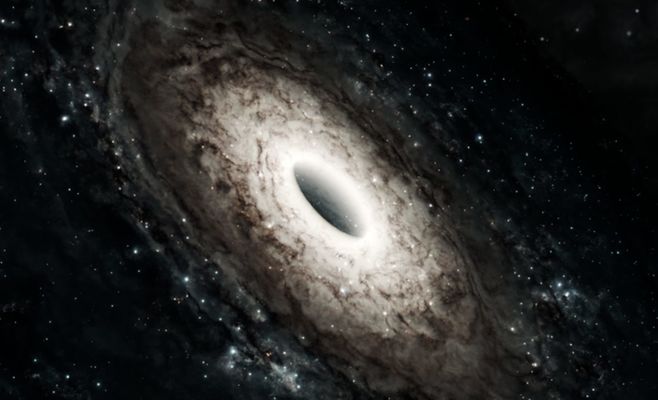
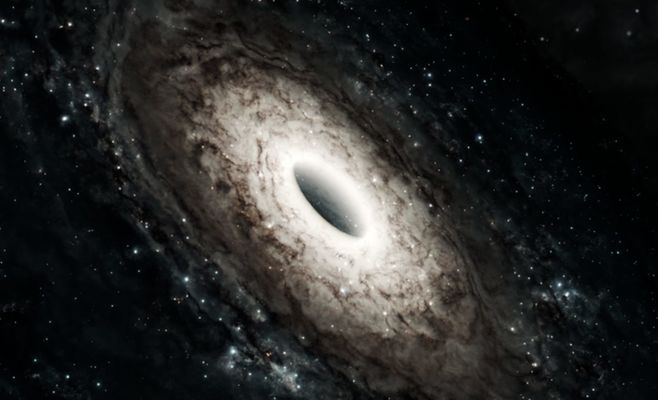
The international team ran advanced cosmological simulations and built a model in which Little Red Dots are galaxies with active nuclei powered by massive black holes that formed from the collapse of supermassive primordial stars. In the model, dense, massive discs of the gas that created the black holes largely conceal them. Those gas envelopes trap high-energy X-rays while letting some visible, ultraviolet and infrared light escape, which fits the light signatures Webb detected.
The simulations also address another puzzle. A large cluster of stars in the discs of these small galaxies produces the blue part of the spectrum Webb observed. According to the models, the discs hold about 100 million stars packed into regions only 500 light-years in diameter, which matches observations.
The team concludes that the central black holes are only about 10 million solar masses. Earlier estimates indicated a maximum of 100 million solar masses.
Who did the work
Whalen’s colleagues came from United Arab Emirates University, the Aristotle University of Thessaloniki, the Institute for Astronomy and Royal Observatory at the University of Edinburgh, and the Harvard & Smithsonian Center for Astrophysics. The paper appears in The Astrophysical Journal Letters.
What this means for the search for the first black holes
The result is a model, not a direct observation, and it is not expected to settle the debate over what Little Red Dots are. But if it holds up, it would connect Webb’s images to a long-standing prediction. “We may be witnessing the birth of the first supermassive black holes,” Whalen said. He added that simulations have predicted for decades that such objects should exist, and that Webb may finally be letting astronomers see them.
Around Prague, based on reporting by Universe Today