Why the Edges of a Black Hole Jet Glow Brighter Than Its Center, According to New Simulation

USD 22,18
Popular
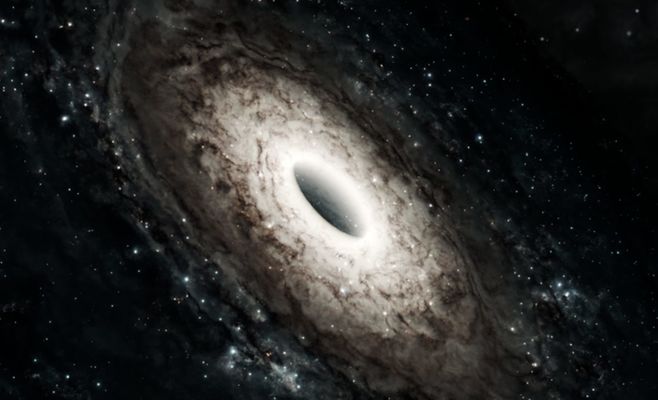
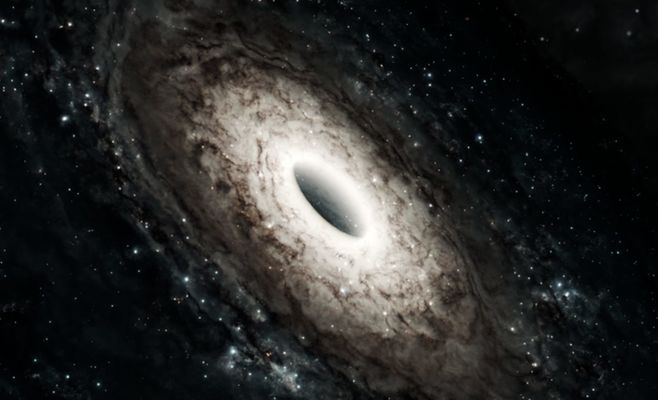
Jets fired from supermassive black holes are among the brightest, longest-lasting sources of energy in the universe, yet one of their features has puzzled astronomers: they often look brighter at the edges than in the middle. A new computer simulation of the jets from Centaurus A, the closest radio galaxy to Earth, now offers an explanation, according to Universe Today.
The study, published in Astronomy and Astrophysics, suggests that the effect arises from how electrons in the jet move relative to the magnetic field around them.
The puzzle of the dim center
The biggest jets come from active galactic nuclei, which are supermassive black holes that are actively pulling in material. As that material gathers in a disk around the black hole, it rotates and heats up, and some of it is flung outward in powerful jets. Astrophysicists know the jets are powered by the black hole's rotational energy and strong magnetic fields, and that they travel at relativistic speeds. They can also pump huge amounts of energy into the gas between galaxies, which heats it and stirs it up, two effects that work against star formation.
What has been harder to explain is the jet's brightness pattern. The natural expectation is that the center of a jet would shine brightest because energy is most concentrated there. Observations with the Event Horizon Telescope spanning a decade show the opposite in Centaurus A: its jets are brighter at their edges. The phenomenon is called limb brightening. Universe Today reported that the same pattern appears in two other galaxies, M 87 and 3C 84.
How the simulation worked
Because the three galaxies differ from one another, the team treated Centaurus A as a pilot study. Lead author Felix Glaser, a master's student at the University of Würzburg in Germany, and colleagues ran a magnetohydrodynamic simulation of a black hole pulling in material and launching a jet. Because the jet moves so fast, the model included the effects of general relativity.
The researchers tuned several free parameters, including the black hole's mass and the viewing angle, to match Centaurus A. According to Universe Today, the simulation successfully reproduced the Event Horizon Telescope observations. The paper's authors wrote that the edge brightening can be reproduced naturally by an uneven distribution of particles.
What uneven electrons mean
In the model, the electrons in the jet are not spread evenly across what are known as pitch angles, the angle between the magnetic field and each electron's direction of motion. The brightness of synchrotron radiation, which is emitted when particles are forced to follow the curve of a magnetic field, depends strongly on that angle. As a result, the brightness we observe changes with the viewing angle relative to the magnetic field the particles follow.
The team also produced simulated polarized images at four frequencies: 86 GHz, 230 GHz, 680 GHz and 3 THz, each showing more detail than the last.
Why it matters: tiny effects, huge structures
The finding does not change anything in daily life, but it helps scientists understand how black holes affect their surroundings. Dr. Christian Fromm, who leads the Computational Astrophysics Group, said microscopic plasma effects can shape structures on vastly larger scales. He said future observations will reveal more of these plasma signatures, making realistic plasma physics increasingly important in models.
The work is a simulation of a single galaxy. The authors framed it as a pilot study, and it does not yet explain the same pattern in M 87 or 3C 84.
Around Prague, based on reporting by Universe Today