Matěj Balga: from cycling the world to a CZK 100bn AI startup

USD 21,75
Popular
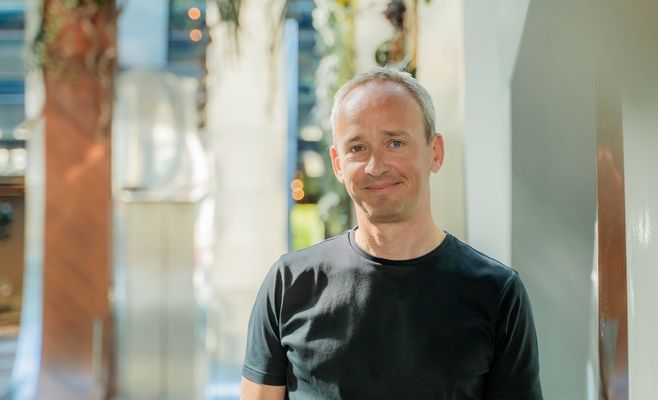
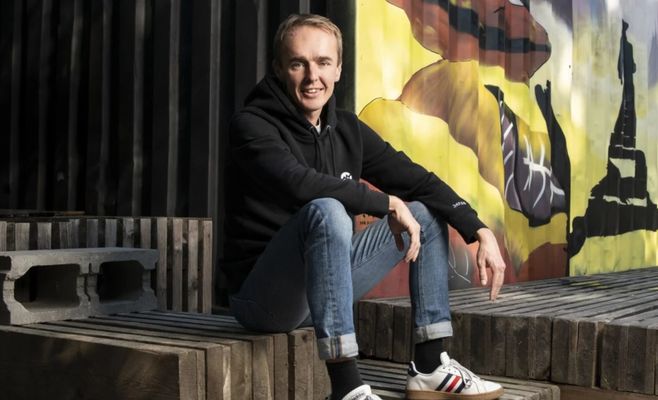
Matěj Balga, a 35-year-old Czech robotics engineer and former developer, spent three years cycling around the world and has now returned to IT, joining one of Europe’s fastest-growing startups, Wonderful. In April this year he became its CTO for Czechia and Slovakia and the company’s first employee in the country.
The journey began almost by accident: because of a girlfriend at the time, Matěj decided to cycle from Prague to Korea, but ended up stuck in China. Later he rode from Alaska to South America, and then returned to Czechia via Africa. “Almost everyone has a romantic idea of a great journey of discovery. But the journey itself doesn’t bring catharsis. Mine only came when I got off the bike,” he recalls. In his words, on the road it feels as though real life is happening somewhere else.
Now, as Balga puts it himself, instead of 20 kilometres an hour he is flying on a rocket that went from zero to a valuation of CZK 100 billion in a year. Wonderful is a startup of Israeli origin with an official headquarters in the Netherlands, founded only last year. In its recent fourth funding round, investors valued it at more than CZK 100 billion. Among the first to believe in it was the Czech fund United Founders. Today the company has around 700 employees, and by the end of the year the number is expected to approach a thousand; Balga’s Czech team has about ten people.
Wonderful positions its platform as an “operating system for AI”: large corporations use it to automate workflows, develop AI applications and coordinate AI agents across all departments. “The debate about AI keeps circling around which model is better. In six months that won’t matter – models have become a commodity, the labs make them. We don’t do science, we do applied AI,” Balga explains.
In his observation, corporate projects die not because of code, but because nobody knows who owns the process. “An agent is not software, an agent is a mirror of a business process. That’s why an engineer can’t own it for long, only the person who runs that process can,” he says. That is why Wonderful’s engineers, so-called Forward Deployed Engineers, are sent straight to clients: for several weeks they become “in-house” employees and try to deliver results in weeks or even days, rather than the months and years customary in corporate practice. The secret, according to Balga, lies in three things: the platform is already ready, the engineers sit inside the client’s company, and from day one there is a business person alongside them who makes the decisions.
Judging by the numbers, the strategy is working. According to the Wall Street Journal, the startup grew in a year from $1 million to $70 million in annual recurring revenue (ARR) – around CZK 1.5 billion – and plans to exceed $100 million (CZK 2.2 billion) by the end of the year. Gross margin is currently around 52%. Balga does not name specific clients, but the US publication mentions Deutsche Telekom, and Wonderful reportedly also works with its Czech subsidiary T-Mobile.
However, the model of engineers “in the field” is expensive and demands a lot of operational effort, which is why Wonderful has to raise large funding rounds. The Israeli site Calcalistech names the key question for the startup as the ability to turn current growth into the economics of a classic software company with a high margin.