From Prague's Horse-Drawn Tram to the Tunnel Bus: A Guide to Czech Public Transport Museums and Depots
USD 21,69
Popular
Czech cities preserve a rich history of trams, trolleybuses and buses — from the oldest horse-drawn tram line in Central Europe to a cutting-edge tunnel bus set to run beneath Prague in 2026. Fans of vintage technology and urban transit will find plenty to explore, from Prague to the small town of Strašice.
Prague's Střešovice Tram Depot
The main draw for Prague transport enthusiasts is the Public Transport Museum housed in the Střešovice tram depot. Prague's first horse-drawn tram line opened on 23 September 1875, running from the Invalidovna in Karlín to the city centre. The Střešovice depot itself was built in 1909 and has been protected as a technical monument since 1991.
Regular tram service there ended in 1992, and a year later the Prague Public Transit Company opened a museum on the site, displaying trams from various eras, service vehicles, vintage trolleybuses, and an original 1886 horse-drawn tram car built by the Ringhoffer factory.
In the summer of 2026, Prague will unveil a genuine technical novelty — its first tunnel bus. Route No. 145 will link Dejvická and Hradčanská stations with the Kobylisy and Čimice districts, part of the route running underground through the Bubeneč tunnel, itself a section of the Blanka tunnel complex. According to calculations, the bus will cover this stretch faster than the metro.
Public Transport Beyond Prague
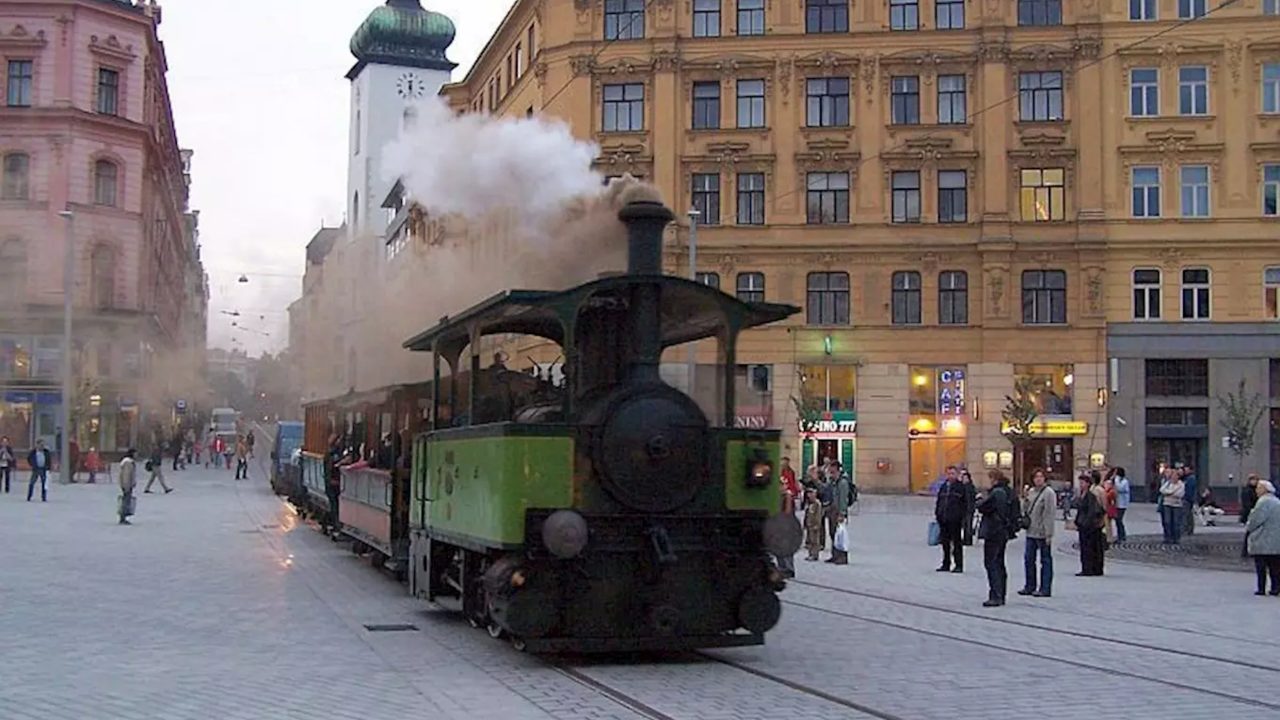
Prague remains the country's transit leader — home to its only metro, the largest tram network, the Petřín funicular, and ferries across the Vltava. But other cities have their own stories to tell. Brno boasts the oldest tram service in the territory of today's Czechia — its horse-drawn tram line dates back to 1869. Trams remain the backbone of transport in Brno today, and in summer, river transport is added along the Brno Dam.
In Ostrava, public transport began in 1894 with a steam tram; today the city runs trams, trolleybuses and buses. Smaller tram and trolleybus networks operate in Plzeň, Liberec, Olomouc, Pardubice, Hradec Králové, Zlín, České Budějovice and several other cities, while in smaller towns public transport often amounts to just one or two bus routes.
One particularly curious story is the route between Český Těšín and the Polish town of Cieszyn, which follows the path of a tram line that operated between the two towns from 1911 to 1921. After the town was split in two, this 1.8-kilometre line became an international route, complete with customs checks on the bridge. Today, eleven memorial markers along the route, old rails still visible in the pavement, and a replica of the historic tram car on the Polish side commemorate this history.
Brno Depot and the Tatra T3 Phenomenon
The Brno Technical Museum operates a storage facility for historic trams in the Líšeň district, located on the grounds of a former local railway station. Tours there are currently suspended, but the historic vehicles are displayed at special events and during Brno Museum Night. The tram depots themselves are also worth a visit — Brno's public transport company periodically opens its facilities for tours, revealing the behind-the-scenes work of technicians and drivers, along with workshops and track maintenance operations.
The Tatra T3 tram deserves special mention as the most widely produced tram model in the world. The first prototype was built in 1960 and unveiled at the International Engineering Fair in Brno before soon entering service on the streets of Prague. Roughly fourteen thousand units were produced in total. Although most Czech cities have retired their T3s, the trams continue to run around the world — from Ukraine and Russia to North Korea, where a local factory even used the Tatra KT8D5 chassis to produce its own tram, the Tongil-181. After Russia's invasion of Ukraine began in 2022, many Czechs were struck by footage of shot-up Tatra T3 trams on Ukrainian streets — for some viewers, it was the first time they realised how widely and how long Czech-built trams had been used abroad.
Today, the tradition continues with Plzeň-based Škoda Group, which supplies trams across Europe and beyond — to Finland, Italy, Turkey, Australia, China, and Portland, USA. The longest trams in the world — nearly sixty metres long — run in Mannheim, Germany.
Curiosities and the Depot in Pisárky
Among the more unusual facts: seasonal boat service on the Brno Dam is officially part of Brno's public transport system, and there's an underground tram stop, Jírova, in the Líšeň district. Brno doesn't yet have a full metro system, but it does have the longest tram tunnel in the country — a 602-metre stretch between the Osová stop and the university campus in Bohunice — as well as a second tunnel near Žabovřeská street, opened in spring 2023.
The country's oldest tram depot is located in the Pisárky district of Brno, built in 1870, just a year after Brno's horse-drawn tram line began operating. In 2024, Brno's public transport company completed construction of a turning loop and renovated the storage yards, allowing trams to turn around directly within the depot grounds — easing pressure on the notoriously congested Mendlovo náměstí area.
Its own museum can also be found in the small town of Strašice, on the border of the Plzeň and Central Bohemian regions, within the protected Brdy landscape area. On select weekends from May to October, the Škoda-Bus Club displays an exhibition dedicated to the development of public transport in West Bohemia and organises special rides on historic club buses.
Read also: 6 Prague cemeteries where history and art matter more than mourning: a guide to necropolis museums
Source: kudyznudy.cz