Science & Space By

A Mars Rover Has Now Driven Farther Than Any Vehicle on Another World, Mostly on Its Own
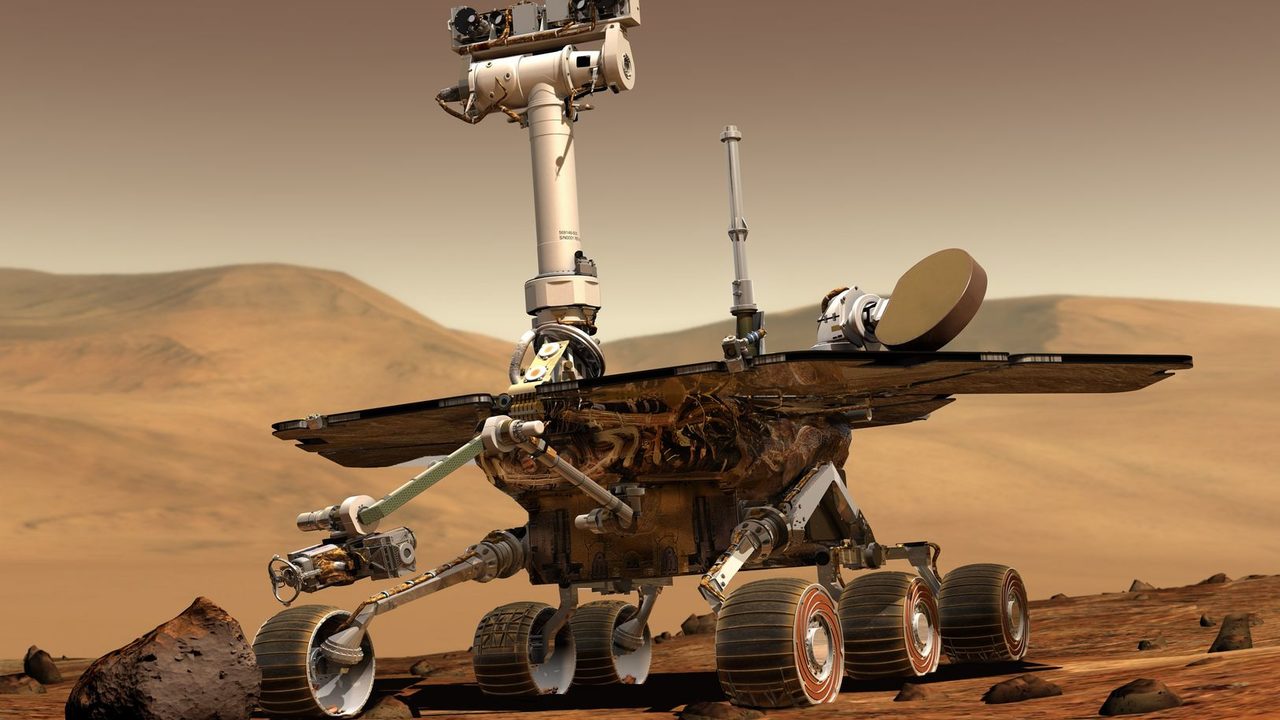
NASA's Perseverance rover has driven farther across the surface of another world than any vehicle before it, ScienceAlert reported. Most of that distance was covered by the rover steering itself rather than following step-by-step commands from Earth.

According to the outlet, the rover's odometer reached 45.22 kilometers (28.10 miles) on Oct. 11. That edged past the mark set by the Opportunity rover, which traveled 45.16 kilometers on Mars from 2004 to 2018.

How Perseverance covered the distance

ScienceAlert said Perseverance drove more than 90 percent of its record distance on its own, using a navigation system called AutoNav. Scientists on Earth set waypoints, and the rover scans the ground between them and picks a safe path across the rocky terrain.

The outlet noted that the technology has a long lineage. Sojourner, the first rover on Mars, landed in 1997 and covered around 100 meters. According to ScienceAlert, Sojourner took 20 measurement points of the path ahead, while Perseverance processes 200,000 with each look, as scientists at NASA's Jet Propulsion Laboratory have pointed out.

That speed lets the rover work out its route while moving, which the outlet described as “thinking while driving.” In a single Martian day, known as a sol, Perseverance can cover as much as 412 meters (1,351 feet). A sol is about 40 minutes longer than an Earth day.

ScienceAlert also pointed to the Ingenuity helicopter that traveled with the rover and became the first controlled aircraft to fly on another planet. Rather than the five test flights planned over 30 days, the outlet reported, it made 72 flights over three years, covering 17 kilometers and climbing nearly 24 meters in the thin Martian air.

Where the rover is now

Perseverance is currently on the western rim of Jezero Crater, in an area called Lac de Charmes. According to ScienceAlert, it is heading toward a spot named Idubi, which may once have been a hydrothermal system, the kind of environment thought to have helped life begin on Earth. Another target is Rainbow Falls, described as a chunk of Mars thrown out of the ground by the impact that formed Jezero Crater.

The rocks in the region are very old. Ken Farley, a Caltech geochemistry professor and former Perseverance project scientist, said they are “probably older than 4 billion years.” ScienceAlert noted that few rocks on Earth are that old, because erosion and plate tectonics have destroyed or recycled most of them. Some survive, however, and could hold traces of early life.

The outlet also recalled that Perseverance has examined a leopard-spot-patterned rock called Cheyava Falls, in an ancient basin that held water several billion years ago. ScienceAlert described the find as possibly the best evidence yet of past life beyond Earth, though the report did not present it as a confirmed discovery.

What it means for the search for life on Mars

The driving record is partly a milestone for engineering. The more a rover can navigate safely by itself, the more ground it can cover between instructions from Earth, and the more rocks scientists can reach and study.

The bigger question is what happens to the samples the rover has collected. ScienceAlert argued that the most useful place to look for signs of life is one from which samples can be brought home, and that Mars is a strong candidate because it was a wet world when life arose on Earth.

A return mission is the obvious next step, the outlet said, but NASA's Mars Sample Return program lost its funding earlier this year. That leaves the timing of any retrieval uncertain. ScienceAlert added that such a mission would also help inform future efforts to send people to Mars and bring them back safely.

For now, according to the report, Perseverance keeps working on the crater rim, adding to its record with every drive.

Around Prague, based on reporting by ScienceAlert
Share: Telegram WhatsApp

More science news

Could Ocean Tides Hide a Trace of Einstein's Gravitational Waves?
A mathematician in Berlin has combined Isaac Newton's explanation of the tides with Albert Einstein's gravitational waves, creating a model that could offer a new way to test how well scientists under
98-Million-Year-Old Amber Mantis Wore Leaf-Like Disguise on Its Abdomen
A praying mantis preserved in amber for 98 million years is the earliest clear fossil evidence of mantises imitating plant leaves, according to ScienceAlert. Scientists say the insect carried leaf-lik
Giant Black Holes Ruled Out as Dark Matter by Big Bang Afterglow
Physicists have struck another suspect from the list of possible explanations for dark matter. According to Universe Today, a new study in Physical Review Letters concludes that stupendously large bla
Physicists Calculate How Far Time Could Run Backward: One Femtosecond
A new mathematical study asks how far time could effectively be made to run backward in a quantum system, and the answer is almost nothing. According to ScienceAlert, physicists Yakir Aharonov of Tel
Leonid Meteor Shower Peaks Nov. 17, but Expect Just 15 an Hour
The Leonid meteor shower, famous for storms that once rained tens of thousands of meteors an hour, is heading for a lean year. Space.com reported that this year's display is expected to be weak, with
Distant Galaxy Group Is Low on Star-Making Gas, Astronomers Find
Astronomers have measured how much of the raw material for new stars remains in a dense, distant group of galaxies, and the answer is not much. According to Universe Today, galaxies in the group, know

Related news

A mathematician in Berlin has combined Isaac Newton's explanation of the tides with Albert Einstein's gravitational waves, creating a model that could offer a new way to test how well scientists understand gravity, Universe Today reported.
A praying mantis preserved in amber for 98 million years is the earliest clear fossil evidence of mantises imitating plant leaves, according to ScienceAlert. Scientists say the insect carried leaf-like structures on its abdomen that resembl
Physicists have struck another suspect from the list of possible explanations for dark matter. According to Universe Today, a new study in Physical Review Letters concludes that stupendously large black holes, known as SLABs, cannot account
A new mathematical study asks how far time could effectively be made to run backward in a quantum system, and the answer is almost nothing. According to ScienceAlert, physicists Yakir Aharonov of Tel Aviv University and Avshalom C. Elitzur
The Leonid meteor shower, famous for storms that once rained tens of thousands of meteors an hour, is heading for a lean year. Space.com reported that this year's display is expected to be weak, with long stretches when not a single Leonid
Astronomers have measured how much of the raw material for new stars remains in a dense, distant group of galaxies, and the answer is not much. According to Universe Today, galaxies in the group, known as COSMOS-Gr30, hold only about 20% to
Astronomers have tracked a mysterious repeating radio signal to a pairing of a white dwarf, the remnant of a dead star, and a living star much like the sun, Space.com reported. The system, called GPM J071507−114153, sits about 5,000 light-y
The Leonid meteor shower peaks on Nov. 17 at about 3:00 Universal Time, and the Moon is cooperating this year, according to Universe Today. Forecasters expect only a modest show of roughly 20 meteors per hour, not the dramatic storm the sho
Earth’s own atmosphere may have helped turn the May 2024 solar storm into one of the most powerful in decades, according to a study in Science Advances. Satellite measurements showed that roughly 85% of the charged particles fueling the dis
Magma that is heated beyond the point where its crystals would normally stay stable can go for more than eight hours without forming new crystals, according to a University of Manchester-led study. In the same experiments, magma that had no
Earth has a temporary new companion. Astronomers have confirmed that a tiny asteroid called 2026 QQ8 was pulled into orbit around the planet in April, and it is expected to stay until January 2027, Live Science reported. The object is about
SpaceX is preparing its most ambitious test yet of Starship, its giant new rocket, and the company's own plans could leave NASA with a problem, NPR reported. As SpaceX shifts resources to Starship, it has said it will stop flying the smalle